So you've decided to try embroidery. Maybe you spotted a gorgeous stitched hoop on Pinterest, or a friend showed off their latest project and you thought, "I could totally do that." The good news? You absolutely can, and the only thing standing between you and your first stitch is knowing what to grab before you get started.
That's where an embroidery kit comes in. For beginners, a quality kit takes all the guesswork out of getting started by bundling everything you need into one convenient package. But not all kits are created equal, and if you're new to the craft, it can be tricky to know what should actually be included versus what's just a nice bonus.
In this post, we're breaking down everything you'll typically find in an embroidery kit, what each item does, and why it matters for your stitching journey. By the time you finish reading, you'll know exactly what to look for when choosing your first kit and feel completely confident diving into this wonderfully relaxing hobby. Let's get into it!
The Core Physical Supplies Every Embroidery Kit Needs
Before your first stitch hits the fabric, your supply lineup does a lot of the heavy lifting. Getting these five foundational items right from the start will save you from frustrating do-overs and help every design stitch out cleanly.
1. Embroidery Hoops Hoop size controls how large a design you can stitch in a single run. The three most common sizes for home machines are 4x4, 5x7, and 6x10 inches. Most entry-level machines ship with a 4x4 hoop, which works great for small designs like pocket logos or baby items, but you will likely want to add a 5x7 or 6x10 as your projects grow. Beyond size, proper hooping tension keeps your fabric taut and stable, which directly affects registration accuracy on multi-color designs.
2. Stabilizer Stabilizer is the supply beginners most often underestimate. Cutaway stabilizer is your best choice for stretchy knits and jersey fabrics because it stays permanently behind the design and prevents distortion. Tearaway works well for stable woven fabrics like quilting cotton or linen. Water-soluble stabilizer shines for delicate fabrics and freestanding lace designs. According to the embroidery machine starter kit guide from B-Sew Inn, stocking all three types gives you the flexibility to tackle any project confidently.
3. Thread Skip the bargain-bin thread. Standard 40-weight polyester is the industry workhorse for machine embroidery because it delivers crisp stitch definition and holds color vibrancy through repeated washing, making it ideal for garments and gifts alike.
4. Needles Start with a 75/11 embroidery needle for most fabrics. Move up to a 90/14 when you are stitching denim, canvas, or heavier structured blanks. Needles are consumables, so buy several packs and swap them out regularly. A dull needle causes skipped stitches and thread breaks far more often than a software or tension issue. For a deeper breakdown of what goes into a well-stocked setup, the ultimate guide to machine embroidery supplies is worth bookmarking.
5. Fabric and Blanks Always pre-wash your fabric before hooping. Shrinkage after stitching can pucker even a perfectly executed design. Pre-washed cotton, fleece, and structured caps each behave differently under the needle. Fleece and knits need cutaway backing, while a structured cap requires a specialty cap frame and stiffer stabilization. Match your blank to your stabilizer choice every single time.
Which Machine Actually Powers an Embroidery Kit?
Now that your supplies are sorted, the next big decision is the machine itself, and this is where embroidery gets genuinely exciting.
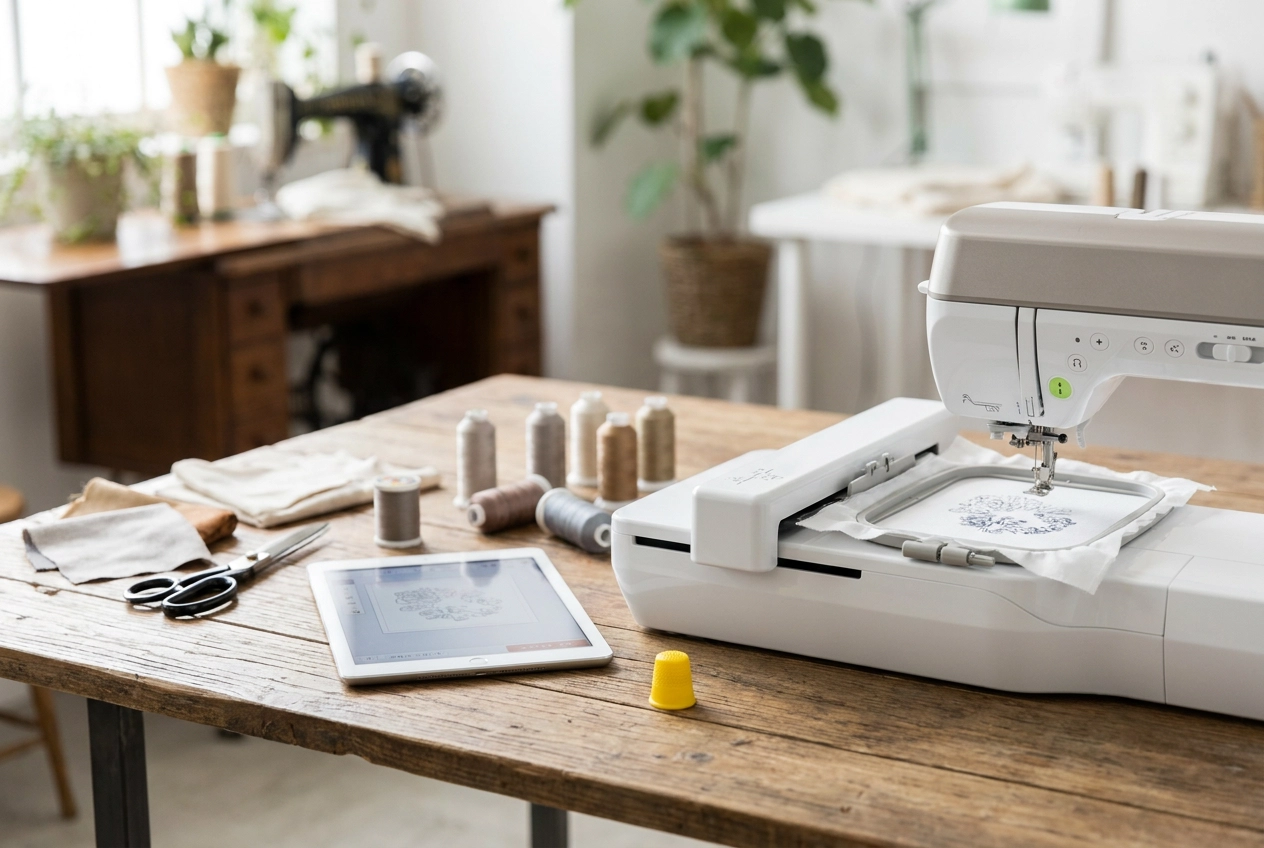
A dedicated home embroidery machine works completely differently from a standard sewing machine. Instead of you guiding the fabric by hand, the machine does all the movement for you. It uses a motorized hoop-drive system that grips your stabilized fabric inside a hoop and moves it automatically in precise X and Y directions while the needle stitches in place. Every movement is dictated by a loaded digital design file, so the machine essentially reads the pattern and executes it stitch by stitch without any manual steering required.
Entry-level single-needle machines are the most popular starting point for beginners and small-batch makers. Models like the Brother PE570 (around $439) and PE545 (around $499) are solid first machines that cover a 4"x4" embroidery area and handle downloadable design files with ease. Machine adoption has grown significantly, with a 27% increase in manufacturers upgrading to computerized machines between 2023 and 2025, reflecting how mainstream this technology has become.
Combination sewing and embroidery machines are a smart pick if you want both functions in one unit. The Brother SE700 ($579.99) and SE725 ($549.99) are popular examples that handle garment sewing and decorative embroidery without requiring a second purchase. You can browse a wide range of current options in the 2026 embroidery machine buyer's guide to compare features side by side.
Multi-needle machines are the upgrade path for high-volume decorators and production sellers. They let you load multiple thread colors simultaneously, eliminating the manual re-threading required between color changes on a single-needle setup. That efficiency matters enormously when you are stitching dozens of pieces per session.
Here is the detail beginners often miss: your machine choice directly determines which design file formats will actually work. Brother machines run on .PES files natively, Janome machines prefer .JEF, and industrial setups typically use .DST. Before purchasing any downloadable design, confirm your machine's compatible formats. Meissner's honest 2026 machine reviews break down format compatibility across popular models, making it a useful reference as you build out your complete embroidery kit.
Hand Embroidery Kits vs. Machine Embroidery Kits: Which One Is Right for You?
Not all embroidery kits are built the same, and the difference between hand and machine options is bigger than most beginners expect.
Hand embroidery kits are the zero-equipment entry point. A typical kit comes with a pre-printed fabric hoop, a selection of DMC floss in the colors you need, a needle, and a stitch guide that walks you through each section of the design. Nothing else required. You open the box and start stitching. This format is beloved for its meditative, slow-stitching appeal, and it genuinely delivers on that promise. If you want something calming to do in the evenings with no setup, no software, and no learning curve, a hand kit is hard to beat.
Machine embroidery kits work on an entirely different principle. The kit is built around three things: your computerized embroidery machine, a digital design file, and physical consumables like stabilizer, thread, and a hoop. The machine reads the file and stitches the design automatically, producing consistent results every single time. According to the Ultimate Beginner's Guide to Embroidery Kits, the digital design file is the most flexible part of the kit to customize, which makes it the piece worth investing attention in from day one.
It is worth knowing that surface embroidery, which covers everything from floral applique to detailed logo work on garments and home decor, holds 31.4% of the embroidery type segment share in 2025, making it the dominant style across both kit categories. Whether you are stitching by hand or running a machine, surface embroidery is where most projects land.
The clearest way to choose is to think about volume. Hand stitching produces one unique piece at a time, slowly and intentionally. Machine embroidery lets you personalize dozens of items in a single session, whether that means gifts, team apparel, or boutique inventory. If you already own a home machine or are planning to buy one, beginner machine embroidery kits paired with a strong digital design library give you the most room to grow.
The One Thing Most Embroidery Kits Leave Out: The Design File
If you own a machine embroidery kit, there is one critical ingredient that most physical retail kits quietly gloss over: the design file. Think of it as the brain of the operation. A machine embroidery design file is a digital instruction set that tells your machine exactly where to move the needle, which thread color to load, and in what sequence to build every single stitch. Without a compatible design file loaded onto your machine, the equipment has nothing to execute. It just sits there waiting.
Why format compatibility matters more than beginners expect
Design files are not one-size-fits-all, and using the wrong format is one of the most common beginner mistakes. Each machine brand reads its own file type. PES is the standard for Brother and Baby Lock machines, making it the most widely used format for home embroiderers. JEF is what Janome machines require. DST is a near-universal format that most commercial machines can read, though it sometimes needs manual thread-color assignment at the machine. VP3 serves Husqvarna Viking and Pfaff users, while HUS shows up on older Husqvarna models. Before you download anything, check your machine manual to confirm which format it accepts. Converting between formats is possible, but complex designs can lose stitch data during conversion, so native-format files are always the safer choice.
What retail kits actually give you
Most boxed embroidery kits sold in stores include one or two pre-loaded beginner designs. That is perfectly fine for learning the basics, but once those are stitched, creativity hits a wall fast. The good news is that premium machine embroidery designs are available across thousands of themes, from NFL and college sports motifs to anime characters, seasonal florals, and children's designs, all available as instant downloads. Demand for digital embroidery design files has surged by 44% in the latest reporting period, which tells you something important: the embroidery community has shifted decisively toward digital-first sourcing. Downloadable design libraries give you immediate access to broad, searchable catalogs without waiting on shipping, letting you move from purchase to stitching in minutes.
Why Downloadable Designs Beat Starting from Scratch Every Time
Now that you understand what design files actually are, here is the honest case for skipping the custom route entirely and going straight to a downloadable catalog.
1. The cost difference is staggering. Custom digitizing a single design from original artwork runs anywhere from $30 to $150 for a moderately complex file, and highly detailed designs can push $200 or more. Turnaround time at even the fastest services is 12 to 24 hours at minimum, and that is before any revision rounds if the first result misses the mark. A downloadable design file from a catalog like EmbroideryNSewing.com delivers the same ready-to-stitch result the moment you check out, typically at a fraction of that price. No waiting, no back-and-forth, no surprise fees.
2. Instant delivery changes everything about how you plan projects. There is no shipping delay because there is nothing to ship. You can browse, purchase, and have a file loaded onto your machine the same night. Buy at midnight, stitch before breakfast; it really is that simple. For anyone working on a gift with a hard deadline or a custom order with a promised turnaround, that kind of immediate access is not just convenient, it is genuinely valuable.
3. One purchase can cover your whole setup. Quality downloadable designs come in multiple machine-native formats, covering major brands so that a single file works across different machines in your home or shop without paying for additional conversions.
4. The variety available digitally is impossible to replicate any other way. Nature motifs, fandom designs, sports logos, holiday themes, and machine embroidery fonts are all browsable in one session. Each of those categories would require a separate custom digitizing job if you sourced them individually from scratch.
5. For Etsy sellers and boutique decorators, this is where margins are actually protected. Per-unit cost control depends on keeping design sourcing affordable. Downloadable files let you reuse the same purchase across unlimited production runs with no additional fees, keeping overhead low while your product variety stays high.
Embroidery Kit Project Ideas by Theme: Where to Start
Once you have your machine set up and your design files ready to go, the next question most beginners ask is simple: what should I actually make? Picking a theme you genuinely love makes every step of the learning curve more fun, and some categories will give you more immediate wins than others. Here are five of the strongest starting points.
Sports and Team Apparel Few categories drive as much excitement as fan gear. NFL franchises, college athletics, and university-themed designs are among the most searched embroidery subjects because fans want to personalize hats, bags, jerseys, and spirit wear that actually reflect their loyalties. These projects also make exceptional custom gifts, since a personalized piece tied to someone's favorite team feels far more thoughtful than anything store-bought.
Seasonal and Holiday Designs Seasonal themes are a reliable engine for embroidery activity, especially heading into Q4. Christmas ornaments, Halloween trick-or-treat bags, and Valentine's Day gifts are perennial favorites for both hobbyists stitching for their own homes and boutique sellers building gift-ready inventory. The appeal goes beyond crafting; embroidery kits for every season confirm that holiday designs are often purchased specifically for seasonal display, which broadens their commercial value considerably.
Anime and Pop Culture Motifs Millennial and Gen Z crafters are increasingly reaching for designs tied to their favorite series and characters. Personalizing a hoodie, backpack, or accessory with a recognizable anime or pop culture motif turns a plain item into something expressive and completely one-of-a-kind.
Nature-Inspired Florals and Botanicals Floral and botanical designs lead custom embroidery orders and translate beautifully into home decor. Pillowcases, kitchen towels, and table runners all become genuinely elevated with the right nature motif stitched in. The home decor application category has seen 31% growth alongside rising demand for digital designs, making this a smart category for anyone who wants projects with lasting display value.
Children's Themes and Nursery Motifs Cartoon characters, alphabet sets, and nursery designs are perennial bestsellers, and they are also forgiving choices for beginners. Personalized baby gifts, school bags, and custom kids' apparel are fast, satisfying projects that produce results you can be proud of from your very first run.
Embroidery Kits and Custom Designs as a Gifting Opportunity
Personalized embroidered gifts carry a weight that a generic store-bought option simply cannot match. When someone receives a tote bag embroidered with their graduation year, a baby blanket stitched with a newborn's name, or a holiday ornament featuring a family motif, the perceived value jumps well beyond the cost of materials. These are the kinds of gifts people keep for years and actually talk about. Milestone occasions like birthdays, baby showers, and graduations are natural fits, but honestly, any giving moment becomes more memorable when the item was clearly made with intention.
If you are shopping for a crafter in your life, a home embroidery machine paired with access to a deep downloadable design library is genuinely one of the most practical gift setups you can put together. Instead of buying a series of single-theme physical kits one at a time, the recipient gets instant access to hundreds of design files across every category they love, from florals to fonts to fandom motifs. It is a setup that scales with their creativity rather than running out after one project.
Sports fans are some of the most enthusiastic recipients of custom embroidered apparel. A hat or bag stitched with a favorite team's logo represents real personal effort that no mass-produced licensed product can replicate. That handmade quality reads immediately, and fans notice it. You can browse embroidery gift ideas across 14+ creative categories to see just how many product types translate naturally into fan-focused gifting.
For boutique makers and Etsy sellers, building a seasonal gifting collection is a direct revenue strategy. Q4 demand for custom embroidered items is well established, with thousands of active custom embroidery gift listings confirming just how competitive and buyer-rich that marketplace becomes heading into the holidays. Sellers who stock up on winter holiday motifs, school spirit designs, or occasion-specific files before the season hits are the ones who fulfill orders on time without scrambling. Downloading a focused set of theme-specific design files before gifting season opens means your creative library is ready to go the moment demand spikes, with no last-minute delays standing between you and a finished, giftable piece.
Your Complete Machine Embroidery Kit Checklist
Everything below assumes you already have your machine set up and your design files ready. This checklist pulls it all together so you can shop smart, start fast, and avoid the beginner mistakes that slow most people down.
A single-needle home embroidery machine. For beginners, a single-needle machine is the right call every time. It is straightforward to operate and handles the full range of home projects beautifully. The one step most new buyers skip: checking supported file formats before purchasing. Different machine brands read different file types, so confirming compatibility upfront means your downloadable design library works the moment your machine arrives, no conversion software required.
Embroidery hoops in at least two sizes. A 4x4 hoop covers small logos, monograms, and pocket designs perfectly. A 5x7 or larger hoop opens up detailed scenes, full-front designs, and larger home decor projects. Starting with both sizes gives you real flexibility from day one.
A stabilizer assortment. Cutaway, tearaway, and water-soluble topping are your three non-negotiables. The topping is especially important for textured fabrics like fleece or terry cloth, where loops can swallow your stitches without it.
40-weight polyester embroidery thread in a starter color assortment. Polyester delivers colorfastness and durability across fabric types. Vibrant reds, blues, and greens account for roughly 50% of consumer color preferences, making them the smartest first investment for any starter thread collection.
The right needles plus a seam ripper. A 75/11 standard needle pack handles most everyday fabrics. Keep a few 90/14 needles on hand for denim or canvas. And pack a seam ripper without apology; every beginner uses one, per this honest beginner supply breakdown.
A theme-organized library of downloadable design files. Having designs sorted by theme, whether sports, florals, seasonal, or children's motifs, means you can pull exactly the right file for any project or gifting occasion without starting from scratch every time.
Start Stitching With the Right Kit From Day One
Everything you need to stitch with confidence comes down to three things working together: the right physical supplies, a compatible machine, and a design file library that keeps your creative momentum going. Most beginners nail the first two and then hit a wall when it comes to finding fresh artwork for every new project. That search-one-design-at-a-time frustration is exactly what a well-stocked digital library eliminates from day one.
Beginners who connect with a reliable download source early on skip one of the most common plateaus in the hobby. Instead of outgrowing a starter kit and scrambling for new ideas, they can browse by theme, occasion, or interest and move straight into stitching. That shift from searching to creating is where the hobby actually gets fun.
EmbroideryNSewing.com offers an instantly browsable catalog of machine embroidery design files covering sports, anime, seasonal motifs, nature-inspired designs, children's themes, and machine embroidery fonts. Every file is available for immediate download in multiple machine-compatible formats, so format guesswork never slows you down. Whether your first project is a personalized baby bib, a favorite team logo, or a floral tote bag, the design that fits your vision is already there and ready to stitch.
Browse the full catalog at EmbroideryNSewing.com and find the design that makes your very first stitch feel like exactly the right one.
Conclusion
Starting your embroidery journey does not have to be overwhelming. A quality beginner kit gives you everything you need in one place: the right fabric, pre-sorted threads, a sturdy hoop, sharp needles, and a pattern that guides you from your very first stitch. Knowing what each tool does and why it matters helps you shop smarter and start stronger. And once you understand the essentials, you can focus on what truly counts, the joy of creating something beautiful with your own hands.
Ready to pick up your first kit? Browse options that include all the core components covered here, and do not be afraid to start simple. Every skilled embroiderer began exactly where you are right now. Choose your kit, thread your needle, and take that first stitch. Your most satisfying creative hobby is closer than you think.