
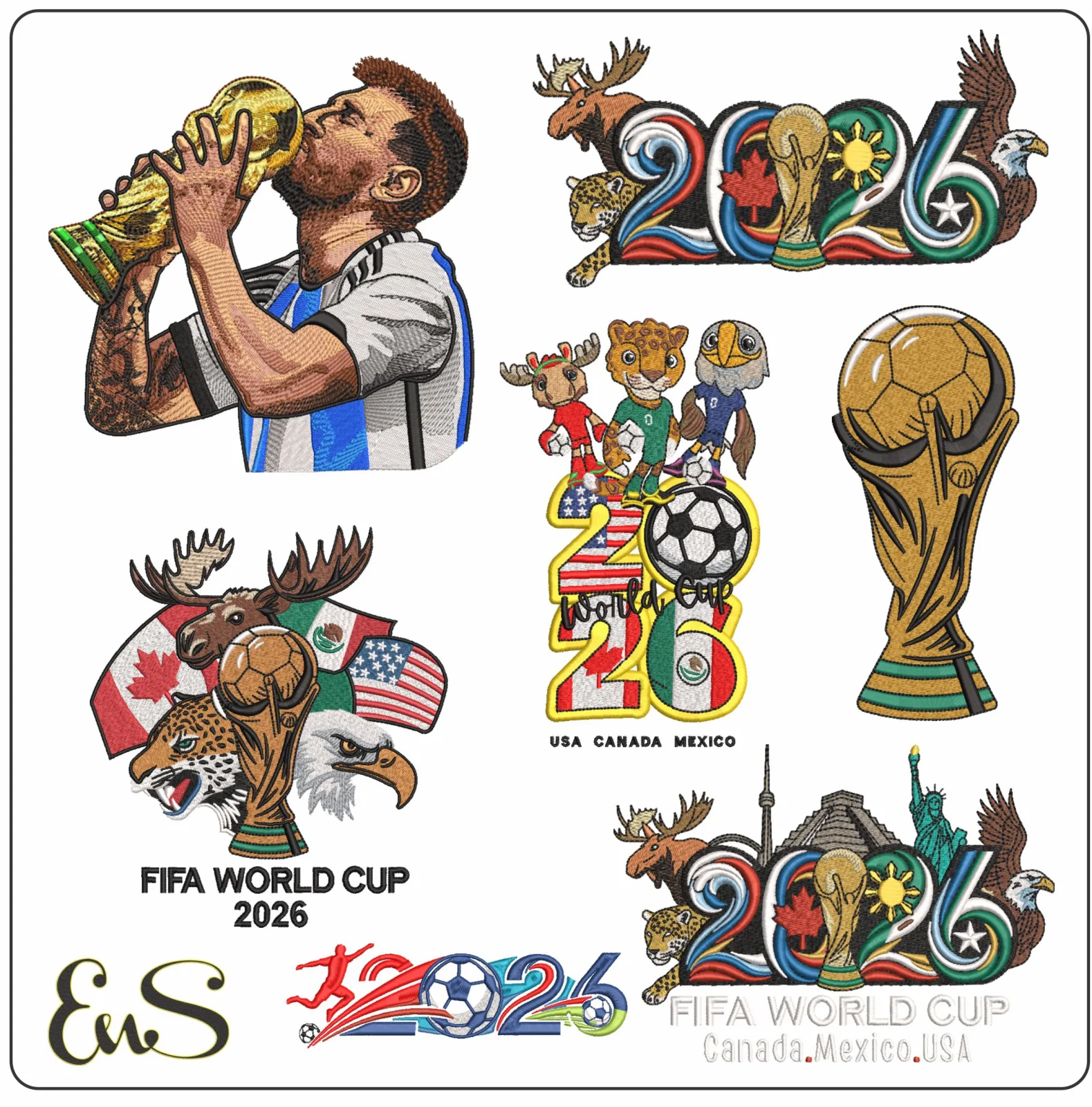
- Selecting high-quality World Cup Embroidery Designs for the 2026 multi-host tournament.
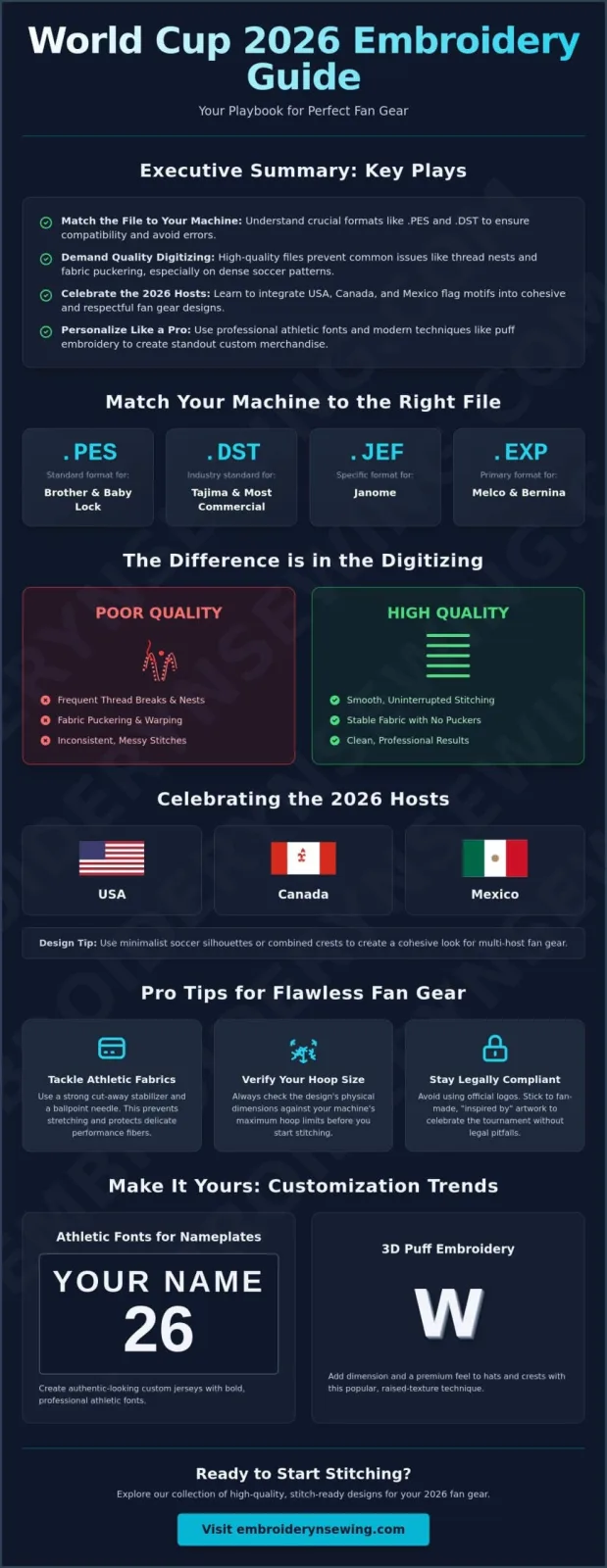
- Understanding machine compatibility for formats like .DST, .PES, and .EXP.
- Navigating design trends like minimalist fonts and puff embroidery.
- Avoiding legal pitfalls by focusing on fan-made, inspired artwork.
What if your embroidery machine could capture the electric energy of a sold-out stadium without a single thread break or bird's nest? I regret that many fans encounter significant technical barriers when they search for World Cup Embroidery Designs for the 2026 tournament. It's frustrating to find a design that looks great on a screen but fails during the stitching process because of poor digitizing. I've seen how confusing the shift to a multi-host tournament can be for creators who want to get their gear just right. I'll show you exactly how to select, format, and customize designs that produce professional results. You'll learn which file types like .DST or .PES are compatible with your specific machine to avoid common errors. I'll also provide inspiration for your 2026 merchandise, from minimalist fonts to the popular puff embroidery technique. We'll explore how to use national colors and flags safely so your projects are both beautiful and compliant with current standards.
Key Takeaways
- Understand which digital formats like PES and DST work best for your specific embroidery machine.
- Learn how high-quality digitization prevents common issues like thread nesting and puckering in dense soccer patterns.
- Discover how to integrate 2026 host-nation flags from the USA, Canada, and Mexico into your fan gear.
- Explore the use of professional athletic fonts to create custom nameplates and personalized jersey styles.
- Find out how to choose the right World Cup Embroidery Designs to ensure your 2026 tournament merchandise stands out.
Table of Contents
- Digital Formats and High-Quality Soccer Patterns
- Selecting 2026 World Cup Designs for Fan Gear
- Personalizing Your Projects with Professional Fonts
## [Digital Formats and High-Quality Soccer Patterns]
I've noticed that many fans get excited about starting a project only to be stopped by technical file issues. It's a common frustration when a digital file doesn't behave the way you expect on your machine. When you're looking for [World Cup Embroidery Designs], the quality of the digitization is actually more important than the image itself. I regret that poor file quality often leads to wasted materials. Choosing professional [embroidery designs] ensures that dense areas, like the hexagonal patterns on a soccer ball, stitch out smoothly without causing thread nesting or puckering on your fabric. Soccer gear is often made of lightweight, moisture-wicking athletic materials. These fabrics are notoriously difficult to embroider because they stretch easily. High-quality sports embroidery is digitized with optimized stitch counts and proper underlay to support the design without weighing down the garment. If you look back at FIFA World Cup history, you'll see how jersey technology has evolved. Your embroidery needs to keep up with those modern standards to look retail-ready and professional.
[### [Matching Files to Your Embroidery Machine]](https://embroiderynsewing.com/articles/nfl-embroidery-designs-fast-custom-projects)
I regret that there isn't a single universal file format that works for every machine. This technical barrier requires you to match your file extension to your specific hardware brand to ensure the machine can read the data. You'll typically need to identify which of these common pairings your equipment uses: [
- .PES: Standard for Brother and Baby Lock machines.
- .DST: The industry standard for Tajima and most commercial machines.
- .JEF: Specifically used by Janome machines.
- .EXP: The primary format for Melco and Bernina machines.](/articles/what-is-thread-painting-with-a-machine-a-creative-beginners-guide)
[Verifying Dimensions and Hoop Limits]
Before you commit to any World Cup Embroidery Designs, please check your machine's maximum hoop size. It's a simple step that saves a lot of wasted thread and time. I've seen many cases where a design is just a few millimeters too large, which causes the machine to reject the file or strike the hoop during the stitching process. I recommend always comparing the design's physical dimensions against your hoop limits to ensure a perfect fit for your 2026 tournament merchandise. 
[Selecting 2026 World Cup Designs for Fan Gear]
I've found that the 2026 tournament presents a unique challenge because it's the first time three nations are hosting the event together. This means your World Cup Embroidery Designs need to represent the USA, Canada, and Mexico in a way that feels cohesive. I regret that finding a single design to capture this trio can be difficult. You'll often have to choose between a minimalist soccer silhouette that works across all gear or a complex tournament crest for a more traditional look. I've seen fans have great success with vintage-style denim baseball caps and custom scarves. If you're looking for inspiration, our collection of Flag Embroidery Designs can help you represent each host nation perfectly. I've compiled a gallery of project photos below to show how these designs look on different textures. Minimalist designs are often easier for beginners to stitch on thicker fabrics like denim because they have lower stitch counts. Complex crests look amazing on scarves but require more attention to detail to avoid thread breaks. I'm sorry that there isn't a one-size-fits-all approach for every fabric. You'll need to consider how the density of your World Cup Embroidery Designs interacts with the weight of your garment to get that professional finish.
[Embroidery on Athletic and Performance Fabrics]
I've learned that performance fabrics present a specific technical barrier during the stitching process. These materials are designed to stretch, which often causes your design to warp or pucker. To prevent this, you'll need to use a strong stabilizer, like a cut-away backing, to keep the fabric firm. It's also vital to pick the right needle. A ballpoint needle is usually best for polyester jerseys because it slides between the fibers rather than cutting them. If you're unsure about the process, learning [how to embroider] on these specialized fabrics will save you a lot of headache. I'm sorry that there isn't a shortcut here, but taking the time to prep your material ensures your fan gear looks retail-ready.
[Personalizing Your Projects with Professional Fonts]
I've found that the real magic happens when you combine World Cup Embroidery Designs with custom text. I regret that many generic font tools simply don't provide the sharp, athletic look required for professional-grade fan gear. To get that authentic jersey feel, I recommend choosing heavy block fonts. These styles mimic what the pros wear on the pitch. It's a common technical barrier to find fonts that scale well without losing their shape, so I always suggest testing your lettering on a scrap piece of fabric first. The choice between stitch types is a critical technical decision for legibility. I've provided a diagram below to show the difference between satin and fill stitches. Satin stitches are excellent for smaller names because they create a smooth, shiny finish that catches the light. However, if you're stitching large player numbers, I'm sorry to say that satin stitches can become too long and snag easily. In those cases, a fill stitch is the better option because it provides a stable, durable surface. You can explore more about these techniques in our guide to embroidery stitches.
[Customizing Team Names and Player Numbers]
I've seen many creators struggle with layering text over flag designs. I regret that adding too many layers often creates excessive bulk, which can break needles or cause the fabric to stiffen uncomfortably. To avoid this, I recommend using a "knockout" technique where the background design is removed from behind the letters. I also suggest matching your thread colors to the official 2026 tournament palettes. Using the specific shades of red, white, and green for host-nation designs ensures your World Cup Embroidery Designs look intentional and high-end. It's a small detail, but it makes a huge difference in the final output.
Ready Your Gear for the 2026 Tournament
I've seen how much effort goes into creating the perfect fan gear. I regret that technical issues like thread breaks or incompatible formats often stand in your way. By focusing on high-quality digitization and selecting the right athletic fonts, you'll ensure your projects look professional. Whether you're stitching host-nation flags or player numbers, the right preparation makes all the difference. I'm sorry that I can't provide the physical machines, but I can help you find the perfect digital files to get started. I believe your 2026 projects deserve the best possible start. You can Browse our High-Quality World Cup Embroidery Designs to find patterns that are already tested for clean-stitching performance. Every design is available for instant digital download and is compatible with all major machine formats like .PES, .DST, and .JEF. I'm confident these tips will help you create something truly unique for the matches. Your custom apparel is going to stand out in the crowd.
Frequently Asked Questions
What is the best embroidery file format for World Cup designs?
The best embroidery file format depends entirely on the machine you use, though .DST is the industry standard for commercial equipment. I'm sorry to report that there isn't a single universal file type for all World Cup Embroidery Designs. If you use a home machine, you'll likely need .PES or .JEF. I regret that technical barriers require you to verify your machine's requirements before downloading any files to ensure they function correctly.
Can I resize a World Cup embroidery design to fit a smaller hoop?
You can resize a design, but I recommend staying within a 10% range of the original size. I regret to inform you that resizing beyond this limit often leads to poor stitch quality or density issues. I'm sorry that standard scaling doesn't always recalculate the stitch count. This can cause the design to become too dense or too thin. Always test a resized file on scrap fabric first to identify any technical failures.
How do I embroider a soccer logo on a stretchy jersey without puckering?
To prevent puckering on stretchy jerseys, you must use a high-quality cut-away stabilizer and a ballpoint needle. I regret that performance fabrics are prone to shifting, which can distort your World Cup Embroidery Designs. I'm sorry that tear-away stabilizer isn't sufficient for the high stitch density found in soccer logos. Using a temporary adhesive spray also helps secure the material to the backing. This ensures the fabric remains stationary throughout the embroidery process.
Are these designs compatible with my Brother embroidery machine?
Yes, these designs are compatible with Brother embroidery machines as long as you select the .PES file format. I'm sorry to report that other formats like .JEF or .EXP won't be recognized by your Brother hardware. I regret that I'm unable to offer specific guidance on your machine's internal software settings. However, as long as the design dimensions fit within your hoop limits, the .PES files will load and stitch according to the digitized pattern.


