

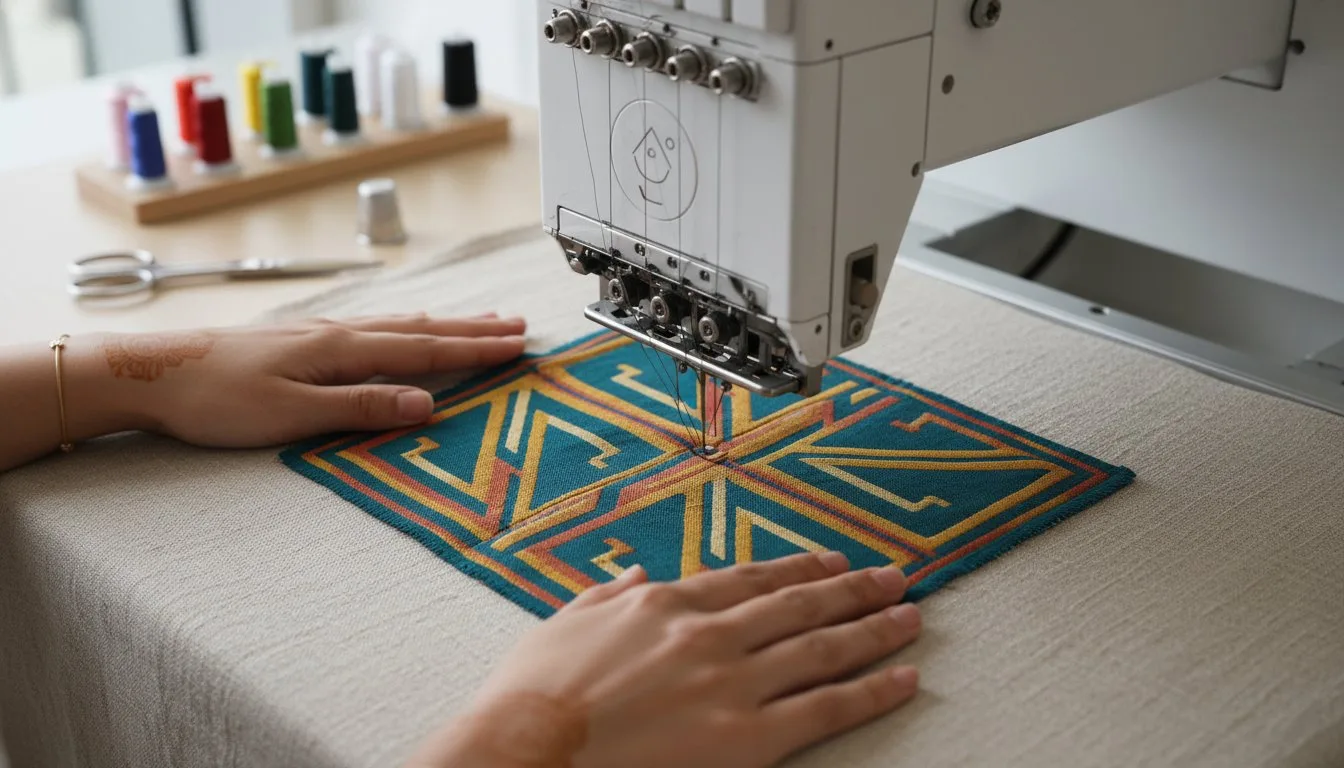
Have you ever admired a vibrant, layered design on a quilt or t-shirt and wondered how it was made? That beautiful technique, which adds incredible texture and dimension, is called applique. For many embroiderers, the process can seem intimidating, sparking fears of complicated steps, special skills, or the dreaded slip of the scissors that could ruin a favorite garment. If you've been curious but hesitant, wondering if you have the right tools or talent, you're in exactly the right place to put those worries to rest.
This ultimate guide is designed to transform you from an apprehensive beginner into a confident creator. We will demystify machine appliqué completely, breaking down what it is and how it’s different from a standard fill-stitch design. You’ll learn exactly what supplies you need to get started and follow our simple, step-by-step instructions for your embroidery machine. Get ready to unlock a new world of creativity and discover why this fabric-layering technique will become your new favorite way to produce stunning, professional-quality projects.
## What Exactly is Appliqué? A Beginner's Guide to Fabric Art
Ever admired a sweatshirt with a bold, stitched-on letter or a quilt with intricate floral designs that seem to pop off the fabric? You were likely looking at appliqué. At its heart, appliqué is the art of sewing smaller pieces of fabric onto a larger background to create a picture or pattern. Think of it as creating a vibrant mosaic or collage, but instead of tiles or paper, you're using colorful fabric shapes to tell a story. This timeless technique has a rich history, adorning everything from ancient ceremonial banners to intricate heirloom quilts and modern runway fashion.
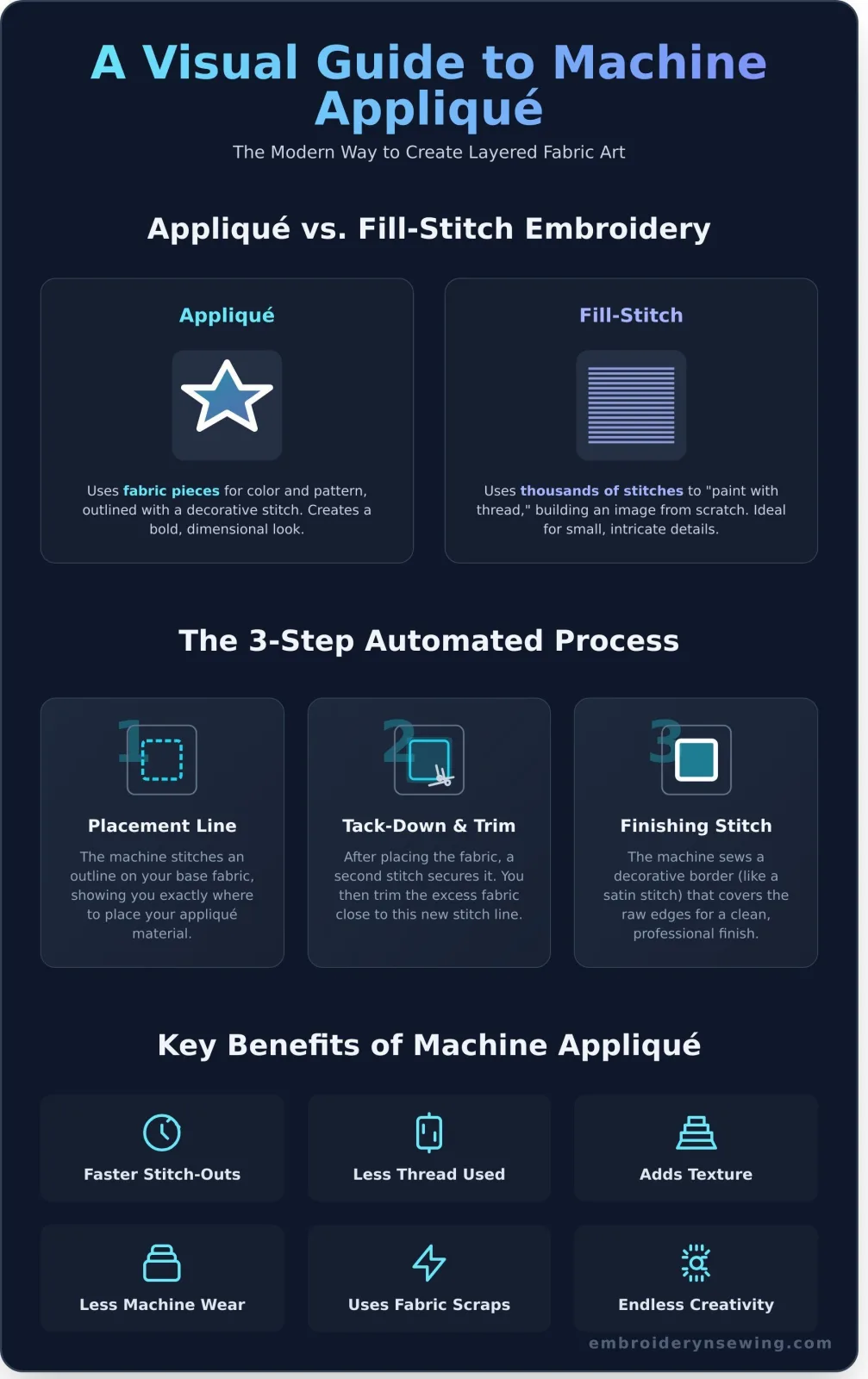
While both techniques create stunning designs, their methods and visual impact are fundamentally different. Traditional fill-stitch embroidery is like ‘painting with thread,’ meticulously using thousands of stitches to build color and form an image from scratch. In contrast, appliqué uses the fabric itself for the main color and pattern. A piece of decorative fabric is cut into a shape and then stitched onto the background, with thread acting as a secure and decorative outline. This layering technique creates a bold, dimensional look with clean lines that literally stands out.
### Why is Appliqué So Popular in Modern Crafting?
The enduring appeal of this craft in the modern sewing room lies in its creative freedom and practical benefits. Whether you're a quilter, a fashion DIYer, or a home decorator, it offers a unique way to add a high-quality, personalized touch. Here’s why so many crafters love it:
- Showcase Beautiful Fabrics: It allows you to feature bold prints, unique textures, and special fabric patterns in a way that truly makes them the star of the show.
- Endless Personalization: Add a chenille letter to a varsity jacket, a fun character to a child’s t-shirt, or floral motifs to throw pillows. The possibilities for customization are limitless.
- A Scrap-Busting Hero: It’s the perfect, eco-friendly way to give new life to treasured fabric scraps left over from other projects, reducing waste and making every piece count.
- Add Texture and Dimension: The layered fabric adds a tactile quality and a professional finish that makes your creations look polished and high-end.
The World of Appliqué: From Hand Stitching to Machine Magic
Appliqué is not a single technique but a vibrant family of methods for decorating fabric. While the rich History of Applique is rooted in centuries of hand-stitching, modern technology has opened the door for crafters of all skill levels. Today, you can choose the method that best suits your project, style, and available tools-from timeless hand-sewn classics to the digital precision of an embroidery machine.
A Nod to Traditional Methods
Before the rise of embroidery machines, appliqué was crafted by hand or with a standard sewing machine. Needle-turn appliqué involves meticulously turning the fabric's raw edge under as you hand-sew it down, creating a seamless, classic look. For a more rustic or modern feel, raw-edge appliqué involves stitching fabric pieces directly onto a base, often with a decorative stitch, allowing the edges to fray slightly. A popular middle-ground is fusible web appliqué, where an iron-on adhesive holds the fabric in place before it’s secured with machine stitching.
Machine Embroidery Appliqué: The Modern Approach
For crafters seeking speed, precision, and perfect results every time, machine embroidery is the ultimate appliqué tool. This method uses a digital design file to guide your embroidery machine through a simple, automated process. The beauty of this technique lies in its three core steps:
- Placement Line: The machine first stitches an outline directly onto your base fabric, showing you exactly where to place your appliqué fabric piece.
- Tack-Down Stitch: After placing your fabric over the outline, the machine runs a second stitch to secure it. You then trim the excess fabric close to this stitch line.
- Finishing Stitch: Finally, the machine sews a beautiful, decorative edge-typically a satin or blanket stitch-that covers the raw edges and permanently attaches your design.
This automated process makes creating intricate and complex shapes incredibly simple. The benefits are undeniable: flawless, even stitches, perfect curves, and consistent results from one project to the next. Best of all, you don't need a specialized machine; any modern home embroidery machine can perform this technique with the right digital file, making professional-quality appliqué accessible to everyone.
Key Benefits of Using Machine Appliqué Designs
While a dense fill stitch is perfect for small details, machine appliqué offers a powerful set of advantages for larger elements. It’s a professional technique that answers the question, "Why not just fill it with thread?" by delivering superior results that save you time, money, and materials. When you use a professionally digitized file, these benefits are amplified, ensuring a flawless stitch-out every time.
Save Significant Time and Thread
The most immediate benefit of appliqué is its incredible efficiency. Instead of your machine spending an hour laying down thousands of stitches for a large fill area, it only needs to stitch the placement, tack-down, and satin border. This translates to huge savings:
- Faster Stitch-Outs: Complete large projects, like designs on jacket backs or quilt blocks, in a fraction of the time.
- Reduced Thread Consumption: Using fabric to cover an area uses significantly less thread, which directly lowers the cost of your project.
- Less Machine Wear: A lower stitch count means less work for your embroidery machine, reducing overall wear and tear on its mechanical parts.
Create Unique Textures and Dimensions
Thread can create color, but fabric creates character. Appliqué allows you to introduce textures and patterns that are impossible to replicate with thread alone. This technique layers fabric onto your base material, producing a raised, tactile effect that gives your project a high-end, dimensional quality. The creative freedom is nearly endless-you can mix and match materials like:
- Crisp cotton prints for a classic look
- Soft felt or Minky for children's items
- Sleek marine vinyl for a modern, edgy finish
This ability to combine fabric patterns and textures results in a dynamic, store-bought finish that makes your work stand out.
Achieve Smoother Results with Less Puckering
Puckering is the enemy of a great embroidery project, especially on lightweight or stretchy fabrics. Because an applique design has a much lower stitch count than a dense fill, it places significantly less tension and pull on the base fabric. This dramatically reduces the risk of puckering and distortion on tricky materials like t-shirt knits. Consequently, you can often use a lighter stabilizer, resulting in a final product that is softer, more flexible, and drapes much more naturally on the body.
Getting Started: Essential Tools and Materials for Machine Appliqué
Ready to dive into the wonderful world of machine appliqué? The great news is that you likely have most of the essential supplies in your sewing room already. This simple checklist will walk you through everything you need to gather before you press 'start'. Getting your tools in order is the first step toward a fun, pucker-free project you can be proud of.
The Core Components: Machine and Design File
At the heart of any project are your machine and your pattern. In modern embroidery, the "pattern" is a digital design file that provides the creative blueprint for your machine. You’ll need three key things to get started:
- An embroidery machine: Any brand or model capable of reading digital files will work perfectly.
- A digital appliqué design: This is the file, in a format your machine recognizes (e.g., PES, DST, JEF), that contains all the stitch information.
- A transfer method: Usually a simple USB stick or a connecting cable to get the design from your computer to your machine.
Ready to find the perfect pattern? Explore our huge library of beginner-friendly appliqué designs to kickstart your creativity.
Choosing Your Fabrics and Stabilizer
Think of these items as your canvas and paint. You’ll need a base fabric-the item you're decorating, like a t-shirt, tea towel, or tote bag-and your appliqué fabric. For beginners, small scraps of tightly woven cotton are an excellent, easy-to-manage choice. However, the most critical ingredient for success is your stabilizer. This material is hooped with your base fabric and acts as a foundation, preventing puckering and stretching during stitching. For apparel and items that will be washed often, a medium-weight cut-away stabilizer is the best choice for durable, professional results.
Finishing Touches: Thread and Trimming Tools
These are the tools that add the polish and precision to your work. A few quality items will make the finishing process much smoother and more enjoyable.
- Embroidery Thread: Choose a high-quality thread in a color that complements your fabric for the final satin stitch outline.
- Appliqué Scissors: These small, sharp scissors with a curved or "duckbill" tip are a game-changer, allowing you to trim fabric close to the stitch line without accidentally snipping your project.
- Temporary Adhesive: While optional, a light mist of temporary spray adhesive or an iron-on fusible web is highly recommended. It holds your fabric pieces perfectly in place, ensuring sharp, clean edges.
Inspiring Appliqué Project Ideas to Spark Your Creativity
Now that you've mastered the fundamentals, it's time for the best part: putting your skills to work! The true beauty of appliqué is its incredible versatility. From simple monograms to complex scenes, you can transform ordinary fabric items into unique, personalized treasures. If you're looking for inspiration, here are a few project ideas to get your creative energy flowing.
Personalized Gifts for Kids and Babies
Handmade gifts are always cherished, and appliqué adds a special touch that makes them unforgettable. These simple projects are perfect for baby showers, birthdays, or just because.
- Stitch a large, bold fabric initial on a onesie or t-shirt for a classic monogrammed look.
- Decorate a library tote bag with a whimsical animal or their favorite cartoon character.
- Add a child's full name in playful appliqué letters to a cozy fleece or flannel blanket.
- Create custom birthday shirts featuring a large number for their age and a fun theme, like dinosaurs or unicorns.
Festive Holiday and Seasonal Decor
Refresh your home for every season with custom decor. These projects are a fantastic way to build traditions and create items you’ll be proud to display year after year.
- Design heirloom Christmas stockings with appliquéd snowmen, reindeer, or personalized names.
- Sew decorative pillows with hearts for Valentine's Day or bunnies and eggs for Easter.
- Make spooky-cute Halloween treat bags with friendly ghosts, smiling pumpkins, or silly monsters.
- Craft a set of festive tea towels with seasonal motifs; they make impressive and easy holiday gifts for friends and family.
Stylish Apparel and Team Spirit
Use your new skills to customize your wardrobe or show off your pride. A well-executed appliqué design can turn a plain garment into a high-end fashion statement or the ultimate piece of fan gear.
- Add your favorite sports team logo to a sweatshirt, hoodie, or backpack.
- Embellish a simple denim jacket with bold floral, geometric, or retro-inspired designs.
- Create stunning and intricate custom quilt blocks with perfectly stitched shapes for a larger quilting project.
Ready to find the perfect pattern? Find the perfect sports, holiday, or cartoon design for your next project!
Bring Your Fabric Creations to Life with Appliqué
You've now journeyed through the vibrant world of layering fabric, from understanding the fundamentals to discovering the efficiency of machine embroidery. We've seen how this technique can transform simple textiles into stunning, dimensional works of art and that getting started is easier than you might think. The true magic of applique lies in its ability to add personality, color, and texture to any project, making each piece uniquely yours.
Feeling inspired? Don't let that creative spark fade. It's time to move from guide to creator! Start your first project today! Browse our collection of digital appliqué designs. Our vast library features thousands of unique patterns, all available for instant download and compatible with all major machine formats (PES, JEF, DST, HUS, and more).
The perfect design is waiting for you. Grab your fabrics, fire up your machine, and start stitching your story today!
Frequently Asked Questions About Appliqué
Can I do appliqué with my regular sewing machine?
Absolutely! You don't need a fancy embroidery machine to get started. A standard sewing machine equipped with a zigzag stitch is perfectly suitable for appliqué. For a clean, professional edge, you can use a satin stitch, which is simply a very dense and narrow zigzag stitch. This stitch covers the raw edge of your fabric piece, securing it to the background and preventing it from fraying. Just be sure to practice on a scrap piece first.
What is the best type of fabric to use for appliqué?
The best fabrics are stable, tightly woven, and non-stretchy. Quilting cotton is a popular choice because it comes in countless colors and patterns, cuts cleanly, and is easy to handle. Other excellent options include broadcloth, chambray, and felt. These fabrics hold their shape well and are less likely to fray, making them ideal for creating crisp, defined shapes. Avoid very lightweight or stretchy fabrics like knits until you are more experienced.
Do I really need special appliqué scissors?
While not an absolute requirement, appliqué scissors make the process much easier and safer for your project. Their unique "duckbill" or paddle-shaped blade rests against the background fabric, lifting the edge of the appliqué piece you need to trim. This design allows you to cut extremely close to your tack-down stitches without any risk of accidentally snipping the fabric underneath. For precise, worry-free trimming, they are a worthwhile investment for any crafter.
Why does my machine stop and start during an appliqué design?
If you are using an embroidery machine, these pauses are a normal and essential part of the process. The machine typically stops after sewing the initial placement outline, allowing you to position your fabric piece. It will pause again after the tack-down stitch so you can carefully trim the excess fabric close to the seam. These programmed stops ensure precise placement and a clean finish for your design before the final satin stitch is sewn.
How do I prevent the edges of my appliqué fabric from fraying?
The most effective method is to use a fusible web adhesive, such as HeatnBond or Wonder-Under. You iron this onto the back of your fabric piece before cutting out your shape. This not only temporarily holds the piece in place for stitching but also seals the raw edges. Finishing your design with a dense satin stitch or a decorative blanket stitch will then completely encase the edge, guaranteeing a durable and fray-free applique for years to come.
What is the difference between appliqué and redwork embroidery?
The core difference is the technique. Appliqué involves layering pieces of fabric onto a background fabric and stitching them down to form a picture or pattern. The primary design element is the fabric itself. In contrast, redwork is a style of hand embroidery that uses thread (traditionally red) to create simple line drawings with outline stitches, like the backstitch or stem stitch. Redwork is purely about the stitched lines, not about adding fabric shapes.


