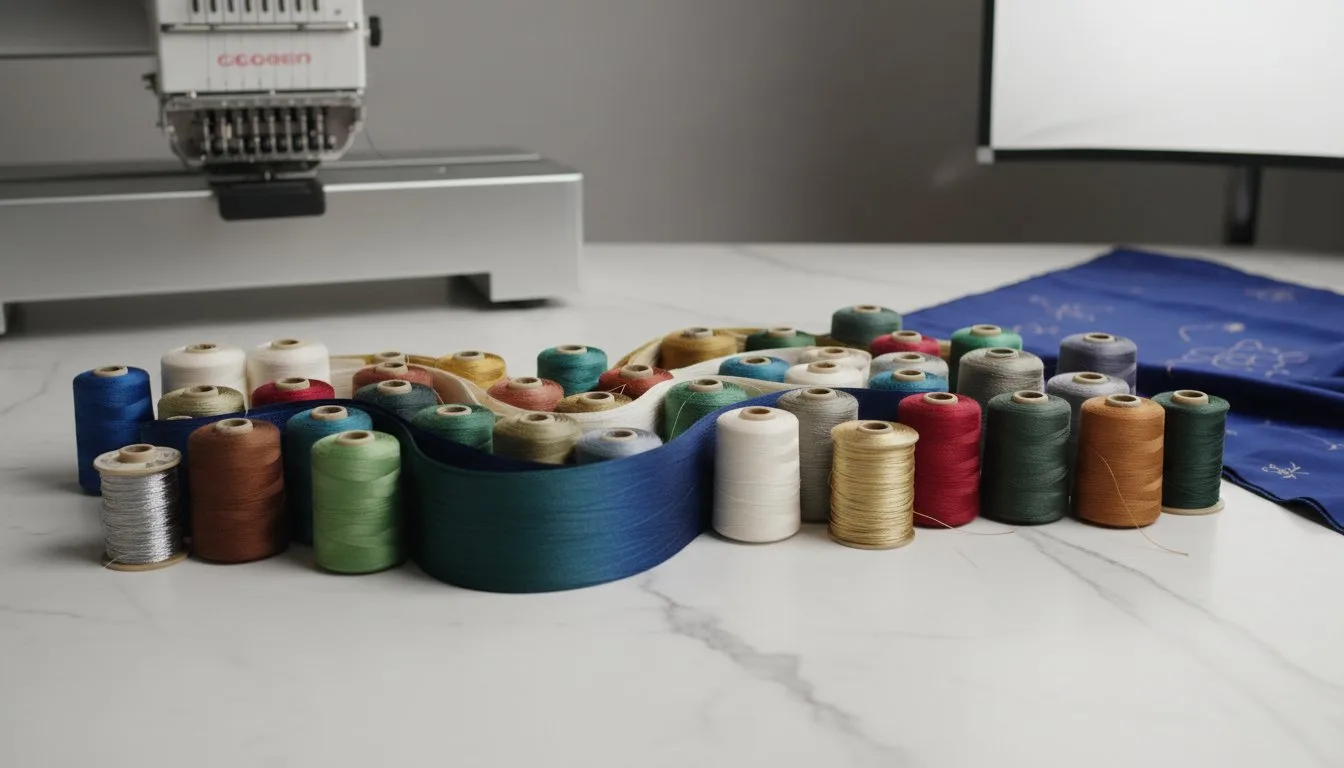
Picking the right thread for your project can feel overwhelming, but it's the secret to achieving beautiful, professional-looking results. The thread you choose directly impacts your design's final appearance, texture, and durability. Using the wrong type can lead to frustrating thread breaks, machine tangles, and a finished product that doesn't last. This guide will walk you through the main types of embroidery thread, helping you understand the differences so you can select the perfect one for every project.
Proper care extends beyond choosing the right thread. For items that are tough to wash at home, like embroidered caps or sneakers, professional services are often the best option. This is especially true for complex jobs like Shoe Cleaning, which can restore items without damaging delicate stitchwork.
## Why Your Thread Choice Matters for Machine Embroidery
The right thread is the key to a beautiful stitch-out. It works with your machine, needle, and fabric to create flawless designs. Using the wrong thread causes breaks, tangles, and frustration, while the correct one ensures your project has the look, feel, and durability you want. Let's explore the main types of thread used for machine embroidery to understand their unique strengths.
Rayon Embroidery Thread: The King of Sheen
Rayon thread is celebrated for its brilliant, high-sheen finish that gives embroidery a rich, silky luster. It is very soft and flexible, allowing it to drape beautifully on fabric, making it a popular choice for decorative items. Because it's a bit more delicate, rayon is best for projects that won't be washed frequently, such as wall hangings or decorative linens. While its color is vibrant, it can be less colorfast than its polyester counterpart when exposed to harsh detergents or bleach.
Polyester Embroidery Thread: The Durable Workhorse
When durability is your top priority, polyester thread is the answer. It is an extremely strong, resilient, and colorfast thread that can withstand bleach and frequent, high-heat washing without fading or breaking down. This makes it the best choice for items that will see a lot of wear and tear, such as kids' clothes, towels, workwear, and sportswear. While it has slightly less sheen than rayon, its versatility and toughness make it an essential part of any embroiderer's collection.
Cotton Embroidery Thread: For a Natural, Matte Look
If you're aiming for a more traditional or vintage aesthetic, cotton embroidery thread is an excellent choice. It provides a soft, low-sheen, matte finish that adds a natural, handmade feel to projects. It's often the preferred thread for quilting, cross-stitch designs, and projects on natural fabrics like cotton and linen. Keep in mind that cotton is not as strong as polyester, so it may be more prone to breaking in a high-speed machine if the tension isn't set correctly.
Specialty Threads: Metallic, Variegated, and More
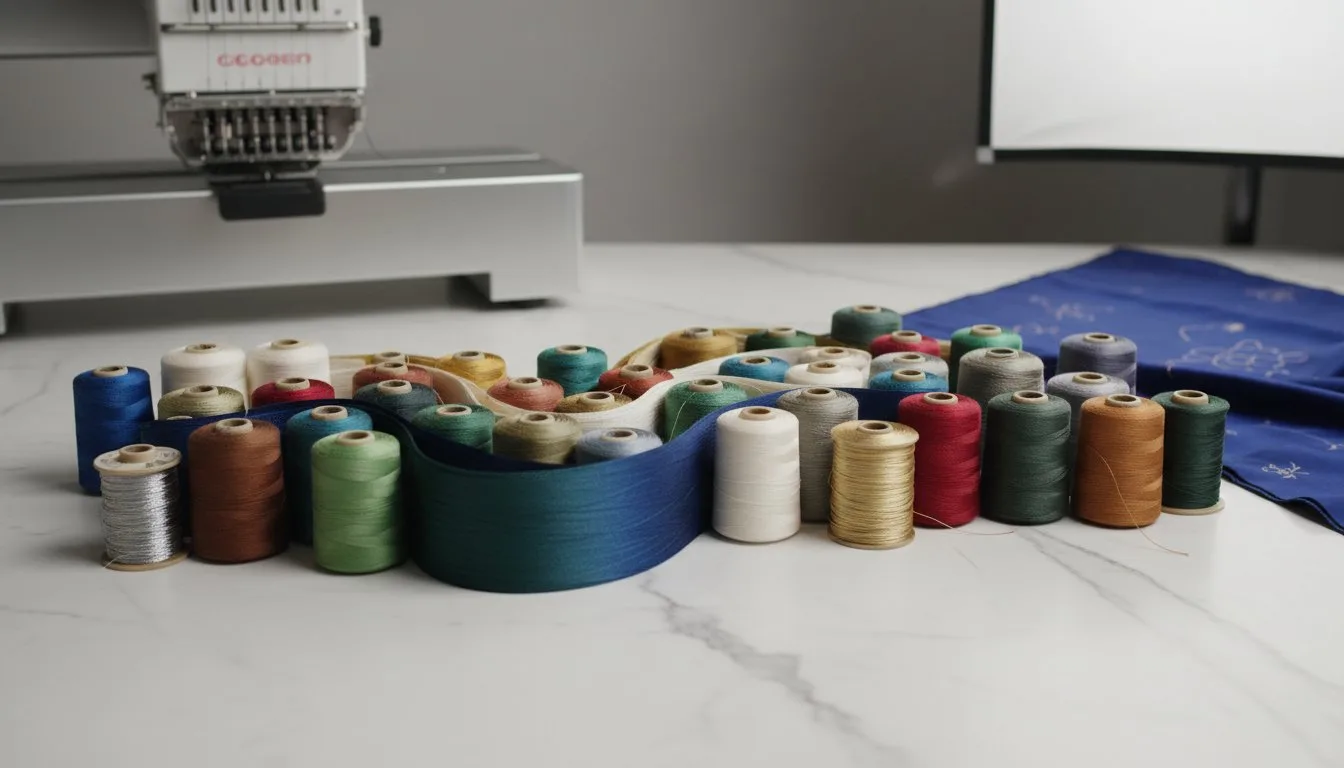
For projects that need extra flair, specialty threads are the way to go. Metallic threads contain a metal foil component that adds a brilliant, sparkling effect, perfect for holiday designs or adding highlights. Variegated threads are dyed with multiple colors that change as you stitch, creating a unique, gradient look automatically. You can even find fun options like glow-in-the-dark thread for kids' pajamas or Halloween projects. Note that these threads are often more delicate and may require a special metallic needle and a slower machine speed to prevent shredding.
How to Choose the Right Thread: A 4-Step Checklist
Choosing the right embroidery thread is easy when you know what to look for. By considering a few key factors about your project, you can narrow down the options and make the perfect choice every time. Follow these four steps to ensure success.
Step 1: Understand Thread Weight (e.g., 40 wt)
Thread weight refers to the thickness of the thread. In the world of embroidery, the system can seem counterintuitive: a lower number means a thicker thread, and a higher number means a thinner thread. For example, 30 wt thread is thicker than the standard 40 wt. The most common and versatile size is 40 wt, which is suitable for the vast majority of embroidery designs. For projects with very small lettering or delicate, fine details, a thinner 60 wt thread will produce crisper, more legible results.
Step 2: Match Your Thread to Your Fabric
The thread you choose should complement the fabric you're using. For stretchy fabrics like t-shirt knits or athletic wear, a strong and flexible polyester thread is the best choice to prevent stitches from popping. Rayon works beautifully on delicate fabrics like silk or satin, where its high sheen can truly stand out. For natural fabrics like cotton and linen, a cotton thread can create a cohesive, matte look. As a rule of thumb, for towels, children's clothing, and anything that will be washed often, always choose polyester for its durability.
Step 3: Consider Your Embroidery Design
The design itself can dictate the best thread to use. Designs that are dense with a high stitch count require a strong thread like polyester to withstand the friction and speed of the machine without breaking. On the other hand, designs featuring fine details or tiny text will look much cleaner when stitched with a thinner 60 wt thread. A great design deserves a quality thread to make it shine. Why not Find the perfect design to test your new threads on?
Step 4: Does Thread Brand and Quality Matter?
Absolutely! While it can be tempting to buy cheaper, unbranded thread, investing in high-quality thread from reputable brands will save you a lot of headaches. Cheaper threads are often weaker, have inconsistencies in thickness, and produce more lint, which can build up in your machine and cause wear or tension issues. High-quality thread runs smoothly, prevents common machine problems, and produces a superior result. Look for well-known brands like Madeira, Isacord, or Sulky to ensure you're getting a reliable product.
Frequently Asked Questions
Can I use sewing thread in my embroidery machine?
It is generally not recommended. Sewing thread is constructed differently and is much thicker and stronger than embroidery thread. Using it can damage your machine's tension discs and result in a clunky, unattractive stitch-out. Stick to threads specifically made for machine embroidery.
Why does my embroidery thread keep breaking?
Thread breakage can be caused by several factors. Common culprits include using a poor-quality thread, an old or incorrect needle size, incorrect machine tension, or running the machine too fast, especially with delicate specialty threads.
What is the best all-purpose embroidery thread for a beginner?
A 40 wt polyester thread is the best starting point for any beginner. It is strong, forgiving, widely available, and suitable for a huge range of fabrics and designs. It's the perfect workhorse thread to learn with.
How should I store my embroidery thread spools?
Store your thread away from direct sunlight and dust, as these can weaken and fade the fibers over time. A clear plastic container with individual spool pegs is an excellent way to keep them organized, clean, and ready to use.
What size needle should I use with 40 wt embroidery thread?
For standard 40 wt embroidery thread, a 75/11 embroidery needle is the most common and effective size. For thinner 60 wt thread, you may want to switch to a smaller 65/9 needle for the best results.
Now that you're equipped with the knowledge to choose the right thread, you can approach your projects with confidence. Selecting the perfect material, weight, and color will elevate your work and bring your creative visions to life with stunning clarity and durability. Explore thousands of digital designs to bring to life with the perfect thread!