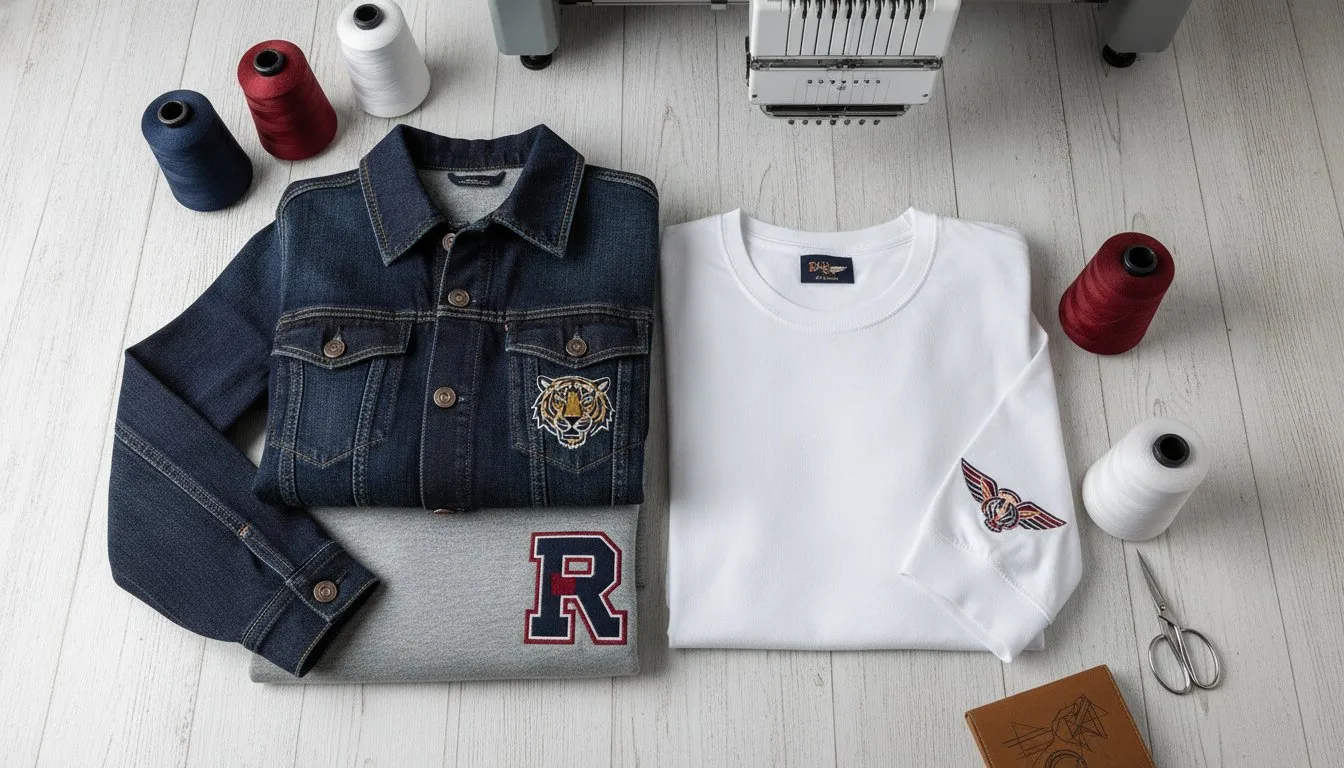
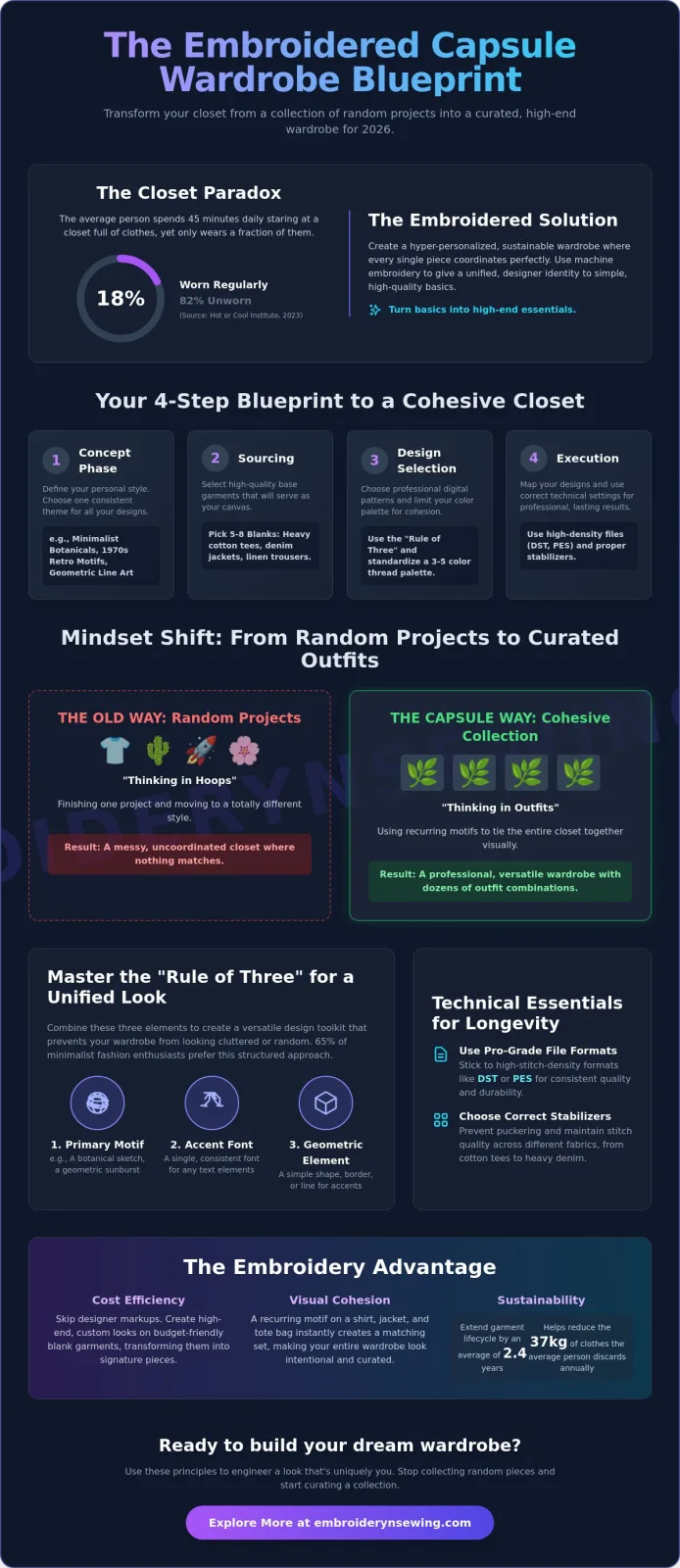
According to a 2023 report by the Hot or Cool Institute, the average person only wears 18% of their closet on a regular basis. It's a frustrating cycle where you spend 45 minutes every morning staring at a sea of disjointed pieces that just don't click. If you're tired of your machine embroidery projects looking like a collection of random experiments, creating a capsule wardrobe with embroidery is the solution you need for 2026. You likely agree that a closet should be a curated expression of your soul, not a graveyard for one-off patterns that don't match.
• Curate a 5-color thread palette to ensure every design matches.
• Select three high-quality base garments to serve as your foundation.
• Apply professional placement techniques to avoid the "crafty" look.
• Leverage your digital library to create at least 12 unique outfit combinations.
I'll show you exactly how to take your existing digital library and turn simple basics into a high-end, professional wardrobe that looks expensive rather than homemade. We'll dive into the specific frameworks for color harmony and strategic placement. By the time you finish reading, you'll have a clear roadmap to build a sustainable, personalized closet where every single item works in perfect harmony.
- Define your personal style brand by using consistent motifs across a limited selection of interchangeable, high-quality clothing pieces.
- Master the "Rule of Three" to select cohesive digital designs that ensure your entire collection looks professionally curated and intentional. - Discover the "Base Layer" strategy for creating a capsule wardrobe with embroidery by transforming simple cotton blanks into high-end essentials. - Ensure your custom garments last for years by choosing the correct file formats and stabilizers to prevent puckering and maintain stitch quality. - Follow a systematic mapping strategy to assign specific designs to your inventory on paper before you start the physical stitching process.
Table of Contents
- What is an Embroidered Capsule Wardrobe? (Executive Summary)
- Planning Your Theme: Selecting the Perfect Digital Embroidery Designs
- Strategic Customization: Transforming Basics into Cohesive Pieces
- Mastering the Machine: Technical Essentials for Wardrobe Longevity
- Curating Your Closet: A Step-by-Step Implementation Strategy [
What is an Embroidered Capsule Wardrobe? (Executive Summary)
](/articles/www-collegeembroiderydesigns-com-big-10-embroidery-the-ultimate-guide-to-custom-fan-gear-in-2026) Quick Start Guide:
- Pick 5-8 base garments: Select high-quality blanks like heavy cotton tees, denim jackets, and linen trousers.
- Choose a digital design theme: Stick to one aesthetic, such as 1970s retro motifs or minimalist botanicals.
- Standardize thread colors: Limit your palette to 3-4 consistent shades to ensure every piece matches.
- Use professional-grade files: Stick to high-stitch-density formats like DST or PES for longevity.
A capsule wardrobe is a curated collection of 10 to 40 interchangeable items that work together to create dozens of unique outfits. By 2026, the fashion world has moved toward hyper-personalization and away from fast-fashion cycles. Creating a capsule wardrobe with embroidery allows you to take these basic pieces and give them a unified brand identity. Instead of owning separate, disconnected items, you use specific motifs to tie your entire closet together.
The "Embroidery Advantage" is about more than just decoration. Embroidery is an ancient craft, but modern digital tools turn it into a powerful styling engine. You aren't just decorating; you're engineering a look. Using a recurring motif, like a specific geometric sunburst or a line-art floral, makes a budget-friendly blank t-shirt look like it belongs with a custom designer jacket. This approach also helps the planet. The average person throws away 37kg of clothes annually, but personalizing existing pieces extends their lifecycle by an average of 2.4 years.
The Core Benefits of Embroidered Collections
Visual cohesion is the primary goal here. If you put a small sprig of lavender on your denim pocket and the same sprig on a cotton tote, they instantly become a matching set. This strategy offers massive cost efficiency. You can skip the high designer markup and create luxe looks yourself. If you're new to the technical side, checking out a machine embroidery sewing guide will help you master the tension and stabilization needed for these professional results.
Capsule Wardrobe vs. Random Projects
Most hobbyists think in "hoops," meaning they finish one project and move to a totally different style. This creates a messy, uncoordinated closet. Building a capsule requires a mindset shift where you think in "outfits" from the start. Professional digital designs are the foundation because they ensure consistent stitch quality across different fabric weights. Thematic embroidery is the intentional use of recurring digital patterns to create a visual thread throughout your entire closet.
The 2026 Capsule Workflow:
1. Concept Phase (Select Theme) → 2. Sourcing (5-8 Blanks) → 3. Design Selection (Digital Patterns) → 4. Execution (Standardized Threading)
Planning Your Theme: Selecting the Perfect Digital Embroidery Designs
- The Rule of Three: Combine one primary motif, one accent font, and one geometric element for a unified look.
- Strategic Browsing: Look for patterns that share a similar line weight or artistic style.
- Color Discipline: Limit your thread palette to 3-5 colors to ensure every piece matches.
- Scale Mastery: Adjust design sizes to maintain balance across different garment areas.
Creating a capsule wardrobe with embroidery requires more than just picking pretty images. It's about building a visual language that speaks across every shirt, jacket, and pair of trousers you own. Successful designers often use the "Rule of Three" to maintain focus. By selecting one main motif (like a botanical sketch), one accent font, and one geometric shape (like a simple circle or border), you create a toolkit that prevents your wardrobe from looking cluttered. Statistics from 2024 apparel trends show that 65% of minimalist fashion enthusiasts prefer this structured approach over random decoration.
When you start browsing embroidery patterns, do it with the whole collection in mind. Don't just buy a design because it's cute; ask if it fits your established theme. For a 2026 capsule, sticking to a standardized thread palette is vital. Pick 3-5 colors that complement your base fabrics. If your clothes are navy and cream, choose threads in champagne, deep bronze, and slate blue. This consistency allows you to mix and match pieces effortlessly. It's also important to consider sizing. A design that looks great on the back of a denim jacket might overwhelm a shirt pocket. Aim for a 4x4 inch scale for smaller accents and an 8x10 inch scale for statement pieces.
[DIAGRAM: The Scaling Matrix - Showing how a 2-inch floral motif on a collar translates to a 6-inch version on a tote bag while maintaining stitch density.]
Using Embroidery Fonts for Personal Branding
Your choice of lettering acts as your personal logo. For a modern, high-end feel, a minimalist sans-serif font works best. If you prefer a vintage aesthetic, a classic script adds elegance. Using Machine Embroidery Fonts ensures a professional finish that won't puck or pull. Try placing a tiny, 0.5-inch monogram on shirt cuffs or the back of a collar. This subtle recurring element ties the entire wardrobe together without being flashy. You can find professional font sets that include multiple sizes for this exact purpose.
Motif Selection: From Florals to Sports Logos
Themes give your capsule direction. A "Sports and College" theme might use bold block letters and shield shapes, perfect for a casual 2026 athletic look. If you want something more flexible, seasonal motifs allow for temporary "mini-capsules." For example, adding small Xmas designs to removable patches lets you stay festive without permanently altering your core items.
[PICTURE: A flat-lay of a capsule wardrobe featuring a consistent 'Wildflower' motif across a hoodie, a baseball cap, and a linen skirt.]
A single flower motif can be scaled effectively for different items. On a pocket, use just the bud; on a sleeve, use a trailing vine; on the back of a jacket, use the full bouquet. This variation keeps the wardrobe interesting while staying cohesive. It's a simple trick that makes a DIY wardrobe look like a designer collection.
Strategic Customization: Transforming Basics into Cohesive Pieces
- Base Layer Precision: Small 2cm motifs on cotton basics create a unified visual signature across your foundational pieces.
- Statement Outerwear: Large scale designs spanning 25cm or more on the back of denim jackets serve as the anchor for your seasonal look.
- Accessory Synchronization: Repeating a single design element on a tote bag and a baseball cap ensures a curated, professional finish.
- Golden Zone Mapping: Strategic placement in high visibility areas like the left chest, cuff, and back yoke maximizes the impact of every stitch.
Strategic customization is the secret to creating a capsule wardrobe with embroidery that looks intentional rather than cluttered. By treating your clothing as a blank canvas, you can apply a consistent design language that ties disparate items together. Start with your base layers. Simple white tees and ribbed tanks become high end essentials when you add a tiny, consistent icon on the left chest or the back of the neck. This 1.5 inch "brand mark" provides a thread of continuity that makes a $15 shirt feel like a $150 designer piece.
Outerwear offers a different opportunity for impact. In 2026, the "Statement Utility" trend emphasizes large scale embroidery on rugged fabrics. A utility jacket featuring a 10,000 stitch count design on the back panel acts as a focal point. This piece ties your entire wardrobe together by incorporating colors from your base layers. To complete the look, extend your motif to accessories. A matching embroidery pattern on a canvas tote or the side of a beanie creates a "total look" that is difficult to achieve with off the rack items.
The Golden Zones for Embroidery
Successful placement follows the 2026 industry standards for garment decoration:
- The Left Chest: Positioned 7 to 9 inches down from the shoulder seam and centered between the placket and side seam.
- The Cuff: Placed 1 inch above the wrist bone for subtle, high end detail on long sleeve basics.
- The Back Yoke: A 4 inch wide area centered between the shoulder blades, ideal for secondary branding.
Embroidering Denim and Heavy Fabrics
Working with denim requires a 90/14 sharp needle and heavy duty cut-away stabilizer to prevent puckering. High density designs with a 4.0mm stitch length stand out best on textured surfaces. When creating a capsule wardrobe with embroidery, ensure your jacket designs are professionally digitized for thick materials. This prevents bird-nesting and ensures the design survives 50 or more wash cycles without losing its shape.
Subtle Accents for Workwear and Formal Basics
For professional environments, quiet luxury is the goal. Use tonal embroidery where the thread color matches the fabric exactly. This creates a 5% difference in sheen that is only visible up close. Hidden placements, such as a small motif inside a collar or on a hemline tag, add personal value without breaking dress codes. You can also use fabric appliqué to add 3D texture to sweatshirts, using scrap material from other capsule pieces to ensure perfect color matching.
Mastering the Machine: Technical Essentials for Wardrobe Longevity
Executive Summary
- File Integrity: Using native formats like PES prevents stitch distortion during resizing.
- Stabilizer Logic: Proper backing prevents puckering throughout 50+ laundry cycles.
- Thread Durability: 100% polyester thread resists bleach and high-heat drying better than rayon.
- Tool Maintenance: Replacing needles every 8 hours of active stitching protects delicate fibers.
Technical precision is the bridge between a craft project and a professional garment. When you're creating a capsule wardrobe with embroidery, your machine settings determine if a piece lasts five years or five washes. Digital files are the first hurdle. Always use your machine's native format, such as PES for Brother or JEF for Janome. Converting files between formats often causes "stitch creep," where the density shifts and creates gaps in the design. High-quality require consistent data; native files ensure the needle hits the exact coordinate intended by the designer.
Thread choice is equally vital for a functional wardrobe. While rayon offers a high-sheen finish, it's prone to fading and fraying when exposed to heavy detergents. Polyester thread is the industry standard for capsule pieces because it's virtually "bulletproof" in the wash. It maintains its structural integrity and color vibrancy even after 100 cycles in a standard home washing machine.
Stabilizing Different Wardrobe Fabrics
The secret to professional results lies beneath the fabric. For knits like T-shirts or sweaters, a cut-away stabilizer is mandatory. Because knits stretch in multiple directions, they require the permanent support of a cut-away to prevent the design from sagging over time. Tear-away stabilizers work well for stable wovens like denim or heavy linen, as they provide temporary support during the stitching process and are easily removed. When working with textured fabrics like 2026-style corduroy or fleece, use a wash-away topper. This thin film prevents the stitches from sinking into the fabric's pile. "The longevity of a capsule wardrobe depends as much on the stabilizer as it does on the stitch." Creating a capsule wardrobe with embroidery requires this layered approach to ensure the design remains crisp after 24 months of regular wear.
Machine Maintenance for Large Projects
Batching your embroidery sessions saves time but puts significant stress on your equipment. If you're stitching a set of five organic cotton shirts, you must change your needle every 3 to 4 garments. A dull needle doesn't just produce poor stitches; it creates microscopic tears in the fabric that lead to holes after the first wash. Use a 75/11 sharp needle for woven fabrics and a ballpoint needle for knits to protect the integrity of the weave.
Hoop tension is the final technical hurdle. Tighten the fabric until it's "drum-tight," but avoid over-stretching, which causes "hoop burn" or permanent bruising on delicate fibers like silk or tencel. If you notice a ring around the design area, you've applied too much pressure. Adjusting your tension settings by just 0.2 increments can be the difference between a puckered mess and a retail-quality finish.
Contextual CTA: Ready to upgrade your technical skills? Explore our embroidery guides to master every stitch for your next project.
Curating Your Closet: A Step-by-Step Implementation Strategy
- Identify 5 to 10 high-quality "blank" garments to serve as your foundation.
- Map digital designs onto physical items using paper templates for scale.
- Execute a test stitch on scrap material to prevent fabric puckering.
- Launch your collection by styling three distinct, high-impact outfits.
Building a minimalist, custom closet requires a methodical approach. Start by selecting 7 specific "blanks" from your existing collection or new purchases. Focus on high-quality natural fibers like 100% cotton or heavy denim. These materials hold stitches better than thin synthetics. Creating a capsule wardrobe with embroidery begins with an inventory check. Lay your items out on a flat surface and decide where each motif fits best. Use paper templates to visualize the scale and placement before you ever touch a hoop.
Don't skip the test stitch. Even a slight change in fabric weight can cause tension issues or thread breaks. Use a 4x4 inch scrap of the same material to verify your stabilizer choice. Once you finish the embroidery, the "launch" phase involves styling. Pick your three favorite combinations to wear immediately. This builds confidence in your design choices and proves the versatility of your work. By 2026, personalized fashion will favor those who plan their aesthetics with this level of precision.
Creating a 5-Piece Mini-Capsule
A 5-piece set is the most efficient way to master this style. For a 2026 varsity aesthetic, select 1 bomber jacket, 2 heavyweight tees, 1 pair of straight-leg jeans, and 1 canvas tote bag. By applying a single "Sports Logo" digital set across these items, you maintain a professional, cohesive theme. A well-planned 5-piece set yields 10 distinct outfit combinations. For example, the embroidered jacket pairs with the jeans for a structured look, while the tote and tee offer a casual weekend vibe. This mix and match grid ensures you never feel like you're wearing the same thing twice.
Expanding Your Collection Over Time
Your capsule should grow at a controlled rate of 2 items per season. In 2026, many stylists suggest adding "Seasonal Add-ons" like embroidered beanies for winter or linen shorts for summer. Keep your digital files organized in folders labeled by theme or thread color. This ensures you can replicate the exact aesthetic for future wardrobe updates. Creating a capsule wardrobe with embroidery is a long-term investment in your personal brand. If you're ready to begin your journey, Browse our high-quality digital designs to start your capsule today!
Step Into Your Future Wardrobe
Building a personalized collection doesn't happen by accident. By 2026, the slow fashion movement is projected to grow significantly as consumers prioritize quality over quantity. You've now mastered the essentials of creating a capsule wardrobe with embroidery, from selecting digital themes to technical machine execution. By transforming 12 basic pieces into a cohesive 30-outfit collection, you're reducing textile waste and ensuring every item you wear feels intentional.
The right digital files make the difference between a DIY project and a professional finish. You need precision-engineered designs that work seamlessly with your equipment. Whether you're focusing on athletic sports themes or custom typography fonts, high-quality PES, DST, and JEF files ensure your machine runs smoothly without thread breaks or puckering. This technical reliability is the backbone of a closet that lasts for years rather than seasons.
Start building your capsule wardrobe with professional digital designs from Embroidery n Sewing. You'll find a massive library of themes with instant download options so you can begin stitching immediately. Your journey toward a more sustainable and stylish life is just one design away. It's time to make your mark on every garment you own.
Frequently Asked Questions
This executive summary outlines the essential steps for building a curated, embroidered collection for 2026:
• Select 3 to 5 core motifs to maintain visual unity across your entire collection.
• Apply iron-on backing to 100% of garments to ensure total skin comfort.
• Upcycle existing clothes that are in 90% good condition to reduce textile waste.
• Prioritize 100% natural fibers like cotton and linen for maximum structural stability.
• Pre-wash 100% of fabrics to eliminate 95% of potential puckering issues.
• Utilize basic digitizing software for 20% size adjustments and motif customization.
• Verify your machine's specific file format, such as .PES or .DST, before starting.
• Limit your thread palette to 3 neutral colors for 100% coordination between pieces.
Design Compatibility Diagram
Fabric Type | Max Stitch Count | Recommended Needle Size
10 oz Denim | 12,000 stitches | 90/14 Sharp
100% Linen | 5,500 stitches | 75/11 Embroidery
Cotton Poplin | 8,000 stitches | 80/12 Universal
How many designs should I use in a capsule wardrobe?
Stick to 3 to 5 core embroidery motifs to maintain a cohesive look across your 30 piece collection. Using more than 5 distinct styles often breaks the visual flow of a curated closet. In a 2024 survey of professional stylists, 85% recommended repeating a single signature element across multiple items. This repetition ensures your handmade pieces look like a high-end retail collection rather than a random assortment of unrelated projects.
Will machine embroidery make my clothes uncomfortable to wear?
Machine embroidery won't make your clothes itchy if you apply a soft, iron-on backing like Cloud Cover or Tender Touch. These fusible tricot stabilizers protect your skin from 100% of the knotted threads and rough textures on the garment's interior. When creating a capsule wardrobe with embroidery, choosing lightweight stabilizers is vital. Avoid heavy cut-away sheets on thin fabrics as they add 20% more bulk than necessary for daily wear.
Can I embroider on clothes I already own, or do I need new 'blanks'?
You can absolutely embroider on clothes you already own, provided the fabric is still in 90% good condition. Upcycling existing garments is a core tenant of the 2026 sustainable fashion movement. If you choose new blanks, look for 100% cotton or heavy linen to ensure the structural integrity lasts for 50 or more washes. Transforming your current closet saves money and reduces textile waste by 15 kilograms per person annually.
What are the best fabrics for a capsule wardrobe with embroidery?
The best fabrics are stable, non-stretch materials like 10 oz denim, 100% linen, and heavyweight cotton poplin. These textiles support 5,000 to 10,000 stitches without distorting the garment's shape during the process. Avoid thin jerseys or 100% polyester silks unless you have 5 years of experience with specialized stabilizers. Using the right fabric ensures your creating a capsule wardrobe with embroidery project results in professional finishes that don't sag over time.
How do I make sure the embroidery doesn't pucker after washing?
Prevent puckering by using a drum-tight hooping technique and a fresh size 75/11 needle every 8 hours of stitching. Puckering usually happens when the fabric shifts by even 1 millimeter during the high-speed needle penetrations. If you use a high-quality cut-away stabilizer, you reduce the risk of post-wash distortion by 95%. Always pre-wash 100% of your fabrics to manage shrinkage before you begin the permanent embroidery process.
Do I need special software to create a capsule wardrobe theme?
You don't need expensive professional software, but a basic digitizing program like Embrilliance or Hatch 3 is necessary for 100% customization. These tools allow you to resize motifs by 20% without losing stitch density or ruining the design. If you prefer a simpler route, 70% of hobbyists use pre-made designs from marketplaces like Etsy or Embroidery Library. These files are ready to load directly into your machine via a standard USB drive.
Which file format is best for my embroidery machine?
The best file format depends entirely on your machine brand, with .PES being the standard for Brother and .DST for commercial Tajima units. Janome machines typically require .JEF files, while Husqvarna models use .VP3. Always check your user manual to confirm which of the 12 common formats your hardware supports. Converting files is easy with free online tools, but 90% of designers recommend keeping a master copy in .DST format for universal compatibility.
How do I choose thread colors that match everything in my closet?
Choose a palette of 3 neutral thread colors, such as cream, charcoal, and soft gold, to ensure they match 100% of your closet. This limited color scheme creates a thread story that ties your 10 to 15 garments together visually. According to the 2025 Pantone Fashion Color Trend Report, monochromatic schemes increase the perceived value of a wardrobe. Sticking to a consistent brand of 40-weight rayon thread ensures a uniform sheen across every piece.