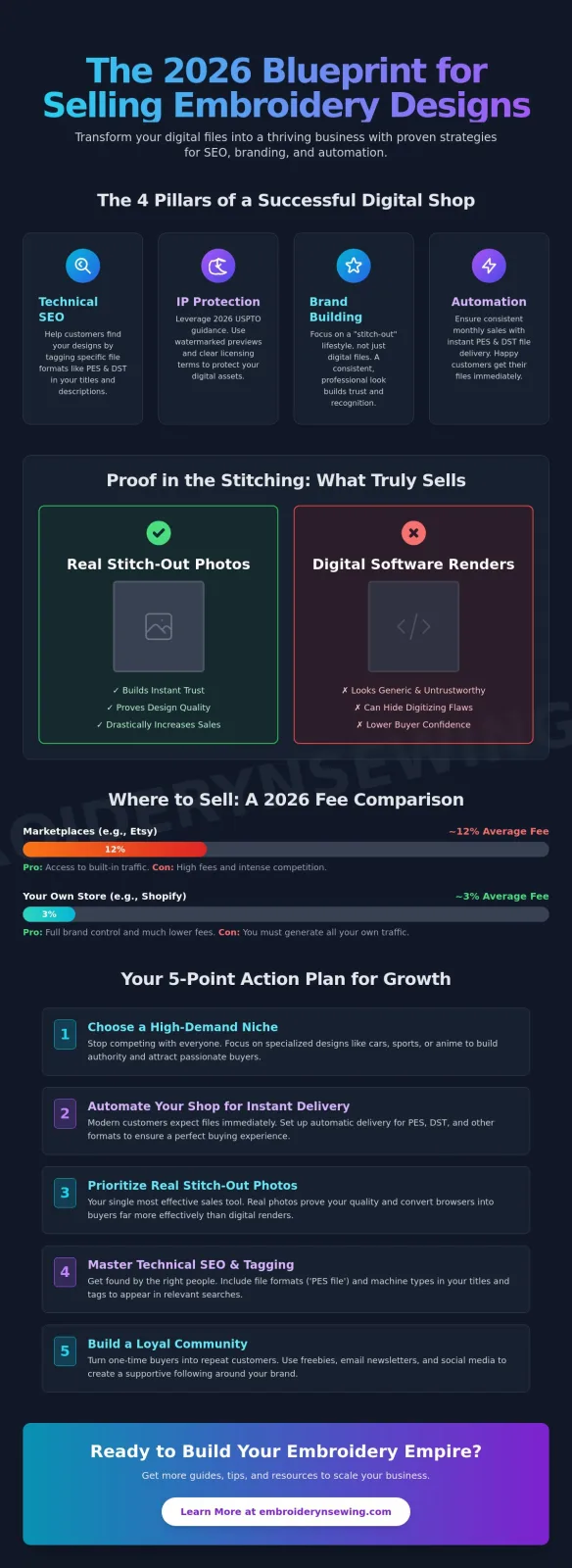
- Master technical SEO strategies to help customers find exactly where to buy embroidery designs online without scrolling through endless pages.
- Protect your intellectual property by leveraging the 2026 USPTO guidance and implementing robust digital asset protection.
- Build a recognizable brand by focusing on the "stitch-out" lifestyle rather than just selling a digital file.
- Automate your business workflow with instant PES and DST delivery to ensure consistent monthly sales.
What if the secret to selling more patterns isn't actually the design itself, but how you show it off in the real world? You've likely felt the frustration of uploading a beautiful anime or car design only to see it sit at the bottom of search results. It's tough when you're competing with thousands of other sellers on platforms where everyone wants to buy embroidery designs online but no one can find your specific shop. You're probably tired of the confusion surrounding licensing and worried about people stealing your hard work.
I'm going to show you how to turn those digital files into a thriving business with proven marketing strategies and technical SEO tips that actually work in 2026. You'll learn how to use the latest USPTO guidance for digital interfaces and Wilcom 2026 software to stay ahead of the curve. We're going to cover everything from setting up automated delivery for your PES and DST files to building a brand that the sewing community truly recognizes.
- Discover the best ways to automate your shop so customers can instantly buy embroidery designs online and receive their files without you lifting a finger.
- Find out why real photos of stitched-out projects are far more effective at making sales than digital software renders. - Master the technical SEO tricks, like tagging specific file formats such as PES and DST, to ensure your patterns appear in relevant search results. - Build a loyal following by using freebies and email newsletters to turn one-time buyers into a community that supports your brand long-term.
Table of Contents
- Building Your Digital Embroidery Brand Identity
- Choosing the Best Platforms for Digital Sales
- Visual Marketing: Proving Design Quality with Stitch-Outs
- SEO Strategies for Digital Embroidery Files
- Scaling Your Sales with Community and Ads
## Building Your Digital Embroidery Brand Identity
- Niche selection: Focus on high-demand categories like anime or sports to cut through the noise.
- Platform strategy: Match your storefront to your audience’s habits for better conversion.
- Visual proof: Prioritize real-world stitch-outs over digital renders to build instant trust.
- Technical SEO: Use specific file formats in your titles so buyers find exactly what they need.
- Community growth: Build a brand that talks with crafters, not at them.
Digital embroidery marketing is about more than just posting a file and hoping for the best. It’s the art of promoting downloadable patterns like PES, DST, and JEF files to people who use computer-controlled embroidery machines. In the 2026 marketplace, standing out requires a brand that feels human. When hobbyists look to buy embroidery designs online, they’re searching for a creator they can trust to deliver a design that won’t birdnest their machine. Your brand identity is that promise of quality.
Finding Your Profitable Embroidery Niche
You can’t be everything to everyone. If you try to sell every type of pattern, you’ll likely end up buried in search results. Instead, look at the high-demand gaps. There’s a massive appetite for specialized embroidery designs in niches like car enthusiasts, anime fans, or college sports. By focusing on a specific theme, like NFL-inspired gear or custom fonts, you build authority much faster. Use Pinterest and Instagram to see what people are actually stitching in 2026. If you see a surge in vintage-style car embroidery, that’s your cue to start digitizing.
Creating a Consistent Visual Aesthetic
Your shop’s look should be as clean as your satin stitches. A consistent color palette and a recognizable logo help customers remember you. It’s also vital to keep your thumbnail styles uniform across your shop. If one design has a white background and the next is on a dark fabric, it looks messy. You want your storefront to look like a curated collection. Think of your branding as a system where your social media posts, email headers, and shop banners all share the same DNA. This visual consistency tells buyers you’re a professional who takes their craft seriously. It makes the decision to buy embroidery designs online from your shop much easier because you look established and reliable.
Choosing the Best Platforms for Digital Sales
Deciding where to set up your shop is the next big hurdle after you've picked your niche. Most beginners naturally flock to marketplaces because that's where most hobbyists go when they want to buy embroidery designs online. However, you need to weigh the convenience of built-in traffic against the cost of doing business. As of early 2026, typical marketplace fees sit around 12%, while a personal Shopify store keeps costs lower at 3% plus payment processing. You're essentially paying for the audience. Whichever path you choose, setting up automatic delivery is non-negotiable. Modern buyers expect their PES or DST files the second their payment clears. If they have to wait for an email, they'll find another seller.
Protecting your hard work is just as important as selling it. With the 2026 USPTO guidance modernizing protection for digital interfaces, you have more legal backing than ever, but you still need to be proactive. Always use watermarked previews on your listings to prevent "screen-trace" theft. Clear licensing terms are also vital. You should explicitly state whether your files are for personal use or if they include a limited commercial license for small businesses. When you combine these protections with transparent customer reviews, you build a foundation of trust. Seeing photos of successful projects from other buyers proves your machine embroidery sewing expertise is the real deal.
Leading Digital Marketplaces
Leading digital marketplaces remain powerhouses for getting your first few sales without spending a dime on ads. Their search algorithms in 2026 heavily favor shops that show real-world results and maintain high engagement. The downside is the intense competition. You aren't just competing with other designers; you're competing with low-cost "design farms." To win here, you have to optimize your listings with hyper-specific tags. Don't just list "car design." List "vintage 90s Japanese tuner PES file" to catch the right eyes. It's a great place to start, but the high fees can eat into your margins as you scale.
Owning Your Traffic: Shopify and WooCommerce
If you want to build a long-term brand, owning your storefront is the way to go. Platforms like Shopify, which currently costs about $29 per month for a basic plan, allow you to collect email addresses and build a loyal community. You can look at the clean layout of Embroidery n Sewing for inspiration on how to organize your collections. To make an independent site work, you'll need to implement a robust SEO program for your website to ensure you aren't invisible to Google. This allows you to bypass marketplace fees and speak directly to your fans through newsletters and exclusive drops.

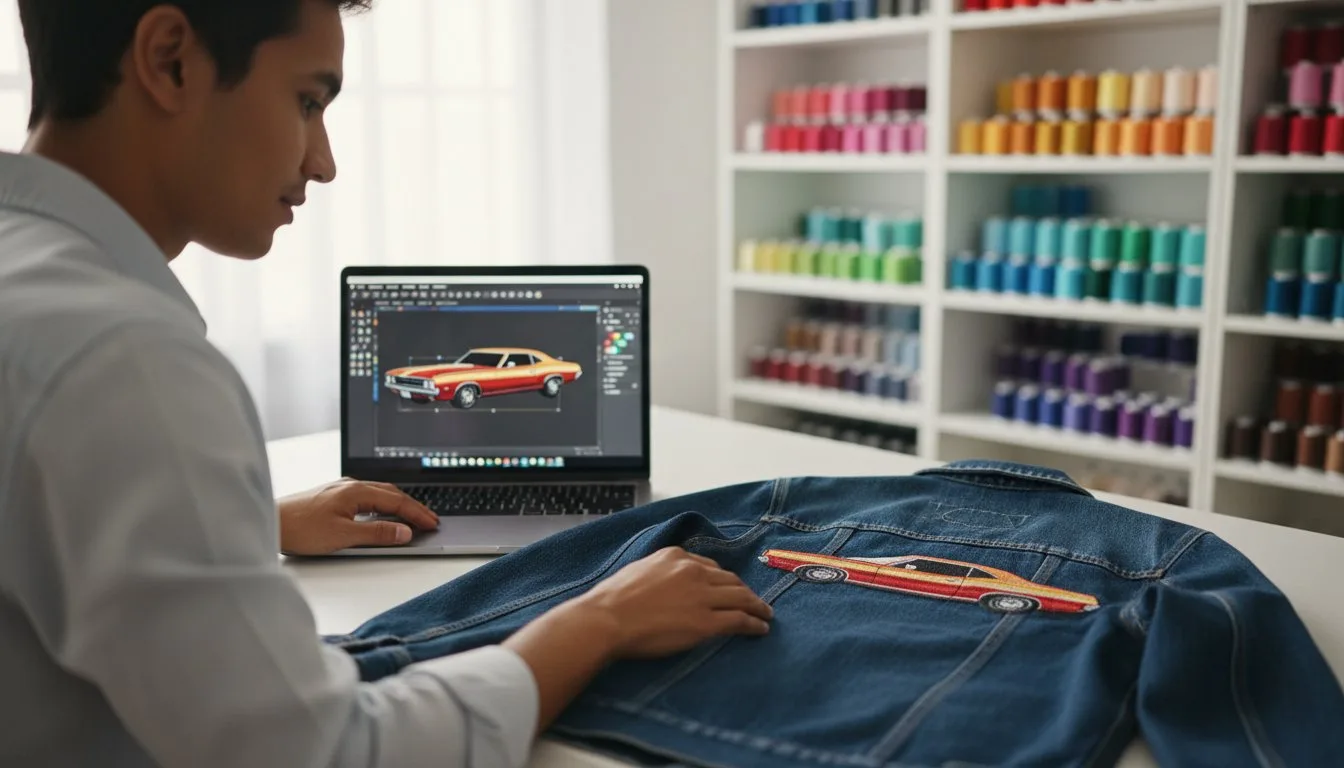
- Physical Proof: Ditch the digital renders and show a real stitch-out to build immediate buyer trust.
- Fabric Versatility: Demonstrate how your design looks on different textures like denim, cotton, and canvas.
- Technical Transparency: Provide clear diagrams of thread color charts and stitch counts for every listing.
- Video Engagement: Use time-lapse videos to show the digitizing and stitching process in action.
Let's be honest about something. A digital render from your embroidery software looks perfect because it isn't real. It doesn't show how the thread pulls on the fabric or how the sheen catches the light. When customers look to buy embroidery designs online, they're often scrolling through a sea of identical looking computer-generated images. If you want to stand out, you have to follow the "Proof of Quality" rule. This means every single design you sell must be accompanied by a high-quality photo of a physical stitch-out. It’s the fastest way to prove that your file won't birdnest their machine or ruin a garment.
If you're looking at the SBA's guide to starting a craft business, you'll see that market research and quality control are pillars of success. In the digital world, your photography is your quality control. Showing the design on multiple fabrics, like a rugged denim jacket or a soft cotton tote, helps the buyer visualize the end result. You should also include a technical diagram in your image gallery. A simple chart showing the thread color sequence and total stitch count gives the buyer the confidence they need to hit the checkout button. It tells them you're a professional who understands the mechanics of the craft.
The Power of the Physical Stitch-Out
Photography for embroidery is a specific skill. You don't need a fancy camera, but you do need good lighting to highlight the texture of your embroidery stitches. Use a macro lens or the portrait mode on your phone to get close-up shots of the satin columns and fill patterns. These close-ups show off your precision. Lifestyle shots also outperform flat lays every time. A photo of a person actually wearing a hat with your design on it is much more persuasive than the hat just sitting on a table. It creates an emotional connection and proves the design is wearable and practical.
Using Video Content on Social Media
Video is your best friend for building authority in 2026. People love seeing the "how it's made" aspect of digital art. Create short time-lapse videos of your machine working through a complex design for TikTok or Instagram Reels. You can also film "behind the scenes" clips of your digitizing process in software like Wilcom or Hatch. This doesn't just show off your skill; it educates your customers. When you show how you solve common machine issues through video tutorials, you aren't just a seller anymore. You're a mentor. That's how you turn a one-time buyer who wanted to buy embroidery designs online into a loyal member of your community.
SEO Strategies for Digital Embroidery Files
Most SEO advice you'll find online is geared toward selling physical t-shirts or hats. But selling digital files requires a completely different approach. When people want to buy embroidery designs online, they aren't just looking for a "pretty picture." They're looking for a specific file format that their machine can read. This is where technical SEO becomes your best friend. You need to include terms like PES, DST, and JEF right in your titles. If a customer has a Brother machine and they're searching for "anime PES files," you don't want to show up with a generic title that just says "cartoon design."
High-intent terms are the goldmine of this industry. Think about "machine embroidery fonts." Someone searching for that is ready to purchase because they have a specific project in mind. Your product descriptions should act as a bridge between what Google wants to see and what the buyer needs to know. Don't just write a block of text. Instead, focus on how your embroidery patterns are digitized to minimize thread breaks and jump stitches. If you want to see how these strategies look in practice, check out the latest collections at Embroidery n Sewing.
Keyword Research for Embroidery Creators
Finding the right keywords isn't about guessing. It's about data. Use tools to see if "college embroidery designs" or "NFL logos" are trending. Long-tail keywords are your secret weapon here. A term like "vintage car embroidery design PES" has much lower competition than just "car embroidery." You also need to map keywords to user intent. Someone searching for "free designs" might not be your ideal customer if you're selling premium patterns. Focus on the buyers who are looking for quality and reliability, not just a freebie.
Optimizing Product Listings for Conversion
Once you've got the traffic, you need to close the deal. Start your description with a single, punchy sentence that tells the buyer exactly what they're getting. "This instant download includes 5 sizes of our vintage truck design in PES, DST, and JEF formats." Then, use bullet points to break down the technical stuff so it's easy to scan:
- Stitch count: 12,400 (based on 4x4 size)
- Dimensions: Fits 4x4 and 5x7 hoops
- Color changes: 6 thread colors
- File formats: PES, DST, JEF, HUS, EXP
Don't forget to use internal links. If you're selling a car design, link to your automotive font set. It keeps people on your site longer and increases your average order value without feeling like a pushy sales pitch. It's all about making the shopping experience as smooth as the final stitch-out.
Scaling Your Sales with Community and Ads
Scaling your business is where the fun really starts. You've already done the hard work of picking a niche and getting your SEO in order. Now, it's time to build a system that brings people back to your shop again and again. Most people who look to buy embroidery designs online aren't just doing a single project; they're hobbyists with a long list of ideas. If you can become their go-to source for specific themes like anime or sports designs, you'll see your monthly sales stabilize. The goal is to stop chasing every single click and start building a community that waits for your next drop.
One of the most effective ways to grow is by using a lead magnet. This is usually a free, high-quality design you give away in exchange for an email address. It’s a low-pressure way for a new customer to test your file quality before they decide to buy embroidery designs online from you. Once they see that your PES or DST files stitch out perfectly without any issues, they'll be much more likely to purchase your premium bundles. You can also boost your reach by running targeted Pinterest Ads. Since Pinterest is a visual search engine where people look for project inspiration, a beautiful photo of a finished car or college design can drive highly relevant traffic directly to your storefront.
Email Marketing for Repeat Customers
Think of your email list as your business’s insurance policy. Unlike social media algorithms, you own this list. You should set up an automated welcome sequence that greets every new subscriber with a small discount or a helpful tip. I recommend sending out weekly alerts whenever you release new designs. It keeps your brand fresh in their minds and drives immediate traffic. You can also offer exclusive "insider" discounts to your most loyal customers. This doesn't just boost retention; it makes your buyers feel like they're part of an exclusive club.
Leveraging Social Media Communities
Social media is about being social, not just being a salesperson. Facebook groups for machine embroidery are goldmines for feedback, but you have to participate without being spammy. Answer questions about stabilizers or thread choices first. When you've built up some trust, people will naturally want to see what you're creating. Instagram Stories are another fantastic tool for this. Use the poll feature to ask your audience what they want to see next. Should your next release be car-themed or more sports-focused? When you involve your followers in the design process, you're building a brand that feels like a relatable dialogue with fellow machinists rather than a faceless corporation.
Ready to Launch Your Embroidery Empire?
It's time to stop treating your patterns like a side hobby and start building a real digital brand. You've seen how picking a specific niche and proving your quality with real stitch-outs can completely change your shop's reputation. By focusing on technical SEO and getting your file formats in front of the right people, you're setting yourself up for a business that runs smoothly. People who want to buy embroidery designs online aren't just looking for art; they're looking for the confidence that their machine will perform perfectly.
If you're ready to see these strategies in the real world, take a look at how we do it. From sports and car themes to custom fonts, every design is digitized for smooth performance and ready for instant download. Check out our collections to see what professional quality looks like in the 2026 market.
Browse our high-quality digital embroidery designs to see marketing in action!
You've got the skills and the tools to make this your most successful year yet. Keep stitching, keep sharing, and watch your community grow!
Common Questions About Selling Embroidery Designs
What is the best platform to sell digital embroidery designs in 2026?
Shopify is the top choice for building a standalone brand, while Etsy remains the leader for immediate traffic. Shopify’s basic plan costs $29 per month and offers lower transaction fees of about 3% compared to Etsy’s 12% total fees. If you want customers to buy embroidery designs online from you directly, owning your site allows you to build a valuable email list for long term growth.
Do I need to own an embroidery machine to sell designs online?
You definitely need access to a machine to test your files before they go live. While you can digitize using software alone, you can't guarantee that a design won't cause thread breaks or puckering without a physical stitch-out. Successful sellers always prove their designs work on real fabric. It's the only way to build genuine trust with a community that is wary of poorly digitized files.
How do I protect my digital embroidery files from being shared for free?
You can protect your work by using watermarked preview images and clearly stating your licensing terms in every listing. The U.S. Copyright Act of 1976 protects your original designs for your lifetime plus 70 years. While you can't stop every instance of unauthorized sharing, using secure digital delivery platforms and tracking download links helps minimize theft and keeps your business secure.
What file formats should I include in my digital download packs?
Your download packs should include at least PES, DST, JEF, and EXP formats to cover the most popular machine brands. PES is essential for Brother users, while DST is the industry standard for commercial equipment. Including a wide variety of formats ensures that anyone who wants to buy embroidery designs online can use your files regardless of the specific machine they own.
How much should I charge for a single embroidery design vs. a design pack?
Single designs typically sell for $3 to $8, while design packs often range from $15 to $50 depending on the complexity and number of files. Pricing usually depends on the stitch count and the specific niche. For example, a highly detailed anime design takes much longer to digitize than a simple monogram. Offering bundles is a smart way to increase your average order value.
Can I sell embroidery designs that look like famous logos or characters?
You cannot legally sell designs that feature trademarked logos or copyrighted characters without explicit permission from the owner. This includes famous sports teams, movie characters, or corporate branding. The penalties for copyright infringement are severe and can lead to heavy fines or the permanent closure of your shop. It is always safer to create original artwork and unique themes.
How do I get my designs to show up on the first page of Etsy?
Getting to the first page requires a mix of specific long-tail keywords and high conversion rates. Use titles that describe exactly what the file is, like "Vintage Truck PES Design for 4x4 Hoop," instead of generic terms. Etsy’s 2026 algorithm also prioritizes listings with multiple photos of physical stitch-outs. The more people click and buy your patterns, the higher your shop will climb.
Is it better to sell individual designs or a monthly subscription?
Selling individual designs is better for beginners, but a subscription model is fantastic for scaling your income. Subscriptions provide predictable monthly revenue and help you build a dedicated fan base. However, they require you to produce a high volume of new work every single month. Most creators start with a traditional shop and transition to a membership once they have a large library.