
Black embroidery: ideas, tips & how-to
Black embroidery is not one single style. Buyers usually mean one of three things: traditional blackwork, white or bright stitching on black fabric, or black-on-black embroidery where the design is intentionally subtle. If you sew machine designs as well as hand projects, it helps to treat these as different techniques, because the thread, stabiliser and transfer method change the result.
The biggest mistake with black embroidery is treating every dark project the same. The best finish comes from matching your fabric, thread contrast and stabiliser to the exact look you want.
Why is it called blackwork embroidery?
Blackwork is a historic counted-thread style worked mainly in black silk on white or pale linen. You will also see references to Spanish blackwork history because patterned dark embroidery became fashionable in Tudor England after earlier influences from Spain and elsewhere in Europe. Today, the term is often used more loosely for geometric line-based embroidery even when the thread colour is not black.
For modern buyers, that matters because many "blackwork machine embroidery designs" are really geometric running-stitch motifs inspired by blackwork rather than true counted blackwork.
What is the difference between cross-stitch and blackwork?
The two are easy to confuse if you are new to counted embroidery.
| Technique | Built from | Usual look | Best for |
|---|---|---|---|
| Cross-stitch | X-shaped stitches on a grid | Filled blocks of colour, pictorial designs | Motifs, lettering, character pieces |
| Blackwork | Running, back and related line stitches | Repeating geometric patterns, outlines, lacy fillings | Borders, monochrome detail, elegant texture |
Traditional blackwork relies heavily on line. Cross-stitch builds area through repeated crosses. In practice, if you want a clean graphic motif on dark cloth, machine embroidery can mimic blackwork texture with light runs or bean stitches, while satin-heavy files create a bolder decorative finish.
What is the Holbein stitch in blackwork?
The Holbein stitch is another name for double running stitch. You stitch a line in one direction, then return through the gaps so the line looks neat on both front and back. In hand blackwork, it is valued for reversible outlines and crisp geometric paths. In machine embroidery, you cannot reproduce hand Holbein exactly, but a carefully digitised running stitch can create a similar fine-lined effect.
If you shop for blackwork embroidery stitches or digitised blackwork-style files, look for designs that use light running structure rather than dense satin fill if you want that airy historical feel.
Choosing the right look: high contrast or black on black
White embroidery on black fabric
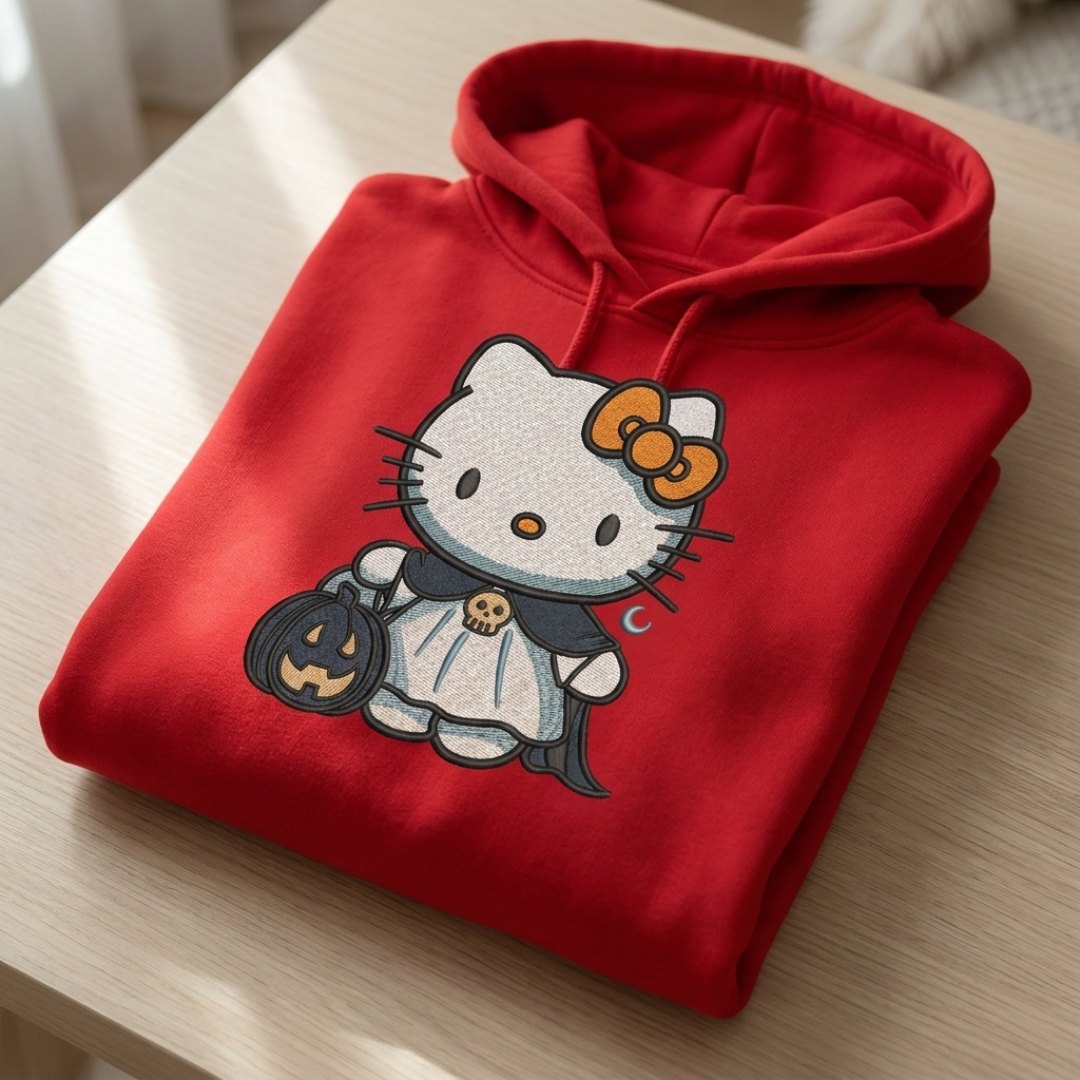
This is the highest-contrast option and one of the easiest ways to make detail visible. It suits gothic florals, Halloween motifs, text and linework. A design like Hello Kitty Witch With Black Pumpkin works well on black garments because the lighter details separate cleanly from the ground.
For crisp white stitching:
- Choose quality polyester or rayon thread with good coverage.
- Slow the machine slightly on dense areas to reduce fraying.
- Avoid underlay showing beyond the design edge.
- Test on a scrap first; black fabric reveals every wobble.
Black on black embroidery
This is subtle and luxurious when done well, but muddy when done badly. The trick is to create contrast without changing colour much:
- Mix stitch types: satin next to tatami, or raised fills next to lighter running details.
- Use sheen deliberately: rayon on matte cotton reads differently from matte thread on satin cloth.
- Let the design breathe. Fine detail disappears if the file is too dense.
- Increase scale. Tiny elements vanish on black fabric.
A tonal floral such as Black Rose is a good example of a motif that can work in black-on-black if the stitch angles and densities are clear.
For black-on-black embroidery, texture does the job that colour contrast normally does.
How do you transfer embroidery designs onto black or dark fabric?
This is one of the biggest frustrations for hand embroiderers, and it matters for placement in machine embroidery too.
Best methods for dark fabric
-
Chalk pencils or dressmaker's chalk
Good for bold placement lines and simple motifs. Not ideal for fine detail. -
White or silver transfer pencils/pens made for fabric
Often the best pens for marking black fabric, but always test removal first. Some air-erase and heat-erase pens can leave marks. -
Water-soluble stabiliser on top
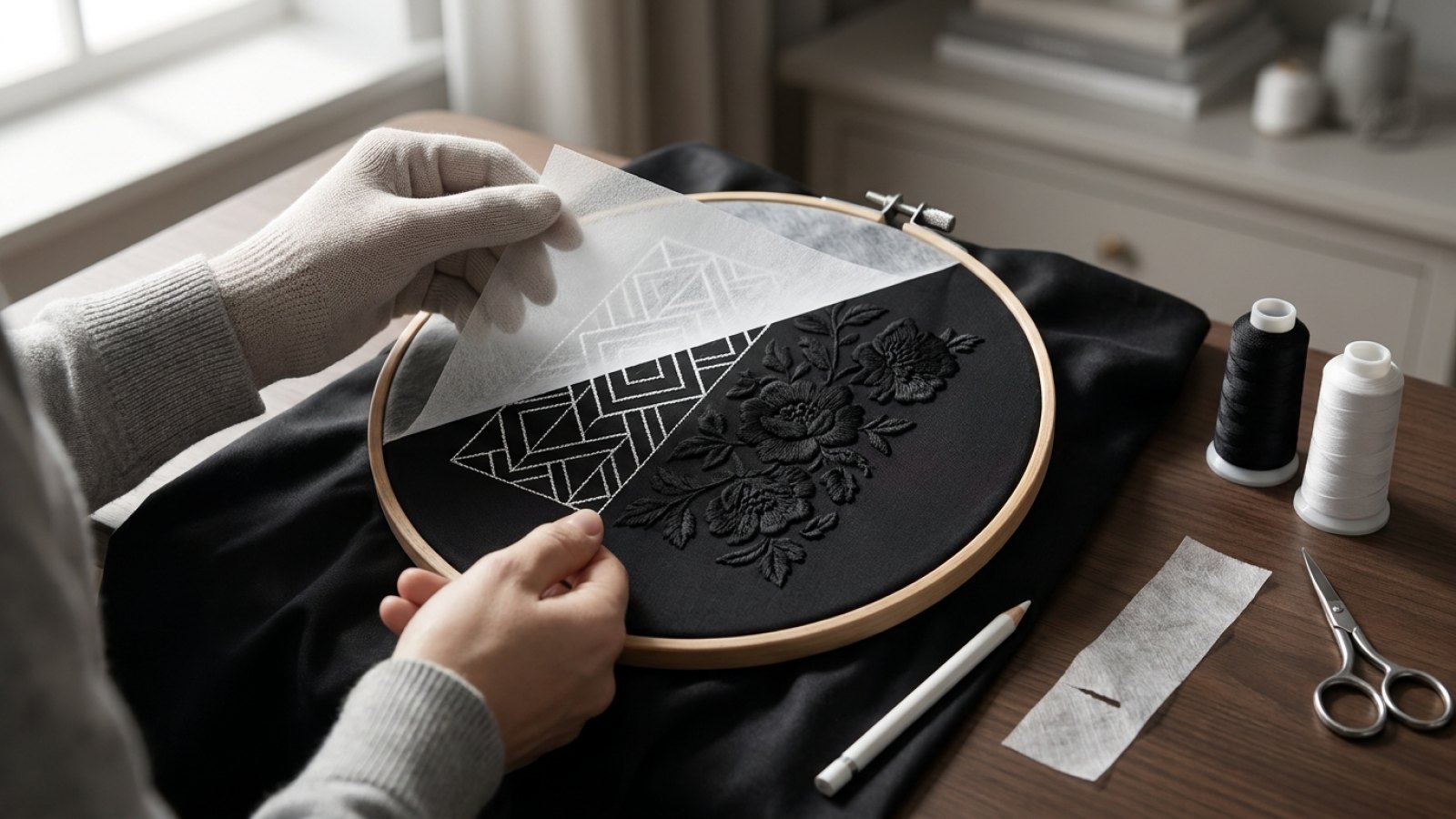
If you are searching for how to trace embroidery on black fabric, this is usually the most reliable method. Draw or print the design onto a sheet of water soluble stabilizer for dark fabric, place it on top, stitch through it, then rinse or tear away as appropriate. -
Light box plus window tracing
Usually ineffective on heavy black fabric, but sometimes works on finer cotton lawn or linen.
For machine embroidery placement, I strongly recommend marking centre lines only and relying on proper hooping rather than sketching the full design directly onto black cloth.
What stabiliser should you use when embroidering on black fabric?
The right stabiliser depends more on the fabric than the colour, but dark projects do raise visibility issues.
- Cut-away stabiliser: best for knits, sweatshirts, T-shirts and anything that stretches.
- Tear-away stabiliser: suitable for stable woven fabrics where you want easy removal.
- Wash-away topping: useful on textured dark fabrics like towels, fleece or pique so stitches do not sink.
- Water-soluble stabiliser for dark fabric: excellent as a transfer aid for hand embroidery and also helpful as a machine topping when surface texture needs controlling.
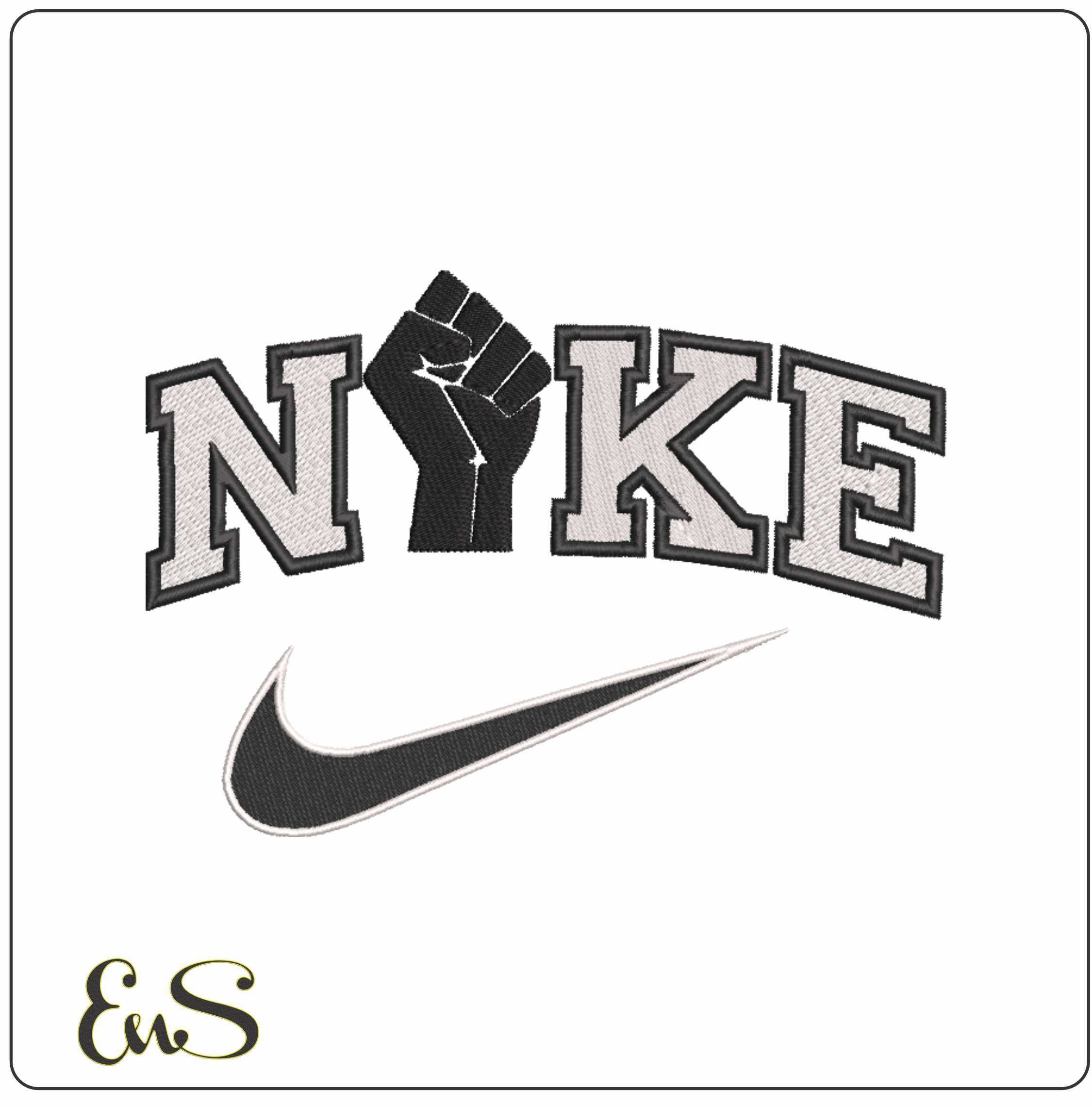
If you are stitching a logo-style design such as Nike Black Lives Matter or the text-forward Black Lives Matter on a black tee or hoodie, a cut-away backing is usually the safer starting point because garments flex in wear and washing.
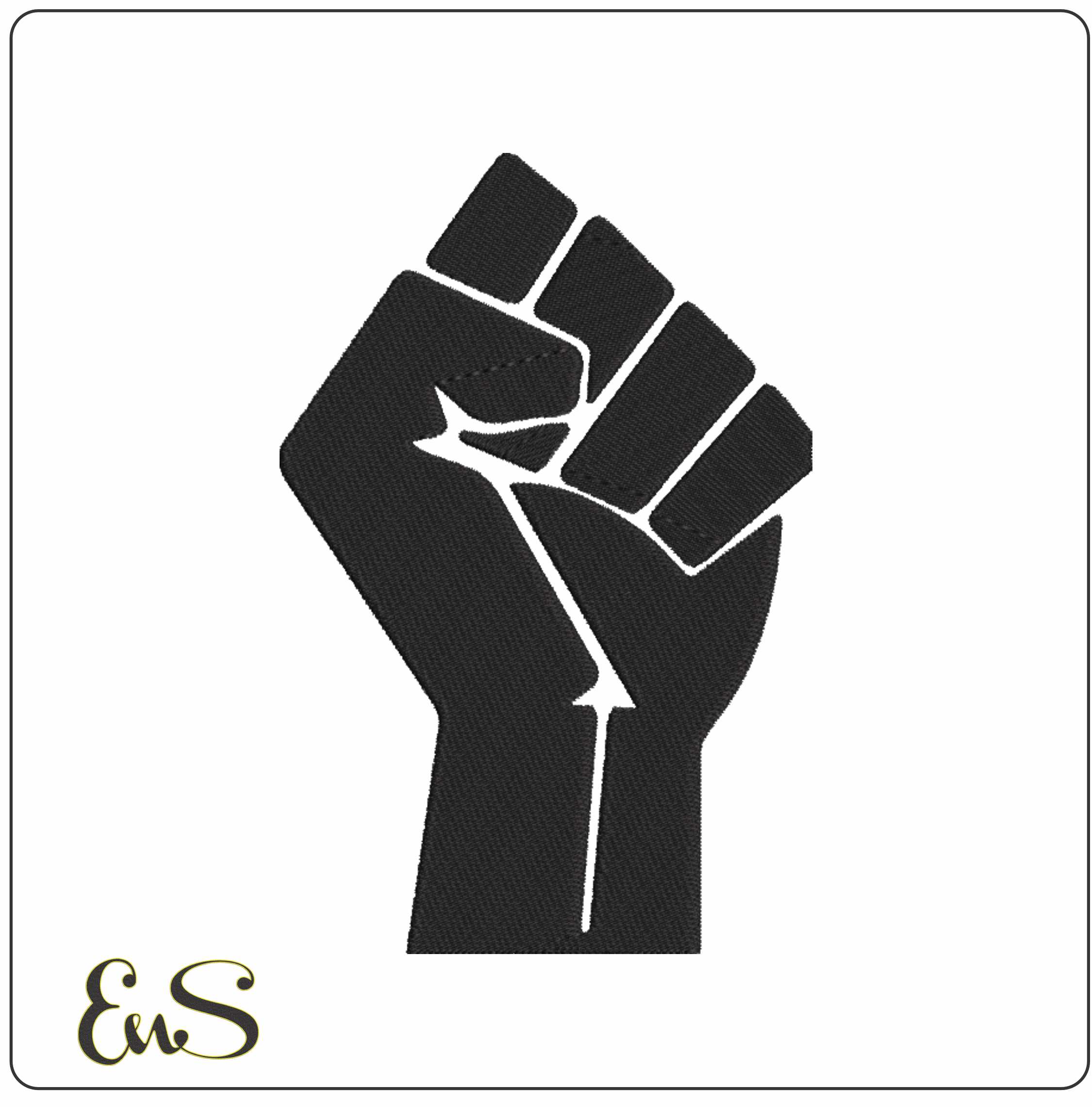 Embroidery designBlack Lives MatterView this design →
How do you keep white embroidery stitches clean and bright on black fabric?
White thread shows lint, oil and handling marks very quickly. To keep it bright:
- Wash and dry the black fabric first if it is likely to shed dye or fluff.
- Clean your machine bed, bobbin area and hands before stitching.
- Cover hooped work when not sewing to keep dust off.
- Use a fresh needle; burrs and residue can dirty pale thread.
- Trim jump stitches carefully so dark fuzz does not cling to the design.
- Rinse out transfer products fully if you used wash-away film.
This matters especially for high-contrast character pieces like 101 Dalmatians Embroidery Designs, where any greyed or fuzzy white stitching is obvious against a dark background.
Can you do blackwork embroidery on a sewing or embroidery machine?
Yes, with limits. A home embroidery machine can stitch blackwork-inspired designs very well, especially borders, repeating geometrics and line art. What it does not do is replicate the exact counted, reversible structure of hand-worked Holbein stitch.
When choosing blackwork-style machine files, look for:
- clean travel paths with minimal unnecessary jump stitches
- lighter stitch counts for delicate patterning
- enough spacing that dark base fabric can show through
- sensible scaling guidance from the seller
That same line-based look can also suit graphic motifs such as Blackout or creature silhouettes like Lizard Black where the drama comes from shape and negative space.
Practical design ideas from a black embroidery catalogue
If you are building a themed collection or planning gifts, black embroidery works especially well in these directions:
- Monochrome florals: Black Rose for elegant jackets, pouches and book covers.
- Statement messages: Black Lives Matter for apparel and tote bags.
- Seasonal dark themes: Hello Kitty Witch With Black Pumpkin for Halloween pyjamas, treat bags or children’s sweatshirts.
- Bold silhouettes: Lizard Black on caps, cuffs or shirt pockets.
- Unexpected humour on dark aprons or kitchen linens: Blackolives.
- Sports contrast on dark fanwear: Alabama Crimson Tide Embroidery Designs can pop on black caps or jackets if the file includes strong light elements.
- Nature motifs with dark framing: Kiwi Embroidery can look striking when the bird is surrounded by a deep black ground fabric.
 Embroidery designBlack RoseView this design →
Tips before you stitch
- Test density on the actual fabric. Black cloth hides puckering until the light catches it.
- Use strong lighting while hooping and trimming. Most mistakes on dark fabric are visibility problems.
- Increase design size if detail is tonal. Subtle black-on-black needs room.
- Check thread sheen under daylight before committing; some blacks look charcoal or greenish.
- Do not over-mark the fabric. On dark cloth, fewer placement marks usually means a cleaner finish.
If you are also browsing blackwork embroidery patterns free, treat them as inspiration first. Free charts and line motifs may need adapting before they sew well on an embroidery machine, especially if they were originally drafted for hand stitching.
Done well, black embroidery is one of the most versatile looks in any catalogue: graphic when you want contrast, refined when you want texture, and practical across clothing, accessories and homewares.