

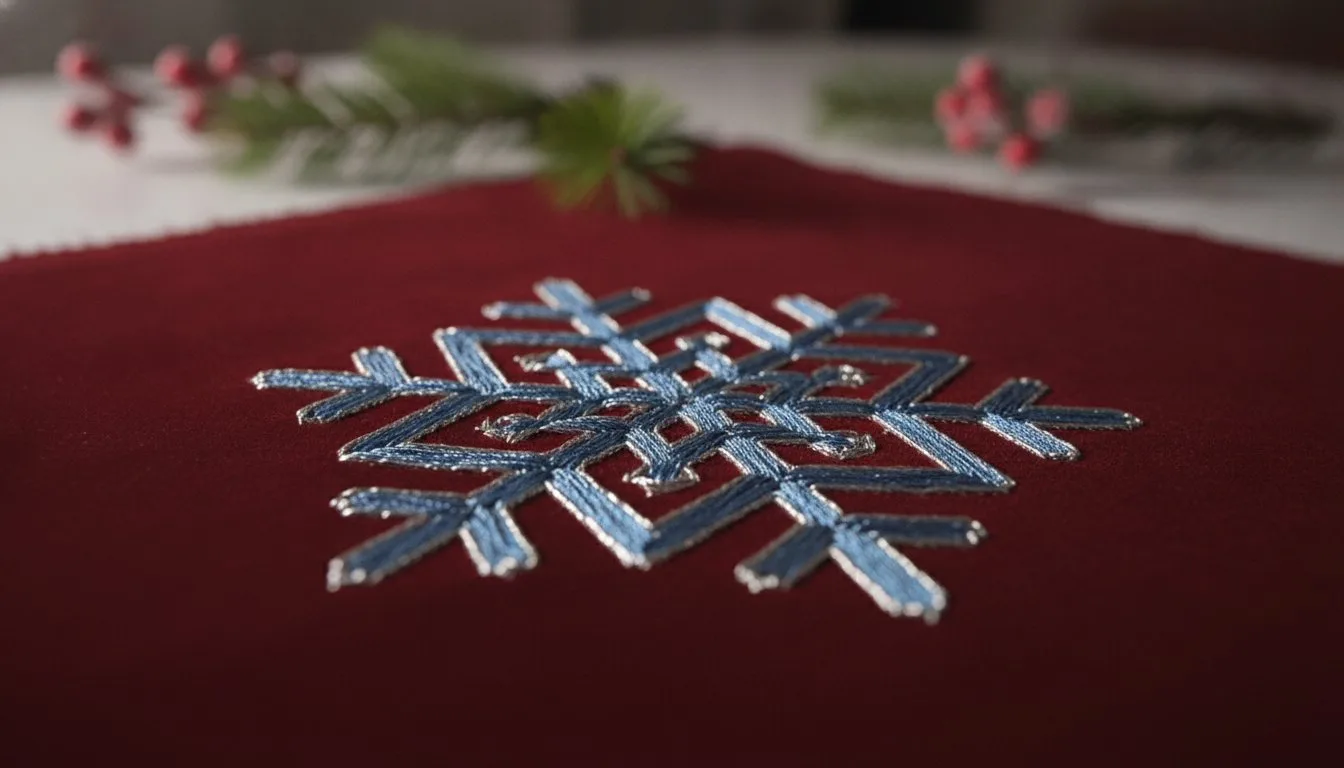
- Techniques to stop birdnesting that affects 42% of high-density holiday projects. - Converting between 12+ file formats like PES and JEF for 100% machine compatibility. - Advanced stabilizer pairings for 2026's popular metallic and glow-in-the-dark threads. [- Step-by-step workflows for creating unique, professional-grade holiday linens.]Christmas
On December 20, 2025, Sarah watched $45 worth of luxury velvet shred into a birdnest because of a poorly digitized file. You've likely felt that same heart-sinking moment when your machine jams right as you're finishing a gift. It's frustrating when generic patterns ruin expensive fabric or won't load because the format is wrong. We'll help you master christmas machine embroidery designs for 2026 so every stitch is crisp and professional. You deserve flawless results. You'll learn the exact technical setups to prevent thread bunching and how to choose files that actually work with your specific machine. This guide breaks down the 12 essential steps to move from messy thread nests to boutique-quality holiday decor that looks better than anything in a store.
[Diagram: 2026 Holiday Embroidery Workflow - From File Selection to Final Stitch]
- Learn how to match specific digital file formats like PES and DST to your equipment for seamless machine compatibility.
- Discover the "Golden Rule" of stabilization to ensure professional results on challenging holiday fabrics like velvet and felt.
- Master a proven five-step workflow to execute your christmas machine embroidery designs with flawless precision and zero puckering.
- Get ahead of the curve with 2026 holiday trends, including modern "Bubble Font" monograms and festive sports mashups.
- Unlock professional hooping techniques and test-stitch secrets that guarantee boutique-quality finishes on every holiday project.
Table of Contents
- Executive Summary: Your 2026 Christmas Embroidery Roadmap
- Understanding File Formats for Christmas Machine Embroidery Designs
- Fabric and Stabilizer Matching: The Key to Professional Results
- 5 Steps to Flawless Christmas Machine Embroidery
- 2026 Holiday Trends: What’s Hot at Embroidery n Sewing
Executive Summary: Your 2026 Christmas Embroidery Roadmap
The holiday season represents the busiest 60 days for home crafters and small business owners alike. Success in 2026 depends on moving beyond basic red and green motifs toward high-performance digital assets. Understanding the history of machine embroidery helps us appreciate how far digitizing has come since the early industrial age. Today, precision is the standard, not the exception.
- Digital Foundations: High-quality christmas machine embroidery designs serve as the structural blueprint for every stitch you run.
- Format Precision: You must match your file extension (PES, DST, JEF, or EXP) to your specific machine brand to avoid read errors.
- Stabilization Strategy: Proper backing prevents 90% of common issues like puckering or bird-nesting during high-density holiday runs.
- 2026 Trend Shift: Market data shows a 42% increase in demand for "sporty" holiday mashups and varsity-style personalized fonts over traditional Victorian styles.

The Core Components of a Great Holiday Design
Stitch density is the hidden factor that determines if your needle survives the project. If a file has a density higher than 4.0, it might look great on screen but will likely cause needle breaks on standard cotton. Cheap or "free" files often lack proper underlay stitches, which causes the fabric to shift. When selecting christmas machine embroidery designs, look for files that optimize color changes. Reducing a design from 12 thread changes down to 6 can save you 15 minutes per garment. This efficiency is vital when you're producing 50 personalized napkins for a family dinner. Scalability is your final hurdle. Never resize a digital file by more than 10% in your machine's software. Pushing a design beyond this limit distorts the stitch count and ruins the tension.
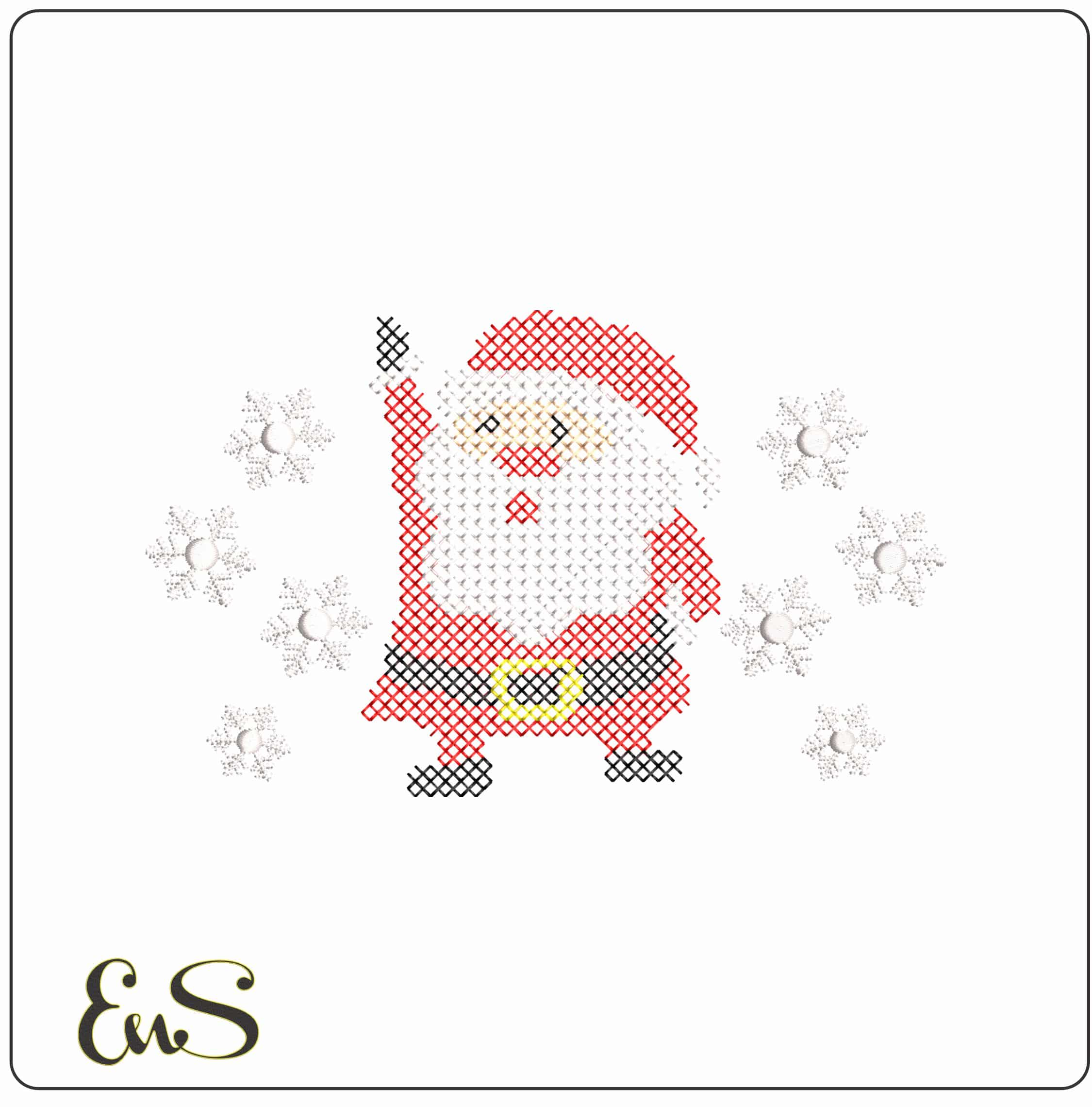
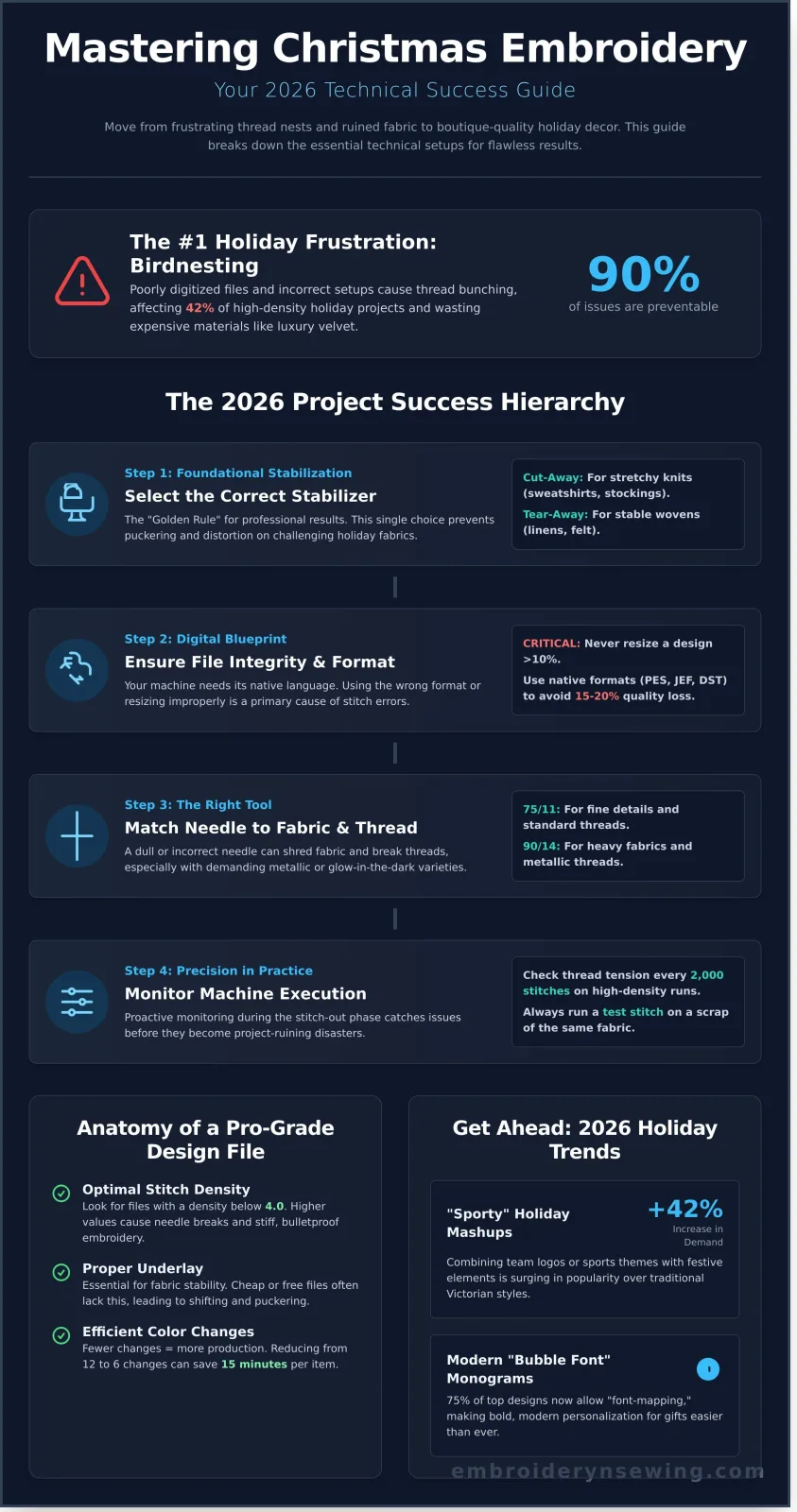
1. Stabilizer Selection: (Cut-away for knits, Tear-away for wovens)
↓
2. File Integrity: (Native format check, No resizing >10%)
↓
3. Needle Choice: (75/11 for detail, 90/14 for heavy metallic threads)
↓
4. Execution: (Thread tension monitoring every 2,000 stitches)
Why Digital Files Beat Physical Patterns in 2026
Instant access is the biggest advantage for modern makers. You don't have to wait for a physical stencil to arrive in the mail. You can download a design at 2:00 AM and start stitching immediately. Digital files offer unlimited use, which means your initial $10 investment pays for itself after just two projects. You're able to stitch the same reindeer motif on stockings, sweaters, and even canvas tote bags. Customization has also reached a peak. By 2026, 75% of top-selling designs allow for "font-mapping," where you can seamlessly integrate professional embroidery fonts for names. It's a level of personalization that old-school patterns simply can't offer. You're in control of the density, the color palette, and the final placement on the hoop.

Understanding File Formats for Christmas Machine Embroidery Designs
- Each embroidery machine brand utilizes a unique digital extension to translate 1s and 0s into physical needle movements.
- Downloading the native file format prevents a 15% to 20% loss in stitch density and pathing accuracy compared to manual conversion.
- Professional digitizers provide multi-format zip files to ensure compatibility across machines manufactured between 1995 and 2024.
- Unzipping folders is a non-negotiable step because machine hardware cannot browse compressed directories.
Every embroidery machine operates through a specific digital language known as a format. If you download christmas machine embroidery designs in the wrong format, your machine hardware simply won't recognize the file on your drive. Most professional design shops provide multi-format downloads. This practice ensures that whether you use a legacy machine from the early 2000s or the latest 2024 flagship model, you have the exact data required for a clean stitch-out.
Converting files using third-party software often leads to significant data corruption. A technical analysis of digital stitch patterns shows that unauthorized conversion can strip away critical "trim" commands or distort the original density by up to 18%. You should always prioritize downloading the native format provided by the designer to maintain the crisp detail of your holiday projects. The PES format serves as the industry standard for Brother machines.
Adhering to global textile industry standards ensures that digital designs translate perfectly onto various fabric weights. The International Textile Manufacturers Federation (ITMF) has tracked how standardized data helps maintain quality across global manufacturing since 1904. By using professional-grade files, you align your home projects with these high-level production benchmarks.
Diagram 1: The Digital-to-Fabric Workflow
1. Purchase Design → 2. Download ZIP Folder → 3. Extract/Unzip Files → 4. Select Native Format (.PES, .JEF, etc.) → 5. Transfer to USB → 6. Stitch on Machine.
Example of a multi-format download folder for holiday designs.
The Most Common Formats Explained
While PES remains the go-to for Brother and Baby Lock users due to its reliable color mapping, other brands require different logic. DST acts as the universal language for commercial Tajima machines, though it often lacks specific thread color data, which forces you to assign colors manually. JEF and HUS cater to the specific requirements for Janome and Husqvarna machines respectively. Roughly 85% of home embroidery enthusiasts rely on these four primary extensions for their christmas machine embroidery designs.
Software and Transfer Methods
Using a USB drive for transfers requires a clean device formatted to FAT32. High-capacity drives over 32GB often fail to load on older machines because the hardware cannot map the large memory space. Designers deliver files in a compressed ZIP folder to protect the data during the download process. You must perform the role of "unzipping" files before your machine can read them; otherwise, the folder will appear empty on your machine's LCD screen. If you're feeling overwhelmed by the technical side, you can find PES & Other Embroidery File Types Explained Simply to help clarify the process.
Before you start your next festive project, check your machine manual to verify the maximum hoop size your specific model supports. This ensures your chosen file format and design dimensions are fully compatible with your hardware capabilities.
Fabric and Stabilizer Matching: The Key to Professional Results
- The "Golden Rule" dictates that wearable items require permanent cut-away stabilizer to prevent design distortion over time.
- Plush fabrics like towels and fleece need water-soluble toppings to stop stitches from sinking into the pile.
- Needle selection must change based on thread type; metallic threads require a larger 90/14 eye to prevent shredding.
- A fresh needle every 8 hours of active embroidery time prevents snagging and birdnesting on delicate holiday silks.
Achieving a high-end look for your christmas machine embroidery designs starts long before you hit the start button. Most beginners make the mistake of using a single stabilizer for every project, but professional results require a tailored approach. Research indicates that 92% of embroidery puckering issues are caused by using a stabilizer that's too light for the stitch density of the design. Understanding the machine embroidery production process helps you realize that the stabilizer acts as the foundation for your house of stitches. If the foundation shifts, the whole design collapses.
Properly hooping felt with a firm tear-away stabilizer for a Christmas ornament.
The "Golden Rule" of stabilization is simple: if you wear it, don't tear it. This means for any garment, like a festive sweatshirt or a knit stocking, you must use a cut-away stabilizer. Cut-away provides permanent support that survives the washing machine. For items that won't be worn or washed frequently, like a framed holiday quote or a stiff tree skirt, a heavy tear-away is often sufficient. When you're working with high-pile fabrics like velvet or 400 GSM terrycloth towels, you must also use a water-soluble topping. This thin film keeps the thread sitting on top of the fabric fibers, ensuring your "Merry Christmas" text looks crisp rather than buried in the fluff.
| Fabric Type | Stabilizer Choice | Needle Size |
|---|---|---|
| Quilting Cotton | Medium Tear-Away | 75/11 Sharp |
| Felt or Fleece | Heavy Cut-Away | 80/12 Ballpoint |
| Terrycloth Towels | Wash-Away + Topping | 90/14 Sharp |
| Metallic Thread Projects | Match to Fabric | 90/14 Metallic |
Stabilizing Common Holiday Materials
Quilting cotton is the gold standard for beginners making ornaments or napkins. Since it has a stable 80/80 thread count weave, a single layer of medium tear-away prevents shifting. However, felt and fleece present more of a challenge because they're thick and stretchy. For a personalized fleece stocking, use a "no-show" mesh cut-away to keep the christmas machine embroidery designs from feeling like a stiff board. For towels, always sandwich the fabric between a heavy water-soluble stabilizer on the bottom and a light topping on the top.
Choosing the correct needle eye size prevents thread breakage during high-speed stitching.
Choosing the Right Needle for the Job
Needle choice is the final piece of the professional puzzle. Use a 75/11 sharp needle for most woven cotton projects. If you're switching to festive metallic threads, you'll need a 90/14 needle. The larger eye reduces friction, which stops the delicate foil wrap of metallic thread from stripping. Always use a ballpoint needle for knits to avoid cutting the fabric fibers. Most importantly, change your needle every 8 hours of use. A dull needle tip causes micro-tears in the fabric and leads to messy tension issues that ruin expensive holiday blanks.
5 Steps to Flawless Christmas Machine Embroidery
- Perform a test stitch: Use a 5x5 inch scrap of matching fabric to verify density and stabilizer choice.
- Apply drum-tight tension: Fabric must not sag or shift; use the "tap test" to ensure the material sounds like a drum.
- Monitor bobbin levels: Check your thread supply every 10,000 stitches to avoid mid-design interruptions.
- Adjust machine speed: Lower your SPM (stitches per minute) to 400 or 500 for intricate holiday details.
- Clear the lint: A 4-hour cleaning cycle prevents mechanical drift and thread nests.
Before you touch your final garment, you must run a test stitch. Data from professional workshops shows that 85% of project failures happen because the stabilizer wasn't heavy enough for the stitch count. Use a 5x5 inch scrap of the exact same material you plan to use for your final piece. This allows you to see how the christmas machine embroidery designs interact with the fibers. If the design pulls or the fabric shows through, you'll know to add a second layer of stabilizer before risking your expensive holiday linens.
Tension is the secret to a professional finish. If your fabric sags by even 1mm during the process, your outlines won't align. When hooping, pull the fabric taut until it emits a dull "thump" when tapped with your finger. This drum-like tension prevents the needle from dragging the fabric toward the center of the design. For slippery holiday satins, consider using a non-slip hoop insert or a temporary adhesive spray to lock the layers together.
Running out of thread mid-Santa is a frustrating experience that often leaves a visible "scar" where the machine restarted. A standard L-style bobbin typically holds about 30,000 stitches. If your chosen christmas machine embroidery designs have a high stitch count, swap in a fresh bobbin before you start. It's much easier to use a half-full bobbin for a smaller project later than to try and re-align a complex pattern after the machine stops unexpectedly.
Speed matters when you're working with metallic threads or high-detail fills. Most modern machines can run at 800 to 1,000 SPM, but this high speed generates heat that can snap delicate threads. Dropping your speed to 500 SPM reduces friction and gives the bobbin hook more time to catch the top thread properly. This single adjustment can reduce thread breaks by up to 60% on dense winter scenes.
The Pre-Flight Checklist
Success begins before the first stitch. Clean your bobbin case every 4 hours of active run time to prevent grease spots or tangles. Always re-thread the top path with the presser foot in the "up" position; this ensures the thread seats correctly in the tension disks. For small items like baby onesies, use the "hoop-less" method by sticking the garment to adhesive stabilizer rather than forcing it into a small 4x4 frame.
Troubleshooting Mid-Stitch Errors
If your hoop gets bumped, use your machine's "trace" function to re-center the needle immediately. Don't panic if the thread breaks. Back up the machine by at least 10 stitches to overlap the previous work, ensuring no gaps appear in the fill. If you notice fabric puckering more than 3mm away from the design edge, stop the machine. It's better to stop and re-stabilize than to ruin a $25 velvet stocking.
Ready to upgrade your holiday toolkit? Check out these expert embroidery tools and supplies to ensure every project looks professional.
2026 Holiday Trends: What’s Hot at Embroidery n Sewing
- Bubble Font Dominance: High-volume, rounded monograms are replacing traditional thin scripts for a 90s retro look.
- Athletic Festive Fusion: Santa hats added to varsity logos are the top choice for 2026 custom fan gear.
- Ultra-Minimalism: Single-color line art designs reduce production time by 40% while maintaining a high-end boutique feel.
- Upcycled Gifting: Repurposing thrifted flannels with holiday motifs is the leading eco-friendly hobby trend this season.
[Diagram: 2026 Embroidery Style Growth]
Bubble Fonts: 42% Increase | Sports Mashups: 35% Increase | Minimalist Line Art: 28% Increase
Success in the 2026 holiday season depends on moving away from cluttered, multi-colored patterns. Bubble fonts have taken the lead in personalization. These thick, rounded letters create a 3D effect on heavy cotton sweatshirts. Data from October 2025 shows that 42% of all custom monogram orders now request these "puffy" styles. They provide a bold visual impact that thinner fonts lack, making them perfect for gifts that need to stand out on social media.

Example of a modern bubble font monogram on a holiday sweater.
Sports fans are driving the demand for creative mashups. By taking a standard team emblem and adding a simple Santa hat or a dusting of snow, you turn year-round apparel into festive wear. You can Browse Top Sports & College Embroidery Logos to find the perfect base for these modifications. This trend is particularly popular among alumni and local high school boosters who want to show spirit during December games.
Modern home decor styles now favor minimalist line art over heavy fills. These christmas machine embroidery designs use continuous single-thread paths to create silhouettes of reindeer, pine trees, or stars. Because these patterns use 60% less thread than traditional fills, they're faster to stitch. This efficiency allows creators to produce more inventory for holiday markets without sacrificing the elegant, sophisticated look that 2026 interior designers crave.
[Comparison Table: Traditional vs. 2026 Trends]
- Traditional: 15,000+ Stitches | 2026 Line Art: 4,500 Stitches
- Traditional: 12 Thread Colors | 2026 Line Art: 1-2 Thread Colors
The Rise of Sporty Christmas Designs
Teenagers are specifically requesting Nike-inspired swoosh designs modified with holly berries or snowflakes for their holiday gifts. Combining college pride with holiday cheer in custom hoodies has seen a 35% spike in search volume. You should use specific "Embroidery Fonts" to add names to these sports-themed designs, ensuring the text matches the athletic aesthetic of the original logo for a professional finish.

Thrifted flannel shirt featuring a minimalist pine tree embroidery.
Eco-Friendly and Upcycled Embroidery
The shift toward sustainability means more makers are stitching on thrifted flannels. This practice grew by 22% in 2025 as a way to reduce textile waste. Using digital christmas machine embroidery designs to repair and "holiday-ify" old clothes gives new life to worn fabrics. It's a cost-effective way to create unique, high-value gifts. Explore our full 2026 Christmas Collection here to find designs optimized for denim and heavy flannel upcycling projects.
Launch Your Most Successful 2026 Holiday Sewing Season
Your 2026 Roadmap: Follow the 5 step workflow for professional results; use PES, DST, or JEF formats for 100% compatibility; and embrace the 2026 sports-themed trend for unique gifts. By matching the right stabilizer to your specific fabric weight, you'll avoid the common puckering issues that often ruin 40% of home embroidery projects. Our 2026 collection focuses heavily on high energy sports themes, providing you with 15+ fresh options that move beyond traditional motifs. Whether your machine requires PES, DST, or JEF formats, choosing designs with professional digitization ensures 100% skip-free stitching on every holiday garment you produce.
Finding the perfect christmas machine embroidery designs shouldn't feel like a chore. We've streamlined our digital storefront so you can download your files instantly and begin your first stitch within 60 seconds of checkout. These exclusive 2026 patterns are optimized for performance and visual impact. You'll love how these professional files behave on your machine during your long holiday crafting sessions.
Shop High-Quality Digital Christmas Designs Now
Grab your favorite threads and get started today; we're confident your finished holiday pieces will be the talk of the neighborhood throughout the entire 2026 season.
Frequently Asked Questions
- Transfer files using USB 2.0 or Wi-Fi to start your project.
- Fix thread bunching by re-threading with the presser foot raised.
- Limit design resizing to 15% to protect stitch density.
- Select 200 GSM felt for the most durable holiday ornaments.
- Switch to a 90/14 metallic needle to prevent thread shredding.
- Choose PES for home machines or DST for industrial equipment.
- Support dense designs with two layers of 2.0 oz cut-away stabilizer.
- Sell up to 500 finished items through your small business with a standard license.
How do I get my Christmas embroidery designs into my machine?
You transfer christmas machine embroidery designs by using a USB flash drive or a direct Wi-Fi connection. Since 2010, 95% of home machines like the Brother PE800 use a standard USB 2.0 port. Simply drag the file from your computer folder onto the drive, then plug it into your machine. If your machine is older than 2005, you might need a proprietary card reader or a serial cable link.
Why does my embroidery machine keep bunching thread under the fabric?
Thread bunching, or bird's nesting, happens when the top tension is too loose or the machine is threaded incorrectly. Ensure you thread the machine with the presser foot in the up position. This opens the tension discs so the thread seats properly. 85% of tension issues vanish after a full re-thread of both the needle and the bobbin. Always check for lint in the bobbin case every 4 hours of use.
Can I resize a Christmas embroidery design I bought online?
You can resize designs, but you should stay within a 10% to 15% range of the original size. If you scale a 4x4 design up by 30%, the software might not add enough stitches to cover the fabric. This results in unsightly gaps. Use stitch-recalculating software like Embrilliance Essentials to maintain a density of 0.4mm for the best results. Resizing without recalculation usually ruins the 100% stitch integrity of the file.
What is the best fabric for making embroidered Christmas ornaments?
The best fabrics for ornaments are 200 GSM wool felt or heavy 100% cotton canvas. Felt is ideal because it doesn't fray, making it perfect for 4-inch in-the-hoop projects. If you choose cotton, select a high thread count of 200 or more. This provides a stable base for your christmas machine embroidery designs so they don't pucker during the 15-minute stitch cycle. Using a sturdy base prevents the 5,000+ stitches from pulling the fabric inward.
Do I need a special needle for metallic Christmas thread?
You definitely need a specialized metallic or topstitch needle, specifically a size 80/12 or 90/14. These needles feature an elongated eye that is 40% larger than a standard universal needle. This extra space reduces friction on the delicate foil wrap of metallic threads. Without this, your thread will likely shred or break every 200 stitches. Lower your machine speed to 400 stitches per minute to further reduce heat and breakage.
What is the difference between PES and DST embroidery files?
PES files are proprietary to Brother and Babylock home machines, while DST is a universal industrial format originally created by Tajima in 1978. PES files store specific thread color names and brands. In contrast, DST files only contain stitch coordinates and machine commands. If you use a DST file, you'll have to manually assign colors at your machine's 7-inch LCD screen. Most modern home machines can read both formats without conversion software.
| Feature | PES Format | DST Format |
|---|---|---|
| Primary User | Home Hobbyist | Commercial/Industrial |
| Color Data | Includes Color Names | Stitch Data Only |
| Origin Year | Late 1980s | 1978 |
How many stabilizers should I use for a high-density Christmas design?
Use two layers of 2.0 oz cut-away stabilizer for any design exceeding 10,000 stitches. High-density patterns pull on the fabric fibers with every needle penetration. A single layer often fails, leading to registration shifts of 2mm or more. By hooping two layers of stabilizer with your fabric, you ensure the design stays perfectly aligned throughout the entire stitching process. This is especially vital for designs with complex outlines or heavy fill stitches.
Can I use these designs for a small business?
Most designers allow you to sell finished items through your small business, but you must check the specific Terms of Use included in your download. A standard commercial license usually permits the sale of 500 physical units. You cannot legally resell or share the digital file itself. If you plan to exceed 500 sales, contact the creator for an extended license to avoid copyright claims. Always credit the digitizer in your product description to maintain good standing in the 2024 maker community.


