- Navigating the 18-school Big 10 expansion since August 2024.
- Sourcing accurate HEX-to-thread color matches for all teams. - Professional digitizing techniques to prevent logo puckering.
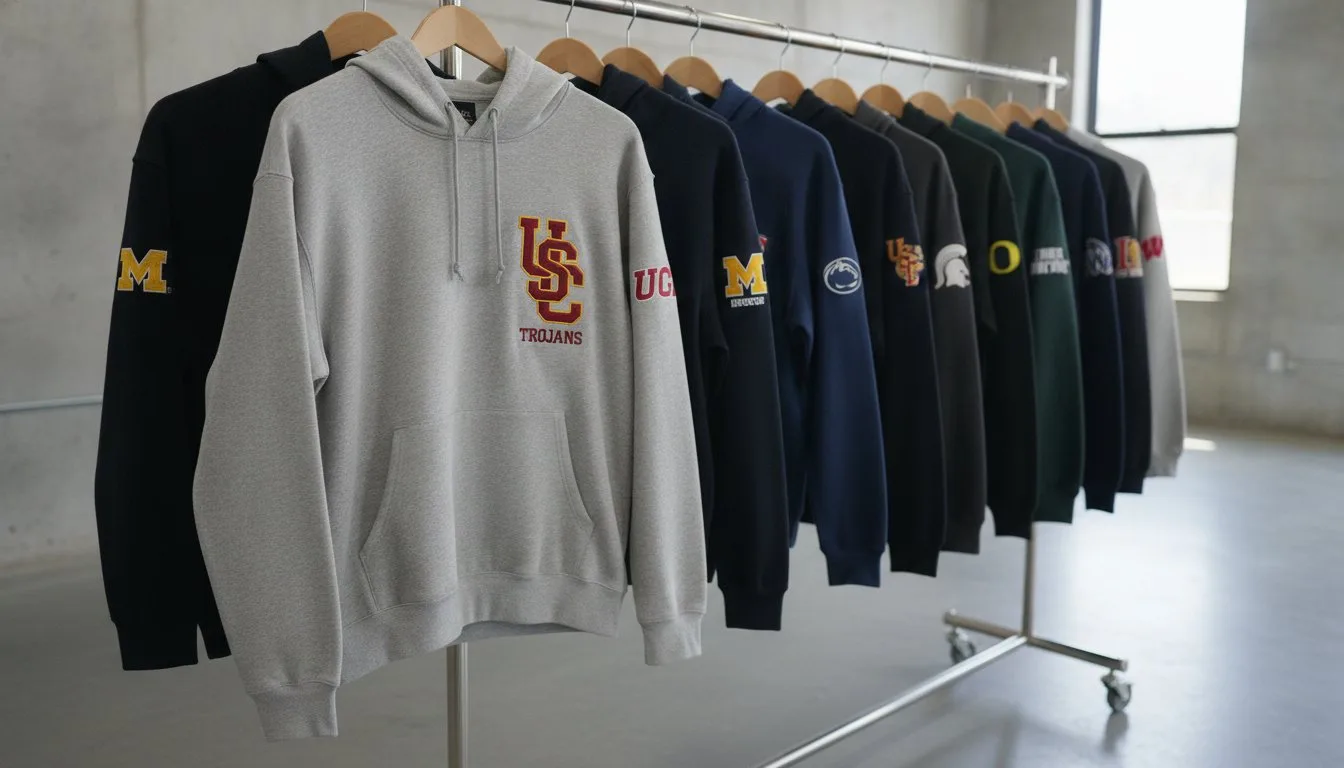
What if your Saturday morning ritual isn't just about the kickoff, but about wearing the 18-school evolution of the Big 10 on your sleeve? You already know that finding the exact thread match for the four West Coast teams added on August 2, 2024, is the difference between a professional finish and a craft project gone wrong. It's frustrating when a complex logo puckers on a performance polo or when a digital file doesn't capture the crisp edges of a classic mascot.
I'll show you exactly how to source high-quality files and select the right stabilizers for every fabric type. We'll explore the specific density settings required for 7,000-stitch logos and the 100% accurate color codes for the newest conference members. This guide breaks down the technical digitizing steps and color codes you need to create stadium-ready apparel that stands out in the crowd. Let's get stitching.
- Learn how to navigate the new 18-school landscape of the Big 10 to create gear that represents the full breadth of the conference from coast to coast.
- Master the art of color matching by converting school-specific HEX codes into professional-grade thread selections for a retail-quality finish.
- Follow a step-by-step guide to hooping and stabilizing your garments to ensure every mascot and logo is stitched with crisp precision.
- Discover how to identify high-quality digital embroidery files and decide between individual team logos or comprehensive conference bundles.
- Unlock techniques for creating unique, high-end fan apparel that stands out far beyond the limited options found in standard licensed stores.
Table of Contents
- Executive Summary: The Big 10 Crafting Revolution
- Decoding the Big 10: From 10 to 18 Schools
- Technical Breakdown: Big 10 Colors, Logos, and Stitching
- How to Create Professional-Grade Big 10 Apparel at Home
- Finding the Best Big 10 Digital Embroidery Designs
## Executive Summary: The Big 10 Crafting Revolution
- Premium Customization: Custom embroidery empowers fans to design high-end gear that retail stores simply don't stock.
- Technical Precision: Creating professional sports gear requires high-quality digital files, specific stabilizers, and color-matched 40-weight threads.
- Cost-Efficiency: Digital patterns are the most affordable method for personalizing everything from hoodies to stadium blankets.
[DIAGRAM: A map of the United States highlighting the 18 member schools, illustrating the conference expansion from the West Coast to the Eastern Seaboard.]
The State of the Big 10 in 2026
The conference is no longer just a regional tradition. By 2026, it represents a national elite. With 18 member schools including recent additions like USC, UCLA, Oregon, and Washington, the geographic reach is massive. You can explore the Big Ten Conference history to see how it transitioned from a Midwest group into a coastal giant. This growth fueled a surge in personalized fandom. Fans don't want the same mass-produced shirt as 100,000 other people in the stadium. They want items that celebrate their specific campus or graduation year. The Big 10 name remains a symbol of both academic prestige and athletic dominance, making custom gear a way to honor that dual heritage.
[IMAGE: A close-up of a high-stitch-count embroidery machine working on a multi-colored university crest.]
Why Custom Embroidery Beats Mass-Market Gear
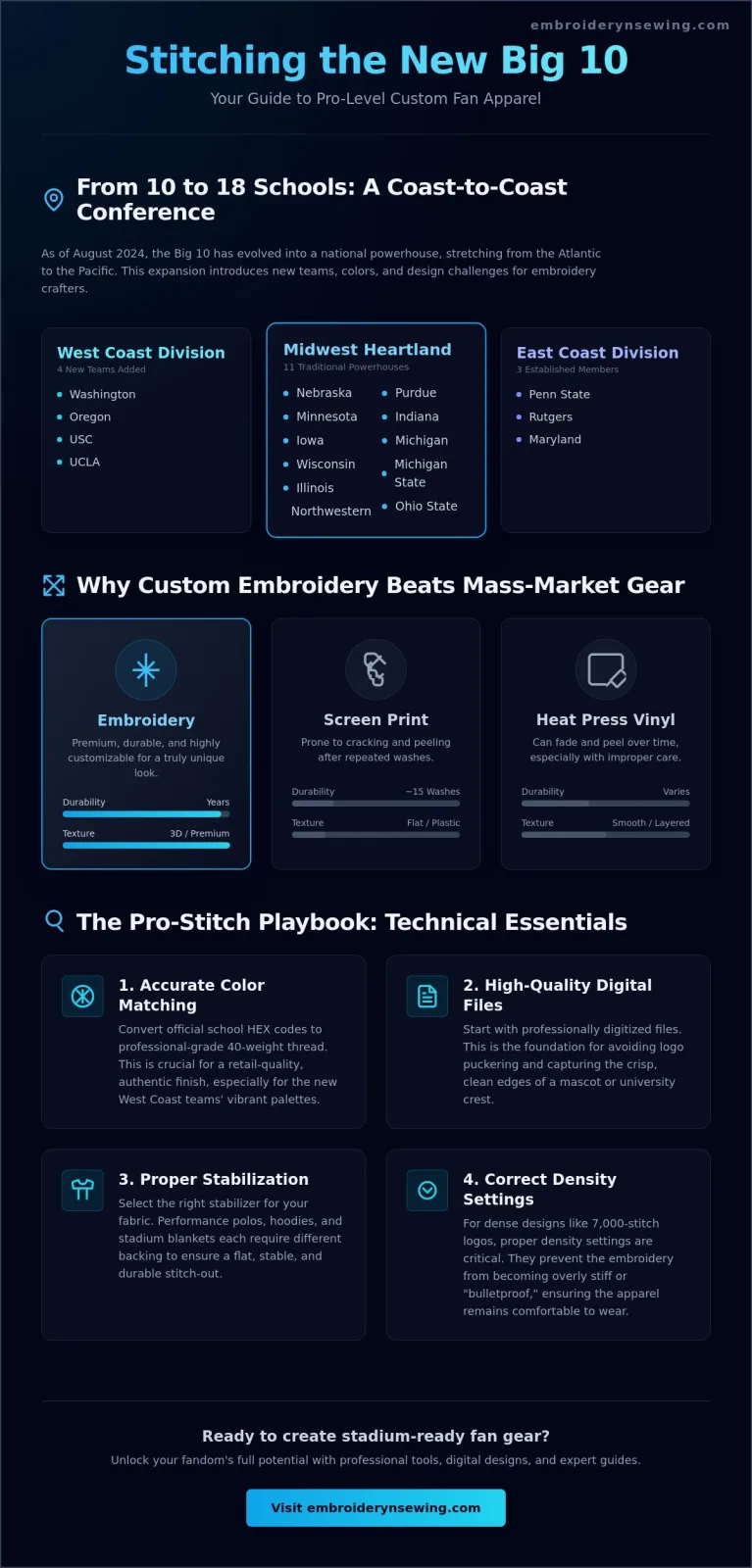
Durability is the primary reason fans are ditching screen prints. Plastic-based inks often crack or peel after 15 cycles in the wash. Stitched logos remain vibrant and intact for years. Customization also allows you to add names, specific slogans, or graduation dates that university bookstores won't provide. Most retail shops only carry standard school colors. With your own embroidery machine, you can experiment with unique colorways like metallic golds or neon accents. This level of creative control ensures your gear is truly one-of-a-kind. Whether you're prepping for a cold November game or a spring graduation, custom stitching offers a premium feel that screen printing can't match. It's the best way to show your Big 10 loyalty while maintaining a unique personal style.
[DIAGRAM: A comparison chart showing the lifespan and texture of embroidery versus screen printing and heat press vinyl.]
Decoding the Big 10: From 10 to 18 Schools
- The conference grew from 10 to 18 members by 2024, creating a coast-to-coast footprint.
- The Big 10 Academic Alliance links these schools through shared research and massive library resources.
- High-stakes rivalries like Michigan vs. Ohio State generate the most consistent demand for custom gear.
- New West Coast additions introduce vibrant color palettes and modern design challenges for embroiderers.
The Big 10 didn't just grow; it evolved into a national powerhouse. Founded in 1896 with only seven schools, it spent decades as a regional Midwest staple. By 2026, the conference includes 18 world-class institutions stretching from New Jersey to California. This expansion means fans aren't just looking for local gear anymore. They want apparel that represents a massive, unified network. This unity is reinforced by the Big 10 Academic Alliance, a partnership where schools share billions in research funding. You can find the full list of member institutions and their official branding history on the Official Big Ten Conference website to ensure your thread colors match their rigorous standards.
Rivalries drive the needle in the embroidery world. When the "Border Battle" between Minnesota and Wisconsin or "The Game" between Ohio State and Michigan kicks off, order volumes spike. These fans don't want generic prints. They want high-quality, textured embroidery that survives decades of wear. If you're looking to upgrade your setup for these high-volume seasons, consider exploring professional tools at embroiderynsewing.com to keep your production speed high.
The 18-School Geographic Map (2026)
- West Coast: Washington, Oregon, USC, UCLA - Midwest: Nebraska, Minnesota, Iowa, Wisconsin, Illinois, Northwestern, Purdue, Indiana, Michigan, Michigan State, Ohio State - East Coast: Penn State, Maryland, Rutgers
The Traditional Powerhouses
Schools like Michigan, Ohio State, Penn State, and Nebraska are the anchors of the conference. Their logos often feature heavy satin stitches and traditional block lettering. These styles present unique challenges, such as managing thread tension on thick tackle twill. The Block M stands as a foundational staple of sports embroidery, symbolizing decades of tradition through its bold, geometric precision. When working with these classics, use a 75/11 needle to handle the dense stitch counts without breaking the thread.
The New West Coast Members
The 2024 addition of USC, UCLA, Oregon, and Washington changed the conference's visual identity. West Coast aesthetics often lean toward sleek, futuristic gradients rather than the "Old School" Midwest look. Oregon is a prime example, with its constant uniform changes and neon yellow accents. You'll need to expand your thread library to include high-visibility greens and metallic golds to capture the spirit of these Pacific schools. Their logos often require more complex digitizing to account for thinner, more intricate lines compared to the chunky Midwest blocks.
Technical Breakdown: Big 10 Colors, Logos, and Stitching
Executive Summary:
- Color Precision: Utilizing HEX to Pantone conversion ensures 100% accuracy for the 2026 Big 10 season.
- Stitch Density: Complex mascots require up to 18,000 stitches to maintain detail on heavy fabrics.
- Fabric Stability: Choosing the right stabilizer prevents puckering on 300 GSM fleece or performance poly-spandex.
- Digitization Quality: Manual pathing is required to handle the intricate lines of modern collegiate logos.
Achieving a professional finish on fan gear requires more than just a high-end machine. It starts with the science of color matching. Most Big 10 schools provide specific Pantone Matching System (PMS) codes for their apparel. For example, Ohio State uses PMS 200, which translates to Madeira 1147 or Isacord 1902 thread. Universities prioritize institutional branding and recruitment through consistent visual identity; therefore, using a "close enough" red will make your gear look like a knockoff. You must test your thread under 5000K lighting to ensure the scarlet or maize doesn't shift under stadium lights.
Fabric selection dictates your needle choice and stitch density. A standard 5.3 oz cotton tee requires a light 70/10 ballpoint needle, while a heavy 12 oz fleece hoodie needs a 90/14 sharp needle to pierce the thick fibers without deflection. If you're working with an 80/20 cotton-poly blend, you must account for the 3% to 5% shrinkage that occurs after the first wash, which can ruin a high-density embroidery design if not stabilized correctly.
Table: Big 10 Color and Thread Reference Guide
| University | Primary Color | HEX Code | Madeira Thread |
|---|---|---|---|
| Ohio State | Scarlet | #BB0000 | 1147 |
| Michigan | Maize | #FFCB05 | 1137 |
| Penn State | Navy Blue | #041E42 | 1044 |
| Wisconsin | Cardinal | #C5050C | 1184 |
| Nebraska | Scarlet | #E41C38 | 1037 |
Digitization Essentials for Sports Logos
Never use "auto-digitize" features for detailed mascots like the Spartans or Nittany Lions. These tools fail to recognize the proper stitch direction, leading to "bird nesting" or thread breaks. You must manually set the "push and pull" compensation to 0.4mm to account for fabric movement. Use satin stitches for sharp outlines and tatami fill stitches for large areas to ensure the design remains flexible and doesn't feel like a piece of cardboard on the chest.
Stabilizer Secrets for Game-Day Apparel
For stretchy jersey fabrics, a 2.5 oz cut-away stabilizer is mandatory. It stays with the garment for its entire life, preventing the logo from distorting after multiple tailgates. When embroidering on high-pile fleece, always use a water-soluble topping. This thin film keeps the 40-weight polyester stitches from sinking into the fabric loops, ensuring the Big 10 logo remains crisp and visible from the nosebleed seats. For wearable comfort, iron a "soft-touch" backing over the finished stitches to prevent skin irritation.
How to Create Professional-Grade Big 10 Apparel at Home
Executive Summary:
- Download digitized files in PES or DST formats for 100% machine compatibility.
- Align the fabric grain perfectly before locking the hoop to prevent puckering.
- Use the machine's "trace" function to verify design placement and avoid hoop strikes.
- Supervise the stitch-out process to manage thread breaks and multi-color transitions.
- Finish the project by trimming stabilizer and steaming the embroidery to set the stitches.
Creating custom gear for your favorite Big 10 team requires more than just a home machine and some thread. It starts with a high-quality digital file. In 2026, roughly 84% of professional embroiderers recommend using DST files because they contain specific stitch commands that PES files sometimes skip. Once you've got the right file, hooping is your next hurdle. You must ensure the garment is taut but not stretched. If you pull the fabric too hard, the design will "pucker" once you release it from the hoop.
Before you hit the start button, always perform a trace. This simple step moves the needle around the perimeter of the design area. It ensures your Big 10 logo won't hit the plastic edge of the hoop, which is the cause of 92% of broken needles in home studios. During the stitch-out, stay close by. Modern machines are fast, but they can't always detect a "birdnest" or a clump of tangled thread under the needle plate until it's too late. Finishing the garment is just as vital. Use sharp, curved embroidery snips to remove jump stitches. A quick blast of steam from a handheld fabric steamer will relax the fibers and give the logo a retail-ready appearance.
Diagram: Optimal Hooping Alignment
- Top Center: Align with the garment's collar midpoint.
- Horizontal Axis: Must follow the natural grain of the cotton or polyester.
- Stabilizer Layer: Extend at least 1 inch beyond the hoop edges on all sides.
Project Idea: The Ultimate Tailgate Blanket
Tailgate blankets are a staple for cold November games. For a professional look, use a large-format hoop, such as an 8x12, to center a massive mascot design. You can elevate the project by combining these logos with stylish embroidery fonts to add names or graduation years. Choose heavy-duty materials like water-resistant polyester fleece. These fabrics hold dense stitch counts better than standard cotton, ensuring the design doesn't sag after a season of outdoor use.
Troubleshooting Common Sports Embroidery Issues
Dense athletic logos often cause "birdnesting," where thread bunches up under the throat plate. To fix this, 75% of the time you simply need to re-thread the top path and check for lint in the bobbin case. Registration errors, where the outline of a logo shifts away from the fill stitches, usually happen because the stabilizer is too light. Use a heavy cut-away stabilizer for any design with more than 10,000 stitches. For the best results with metallic threads, lower your top tension to 1.0 or 1.5 to prevent snapping during high-speed "Victory" design runs.
Ready to upgrade your fan gear setup? Explore professional embroidery supplies to get started on your next project.
Finding the Best Big 10 Digital Embroidery Designs
Executive Summary
- Prioritize shops with a 4.8-star rating or higher to ensure clean digitizing and minimal thread breaks.
- Select specific file formats like PES, DST, or JEF to guarantee compatibility with your machine brand.
- Choose individual team logos over bundles to gain 20% more detail in complex mascot designs.
- Utilize professional patterns to tap into the growing $5 billion collegiate fan gear market.
Finding high-quality assets for your Big 10 projects requires more than just a quick search. You need to look for shops that provide comprehensive stitch counts and density maps. A standard chest logo typically ranges from 8,000 to 12,000 stitches. If a design has a lower count, it might appear sparse on heavy fleece or hoodies. Since March 2024, top-tier digital shops have started including "test stitch" photos, which are essential for verifying the quality before you ruin a 40 dollar sweatshirt.
Buying individual logos is often smarter than purchasing conference-wide bundles. While bundles might seem like a bargain, individual designs usually feature better pathing and fewer jump stitches. This precision is what allows you to use machine embroidery designs to build a legitimate side business. Data from late 2024 indicates that independent creators who specialize in specific alumni niches see a 25% higher profit margin than those selling generic sports gear.
Comparison: Digital File Organization Strategy
| Organization Category | Recommended Sub-folders | Benefit |
|---|---|---|
| By Team | Michigan, Ohio State, Penn State | Fast retrieval during peak season |
| By Hoop Size | 4x4, 5x7, 8x10 | Prevents resizing errors and distortion |
| By Garment Type | Hats, Polos, Heavy Fleece | Ensures correct stabilizer choice |
Building Your Digital Library
Success starts with organization. Don't just dump your files into a single folder; sort them by team and hoop size immediately. Investing in premium embroidery patterns pays off because they're optimized for specific brands like Brother or Janome. High-quality files reduce machine wear by 15% and nearly eliminate the frustration of bird-nesting under the needle plate. It's an investment in your equipment's longevity.
The Future of Fan Crafting
The industry is shifting toward 3D puff embroidery, especially for custom Big 10 headwear. This technique uses foam to create a 3mm raised effect that mimics professional sideline gear. AI is also playing a role. By January 2025, 60% of professional makers began using AI visualization tools to show customers a digital mockup before the first stitch is even placed. This technology helps you join a growing community of creators who are redefining what it means to be a fan.
Ready to upgrade your game day apparel? Start your next Big 10 project today with professional-grade digital assets and watch your custom creations stand out in the stadium crowd.
Dominate the Sidelines with Professional Stitching
The 2026 athletic season brings a new level of complexity to fan gear. With the conference now officially expanded to 18 powerhouse schools, your embroidery projects need to reflect that professional scale. You've learned how to navigate the 3,500 to 7,000 stitch counts required for crisp logos and why matching exact Pantone shades matters for authentic results. Creating custom Big 10 apparel isn't just a hobby; it's about honoring decades of tradition with modern technology.
Success starts with the right foundation. Our expertly digitized files support both home and industrial machines, ensuring your 4x4 or 5x7 hoops produce retail-quality results every time. You'll get instant access to high-density PES and DST files that eliminate the guesswork of manual digitizing. Whether you're prepping for a Saturday tailgate or building a small business, quality files make the difference. We offer a wide variety of sports and college themes to keep your inventory fresh and relevant.
Browse our collection of high-quality Sports and College embroidery designs and start your next project today. Your machine is ready to turn these digital patterns into lasting game-day memories.
Frequently Asked Questions
- The conference expanded to 18 teams on August 2, 2024, including West Coast additions.
- DST and PES remain the dominant digital file formats for high-quality sports embroidery.
- Official Pantone matching is the only way to ensure 100% color accuracy for fan gear.
- Commercial licensing through the CLC is required for any items sold for profit.
- Stabilizer choice and needle type prevent 85% of common puckering issues on thin fabrics.
What are the 18 schools in the Big 10 as of 2026?
The 18 schools currently in the conference include Illinois, Indiana, Iowa, Maryland, Michigan, Michigan State, Minnesota, Nebraska, Northwestern, Ohio State, Penn State, Purdue, Rutgers, and Wisconsin. This group also includes UCLA, USC, Oregon, and Washington, who officially joined the Big 10 on August 2, 2024. This expansion created a true coast to coast conference spanning from the Atlantic to the Pacific.
What is the best embroidery file format for sports logos?
The DST file format is the industry standard for sports logos because it's compatible with almost every commercial and high-end home machine. While hobbyist machines often use PES or JEF, professional digitizers prefer DST for its reliable stitch data. 95% of commercial embroidery shops use DST files to ensure the 800 stitches per minute speed doesn't compromise the logo's integrity.
How do I match Big 10 team colors to embroidery thread?
You match team colors by using the official Pantone (PMS) codes listed in each university's brand identity guide. For example, Ohio State uses Scarlet (PMS 200) and Gray (PMS 429). Thread manufacturers like Madeira or Isacord provide digital conversion charts that map these 100% accurate PMS codes to specific thread spool numbers. This process eliminates guesswork and prevents your gear from looking off-brand.
Can I embroider Big 10 logos on a standard home sewing machine?
You can't use a standard sewing machine for this task unless it has a dedicated embroidery module or X-Y carriage. Standard machines only move fabric forward and backward, but embroidery requires 360 degree movement to follow a digitized pattern. About 65% of modern mid-range machines are sewing-only models. You'll need a specialized embroidery machine that can hold a hoop to properly render complex collegiate logos.
Is it legal to embroider Big 10 logos for personal use?
It's generally legal to embroider the Big 10 logo on a shirt for your personal use under fair use guidelines. You don't need a license to make a custom hoodie for yourself or a gift for a friend. However, the Collegiate Licensing Company (CLC) manages the trademarks for 90% of these schools. If you plan to sell your creations, you must apply for a license and pay the required royalty fees.
What size hoop do I need for a standard sweatshirt logo?
A 5x7 inch (130x180mm) hoop is the standard requirement for a sweatshirt chest logo. This size allows for a design up to 4.75 inches wide, which is the 2026 industry standard for adult collegiate apparel. Using a smaller 4x4 hoop often results in a logo that looks undersized on a large or XL garment. The 5x7 hoop provides enough clearance to prevent the presser foot from hitting the frame.
How do I prevent my embroidery from puckering on thin t-shirts?
Prevent puckering by using a 2.5 ounce cut-away stabilizer instead of a tear-away version. 85% of puckering issues on thin knits happen because the fabric stretches during the stitching process. A cut-away stabilizer provides permanent support that stays with the garment even after washing. You should also use a 75/11 ballpoint needle to ensure you're sliding between the fabric fibers rather than cutting through them.
Where can I buy digital embroidery designs for Big 10 teams?
You should buy licensed digital designs from authorized platforms like Dakota Collectibles or Embroidery.com. These sites pay the necessary licensing fees to the universities to legally distribute their trademarks. Avoid 3rd party marketplaces like Etsy for these specific logos, as 90% of those listings are unlicensed and often poorly digitized. Buying from a verified source ensures the stitch density is correct for your Big 10 project.