
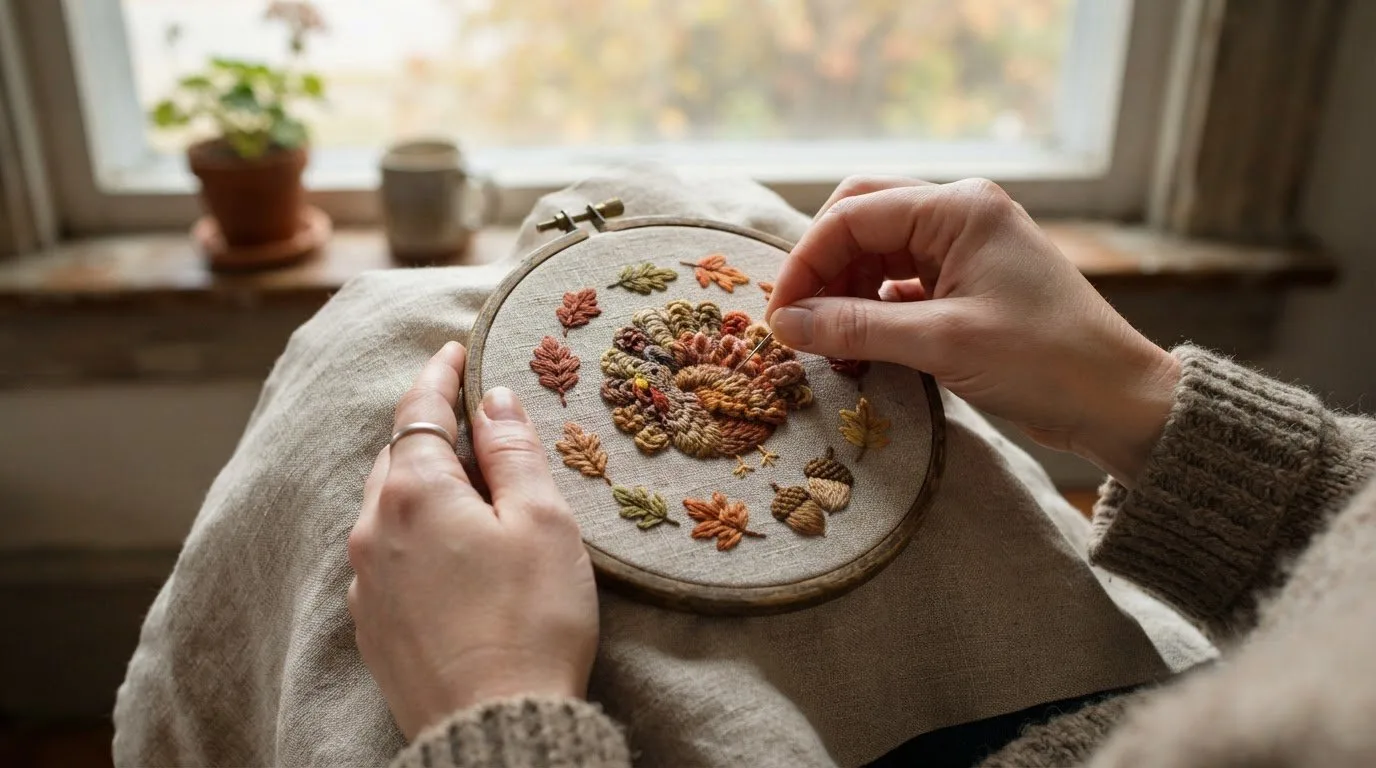
A November turkey can be a compact project: the individual design measures 42 stitches wide by 56 stitches high, with a finished size of 3 by 4 inches. For leaves and turkeys to stitch this November, the complete Shelf Life Series measures 168 stitches wide by 196 stitches high, giving you a larger seasonal project to plan around.
Fall stitching feels especially satisfying when turkey, acorn, and leaf motifs work together in a coordinated design. This guide compares individual motifs and series measurements, explains how to approach a November turkey chart, and shows how Turkey Stitch adds raised, looped texture to seasonal details. Use these tips to plan your layout and stitching before you begin.
Key Takeaways
- Choose between a single seasonal motif and a coordinated series by considering how you want to arrange the finished stitching.
- Use the turkey, acorn, and fall-leaf motifs to build a seasonal composition, with placement helping each element stand out.
- Decide whether to leave Turkey Stitch loops intact or trim and fluff them for a denser textured finish.
- Follow the November turkey's color-charted PDF to guide your stitching and keep the motif's details organized.
Individual and Series Finished Sizes
- Use the individual November's Turkey chart when planning a compact seasonal motif. Its stitch count is 42 stitches wide by 56 stitches high, and its finished size is 3 by 4 inches. Treat the stitch count as the chart's grid dimensions and the finished size as the space the stitched design occupies. This distinction helps you plan placement on a project before stitching begins.
- Choose the complete Shelf Life Series when you want a larger, coordinated project. Its stitch count is 168 stitches wide by 196 stitches high. The pattern specifies black 28-count Monaco cross-stitch cloth measuring 20 by 24 inches. Keep those figures distinct: the stitch count describes the chart, while 20 by 24 inches describes the specified cloth. Use the cloth measurement when preparing the fabric for the series.
- Plan the layout around the design you selected. For the individual turkey, reserve a 3-by-4-inch area for the finished motif. For the series, use its 168-by-196-stitch chart and the specified 20-by-24-inch cloth as planning references. Avoid treating the individual design's dimensions as the size of the complete series. A clear distinction makes it easier to choose between one motif and the full seasonal arrangement.
- Work Turkey Stitch rows close together for a firmer, denser finish. Keep the rows near one another across the area you want to texture; wider spacing leaves more fabric visible between loops. Apply this technique to the textured section, rather than assuming the chart's stitch count determines the finished density.
- Finish each Turkey Stitch row by cutting the thread and leaving about an inch above the work. Keep the tail in place as you complete the row instead of cutting it flush with the stitched area.
November Turkey, Acorn, and Fall-Leaf Design
Choose your motifs and materials before starting a seasonal project. Compare charts for leaves and turkeys to stitch this November, then use the steps below to plan the design and stitching.
1. Choose Autumn Designs and Patterns
Start with a beginner-friendly design that has clear outlines, such as a single leaf, acorn, or turkey. If you're choosing leaves and turkeys to stitch this November, compare each chart's technique and level of detail with your project. The November's Turkey pattern is a downloadable PDF charted in color, but PDF format alone doesn't mean a pattern is free. Gather fabric, embroidery thread, and a needle, then select colors that distinguish the motifs. Browse our embroidery project articles for seasonal inspiration, including our seasonal embroidery designs download guide.
2. Stitch an Autumn Leaf
Draw or transfer a simple leaf outline onto fabric, then stitch around it with backstitch. Fill the shape with satin stitches, working from the center vein toward each edge. Use a straight stitch for the vein and smaller branches. Keep the stitches within the outline, and change thread colors between sections to suggest autumn foliage. Fabric, embroidery thread, and a needle are the basic materials for this example.
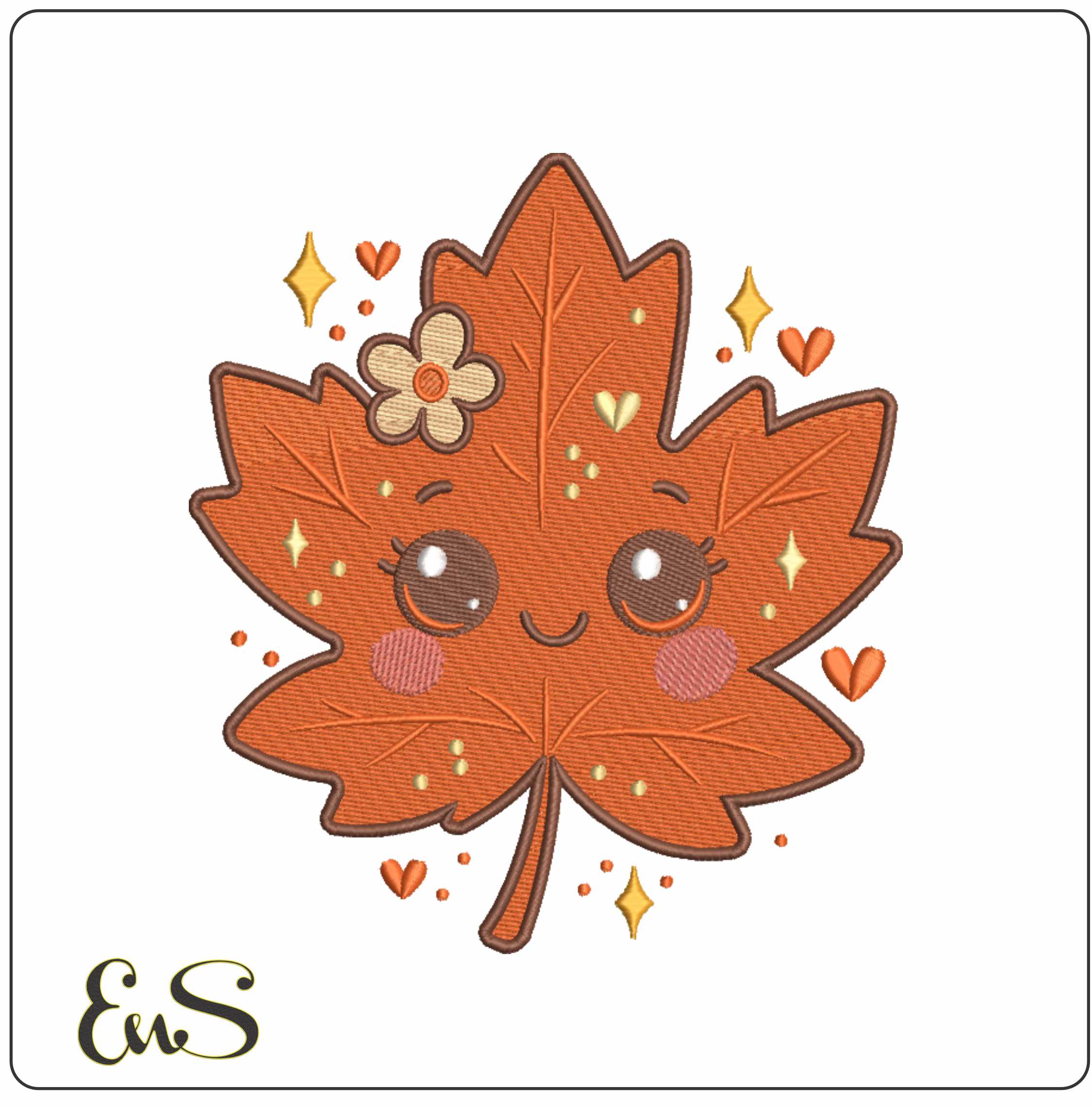
Prefer to stitch your leaves by machine? Our Fall Leaves and Twigs design, Maple Leaf Outline design and playful Autumn Leaf with Face design are quick, seasonal options.
3. Stitch a Turkey Pattern
Follow the color chart to place the turkey's body and feather details. To make raised feathers with Turkey Stitch, bring the needle up just right of the thread tail, down just left, then up through the center hole and pull taut. For each following stitch, go down one canvas hole to the right of the rightmost stitch. Leave the loops uncut, or snip and fluff them with small, sharp embroidery scissors for fuller texture.
Where Can I Find Free Turkey Embroidery Patterns?
- Look for patterns explicitly labeled free rather than assuming every downloadable chart costs nothing. PDF describes a file format, not whether a pattern is free. Read the title and description before choosing a pattern, and check whether it is for cross-stitch or machine embroidery.
- The November's Turkey chart is one example of a downloadable pattern. It is a two-page, color-charted PDF. These details describe its format, but do not mean it is free. Read the listing terms before treating it as a no-cost download.
- Match the pattern type to your project. A color-charted cross-stitch PDF guides hand stitching from a chart, while a machine embroidery design is made for a machine-based project. Search for the specific technique you plan to use so a turkey illustration does not lead you to an incompatible file.
- Inspect the chart before starting. Look for a clear color key, legible symbols, and enough detail to distinguish the turkey's body and feathers. Beginners may find a simple outline with distinct sections easier to follow than a crowded design with many small color changes.
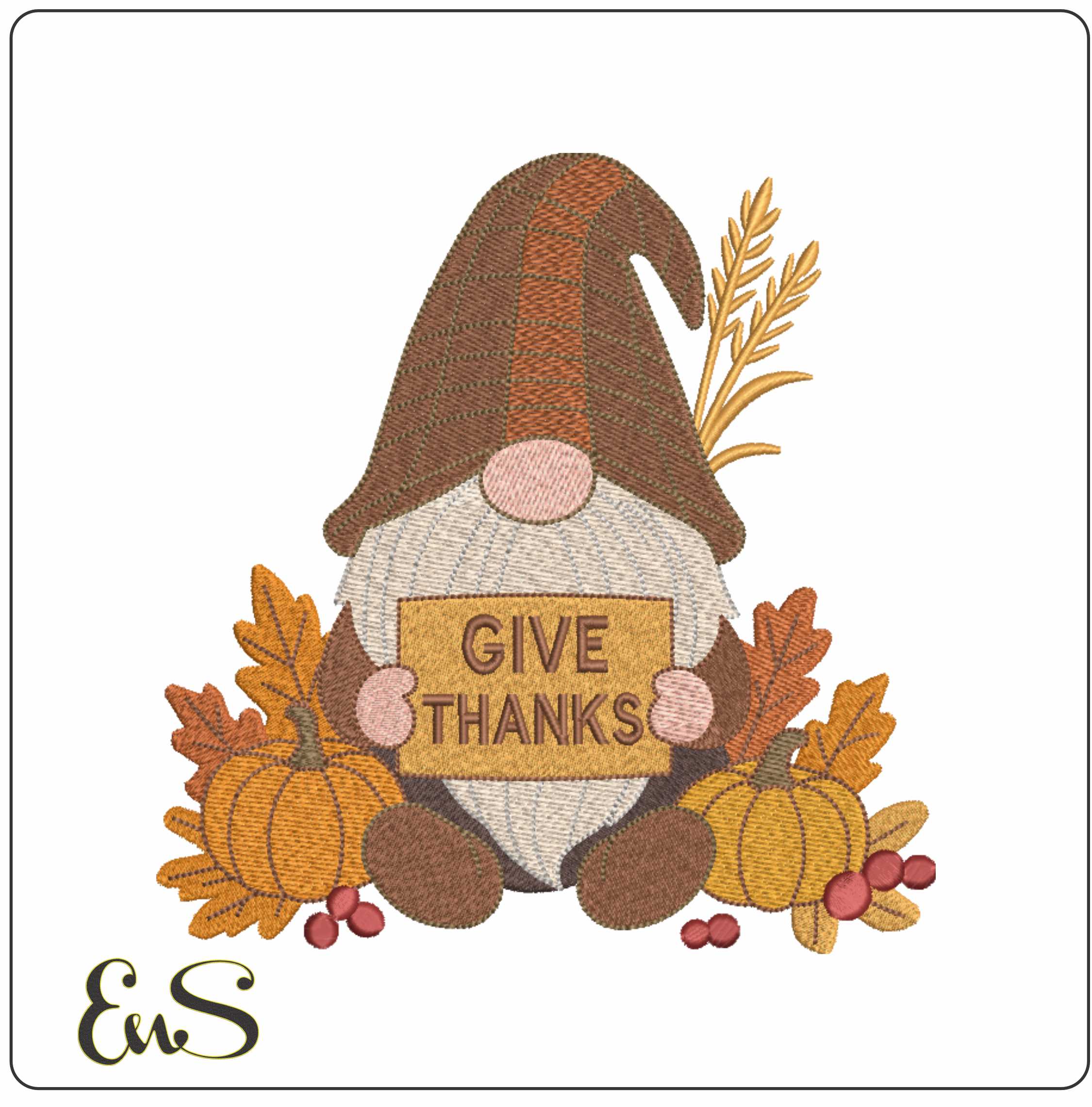
- Save the selected chart with its title and instructions together. Keep the color key beside the pattern as you work, and mark completed sections on a printed or digital copy. For more motif choices beyond turkey charts, browse our Thanksgiving embroidery designs and select a theme that suits your next project, such as the Thanksgiving Gnome design.
Turkey Stitch is another technique to consider when you want raised, three-dimensional embroidery texture. It can also create embroidered hairstyles with longer thread tails. Small, sharp embroidery scissors help you snip the loops precisely. This textured stitch is different from choosing a cross-stitch chart or a machine embroidery design.
Embroidery n Sewing
Embroidery n Sewing offers digital embroidery inspiration for crafters exploring different themes after planning fall projects. Our nature embroidery designs are a natural next step after leaves and acorns, and our pumpkin embroidery designs guide has more fall ideas. For kitchen projects, see our 50 kitchen towel embroidery ideas. Choose a theme that suits your next project, then browse the relevant designs and articles for direction. If you'd like help finding a suitable embroidery topic, contact Embroidery n Sewing.
Carry Your Next Stitching Idea Forward
Let seasonal motifs inspire a project for another interest or occasion. As you plan leaves and turkeys to stitch this November, note the themes and formats you enjoy; they can guide your next embroidery project beyond autumn.
Embroidery n Sewing offers Digital Embroidery Designs, Machine embroidery designs, and College embroidery designs, giving you different directions to explore after a fall project. Choose a theme that matches what you want to stitch next, then contact Embroidery n Sewing for help finding a suitable direction. A new motif can turn a familiar stitching routine into a fresh creative project. Take your next idea one stitch at a time.
Frequently Asked Questions
What are popular leaf-themed embroidery patterns for November?
Maple and oak leaves, leaf wreaths, and winding autumn garlands are popular choices for November projects. A single outlined leaf makes a good small accent, while repeating leaves can frame a napkin or decorate a larger panel. For a natural look, vary the leaf shapes and use contrasting thread colors to distinguish the motifs.
How much do downloadable leaf and turkey embroidery patterns cost?
Prices vary by design, technique and the options included, and some patterns are offered free. Check each listing's price and terms before downloading, and confirm whether the file is a cross-stitch chart or a machine embroidery design.