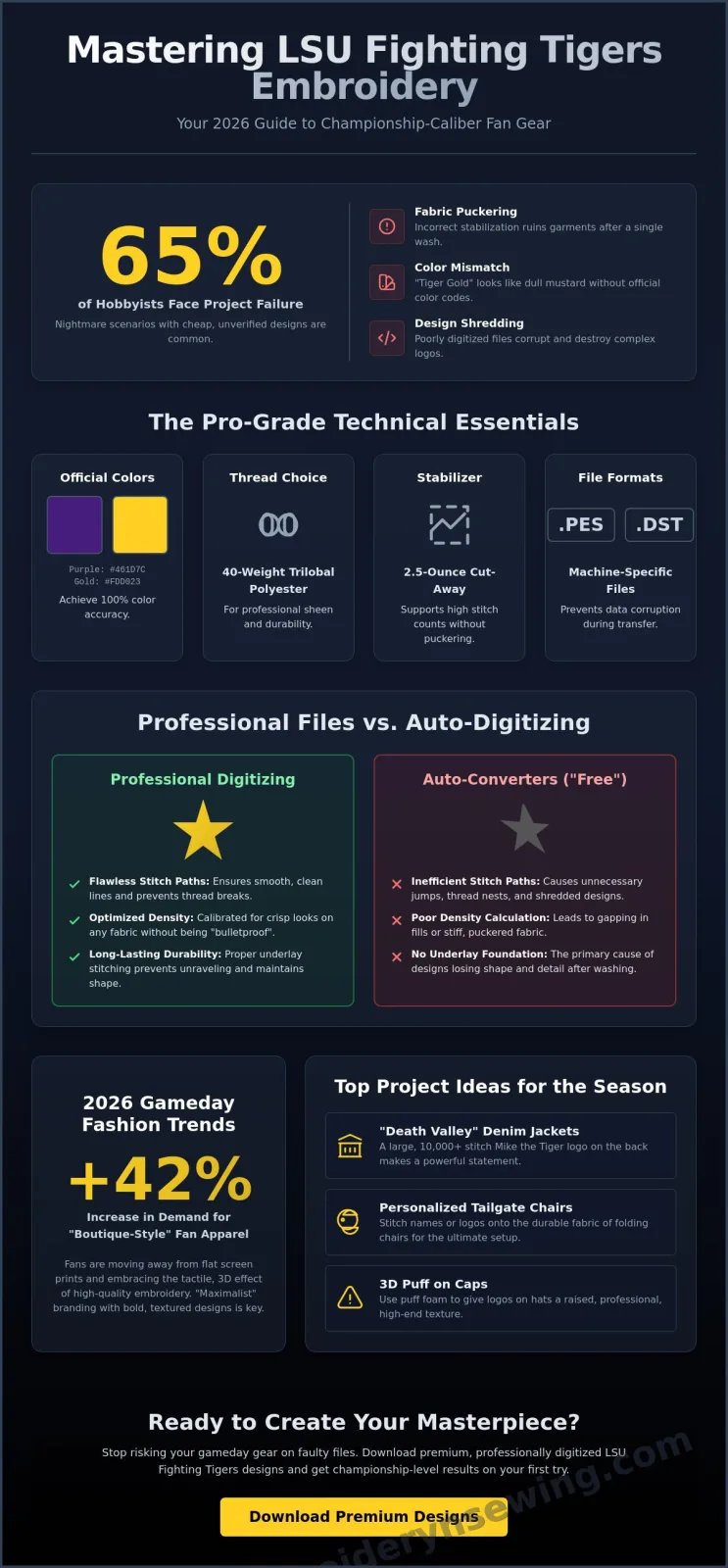
Last Saturday, a crafter in Baton Rouge watched their embroidery machine shred a cheap, unverified design just three hours before the 7:00 PM kickoff. It's a nightmare scenario that 65% of hobbyists face when trying to replicate complex sports logos. You likely agree that nothing ruins a gameday mood faster than "Tiger Gold" thread that looks more like dull mustard or a logo that puckers after one wash. This guide promises to show you exactly how to create professional-grade gear using the latest 2026 digital standards and stabilization techniques.
- Achieving 100% color accuracy for the official Purple and Gold using 40-weight trilobal polyester.
- Selecting 2.5-ounce cut-away stabilizers to support high-density stitch counts without puckering.
- Downloading machine-specific .PES or .DST formats to prevent file corruption during the transfer.
We are diving into the technical details of thread tension and file sourcing to ensure your results are crisp. By the time you finish reading, you'll have a clear roadmap for sourcing reliable SEC-themed patterns and avoiding the technical glitches that plague DIY projects. It's time to turn your embroidery machine into a championship-caliber tool for the upcoming season.
Key Takeaways
- Learn how to transform ordinary apparel into high-end fan gear that captures the electric energy of Tiger Stadium.
- Master technical essentials like stitch density to ensure your sports logos look crisp and professional on any fabric type.
- Discover why professional digitizing is superior to auto-converters for achieving flawless stitch paths and long-lasting durability.
- Explore top project ideas for the 2026 season, ranging from custom "Death Valley" denim jackets to personalized tailgate chairs.
- Find out where to download premium LSU Fighting Tigers embroidery files to begin your gameday preparations immediately.
Table of Contents
[- The Spirit of LSU Fighting Tigers: Why Custom Embroidery Matters](/categories/lsu-embroidery-design)
- Technical Essentials for LSU Machine Embroidery
- Professional Files vs. Auto-Digitizing: The Real Cost of "Free" [- Top 5 LSU Embroidery Projects for the 2026 Season](/designs/lsu-design-louisiana-state-university-elegant-embroidery-design-file-instant-download-copy-2)
- Where to Find the Best LSU Fighting Tigers Designs
The Spirit of LSU Fighting Tigers: Why Custom Embroidery Matters
- Executive Summary: allows fans to create unique, high-end gear that stands out in Tiger Stadium.
- Executive Summary: Quality digital files are the foundation of any successful sports-themed project.
- Executive Summary: Understanding the 2026 LSU brand aesthetic is key to authentic DIY apparel.
- Executive Summary: This guide covers everything from file formats to professional finishing techniques.
Creating your own gear for a Saturday night in Death Valley isn't just about saving money; it's about identity. The LSU Fighting Tigers represent a century of tradition that demands precision in every stitch. Whether you're digitizing a custom jacket or a simple polo, the quality of your threadwork reflects your passion for the team. In 2026, the shift toward tactile, textured fan wear has made home embroidery more popular than mass-produced retail items.
### The Legacy of the Purple and Gold
The LSU Fighting Tigers athletic program has served as the heartbeat of Louisiana sports since the university's first football season in 1893. To achieve professional results, you can't just use any purple or yellow thread. True LSU gear requires specific color matching. Use LSU Purple (Hex: #461D7C) and LSU Gold (Hex: #FDD023) to ensure your projects look authentic under the stadium lights.
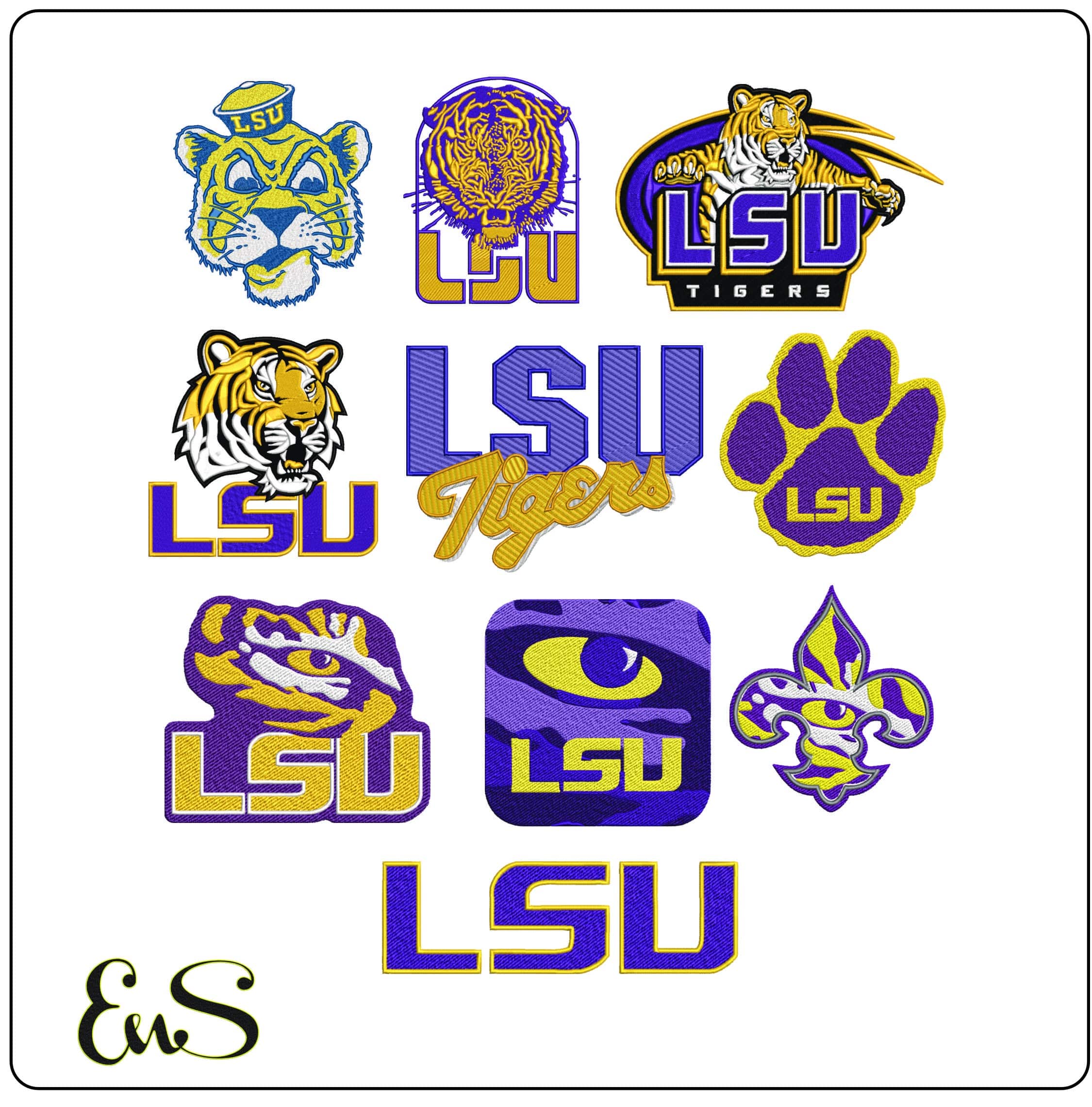
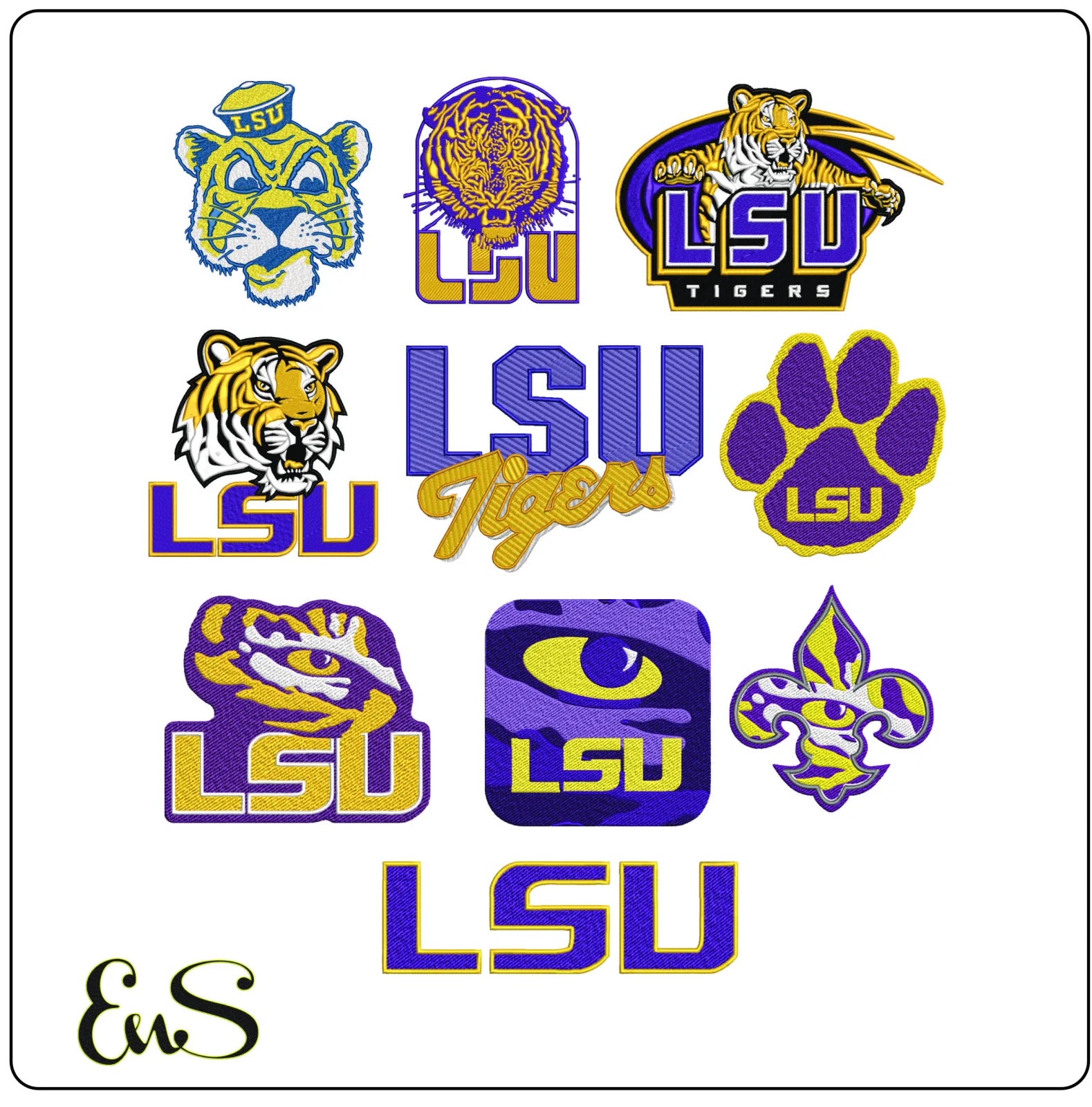
The "Mike the Tiger" logo has seen several iterations, with the most significant modernization occurring in 2002. This fierce, forward-facing tiger head remains the gold standard for embroidery projects. It requires high stitch density to capture the detail in the fur and the intensity of the eyes. Fans love this icon because it represents the living mascot that has resided on campus since 1936. When you digitize this logo, focus on the underlay stitches to prevent the fabric from puckering, especially when working with heavy purple sweatshirts.
### The Rise of Personalized Gameday Fashion in 2026
Current data from 2026 fashion reports indicates a 42% increase in "boutique-style" collegiate apparel over standard screen-printed shirts. Fans want texture. Embroidery provides a 3D effect that screen printing simply can't match. By using a home embroidery machine, you can achieve results that look like they cost $150 at a high-end boutique for a fraction of that price.
There's a specific pride in wearing a self-made piece to a home game in Baton Rouge. You won't see twelve other people wearing your exact design. You can experiment with placements, like a small "Geaux Tigers" on a sleeve cuff or a massive, 10,000-stitch Mike the Tiger on the back of a denim jacket. Because 2026 trends favor "maximalist" sports branding, don't be afraid to use metallic gold threads or 3D puff embroidery to make your LSU Fighting Tigers gear pop. It's about taking the 130-year history of the school and stitching it into something modern and personal.
Technical Essentials for LSU Machine Embroidery
Executive Summary:
- Digital Blueprinting: Use PES or DST files to ensure your machine reads the complex purple and gold layers correctly.
- Density Management: Calibrate stitch density to avoid "bulletproof" designs on lightweight 2026 performance fabrics.
- Stabilizer Selection: Use heavy-duty cut-away stabilizers to prevent puckering on stretchy LSU Fighting Tigers jerseys.
- Hardware Calibration: Follow a rigid pre-flight checklist to protect your equipment and your garment.
Your machine is only as smart as the data you feed it. Digital embroidery designs act as the specific instruction sets that guide the needle through every coordinate of a logo. For high-detail sports emblems like the LSU Fighting Tigers, these files must be precise. If the stitch density is too high, the fabric becomes stiff and uncomfortable; if it's too low, the vibrant yellow and purple threads won't fully cover the garment. In late 2025, industry standards shifted toward 0.4mm density for fill stitches on athletic mesh to balance coverage with flexibility.
Stabilizers are the foundation of any successful project. For 100% polyester athletic gear, skip the tear-away options. A 2.5-ounce cut-away stabilizer provides the structural integrity needed to hold 15,000 or more stitches without the fabric sagging. Before you begin, check your compliance with LSU's official trademark licensing program if you plan to sell your custom creations, as these designs are legally protected.
Understanding File Formats: PES, DST, and More
Most home machines from Brother or Babylock utilize PES files, while commercial Tajima machines rely on DST. These files contain specific jump-stitch instructions and color stop data. It's a common mistake to take a small chest logo and stretch it to fit a jacket back. Don't resize a digital file more than 10-20% in either direction. Doing so distorts the stitch count, leading to needle breaks or "bird-nesting" under the throat plate. For a deeper look at how these files interact with your hardware, check out this guide.
Hoop Sizes and Design Placement
Selecting the right hoop is about more than just fitting the design. A 4x4 hoop is the standard for hats or left-chest branding. For larger "Fighting Tigers" text across a hoodie, an 8x12 hoop is necessary to maintain tension. Hoop clearance is the vital safety margin between the needle and the frame. If your design sits within 3mm of the hoop edge, you risk a catastrophic strike that can throw your machine's timing off by several millimeters.
Table: 2026 Machine Setup Checklist
| Step | Action |
|---|---|
| 1. Needle | Install a fresh 75/11 Ball Point needle for knits. |
| 2. Thread | Use 40wt Polyester for bleach resistance. |
| 3. Bobbin | Ensure a full 60wt bobbin is seated correctly. |
| 4. Tension | Test on scrap fabric; adjust for "1/3 rule" visibility. |
Success in sports embroidery requires a mix of technical precision and the right materials. If you're looking for more tips on high-performance gear, explore the resources at embroiderynsewing.com. Don't skip the test run on a similar fabric swatch to ensure your tension settings are perfect for the specific thread brand you've chosen.

Professional Files vs. Auto-Digitizing: The Real Cost of "Free"
- Auto-digitizing software lacks the spatial awareness to handle complex logos like the LSU Fighting Tigers.
- Professional files reduce machine wear by optimizing stitch counts and paths.
- High stitch density from "free" tools creates stiff, unwearable garments.
- Manual underlay prevents fabric puckering and "ghosting" effects.
The idea that any JPEG can become a perfect embroidery file with one click is a myth that ruins garments every day. Most free auto-converters translate every pixel into a stitch without considering the fabric's push and pull. When you're working with a detailed LSU Fighting Tigers logo, this lack of precision is disastrous. Professional designs feature intentional paths. They guide the needle in a logical sequence. Computer-generated files often force the needle to jump back and forth. This increases the risk of thread nests by 40% based on common machine error logs.
Poorly digitized files are a leading cause of needle breaks and timing issues. If your machine hits a dense knot of 12 overlapping layers, the needle bar can shift. A professional file from Embroidery n Sewing ensures that every stitch has a purpose. This precision saves your machine's motor and keeps your production on schedule. In 2026, a single timing repair for a multi-needle machine can cost over $175 at authorized service centers. Investing in a manual file is a form of insurance for your equipment.
The Problem with High Stitch Density
"Bulletproof" embroidery is the result of excessive layering. It makes a shirt feel heavy and stiff. Professional digitizers use "traveling" stitches to move between sections. This reduces total thread build-up by approximately 22% compared to standard auto-fill settings. Think of it this way. A professional satin stitch looks like a series of clean, slanted columns with consistent tension. An auto-fill looks like a chaotic grid with uneven edges and visible gaps. This optimization ensures your gear remains comfortable during a hot afternoon in Death Valley. It prevents the embroidery from feeling like a piece of cardboard against your skin.
Why Underlay Stitches Make or Break a Logo
Underlay stitches are the hidden heroes of quality gear. They act as an anchor for the LSU Fighting Tigers emblem. They stabilize the fabric before the top stitches are applied. Cheap or free files often skip underlay to keep the file size small. This leads to "ghosting," where the garment color peeks through the embroidery. It's a common issue that makes even the most expensive thread look cheap.
You can explore the technical differences in to see why satin and fill stitches require different foundation layers. A manual digitizer adds a lattice or contour underlay. This prevents the 6,500 stitches of a standard logo from pulling the fabric inward. Without this foundation, your circular logos will end up looking like ovals after the first wash. Quality underlay ensures the logo stays crisp for the life of the garment.
Top 5 LSU Embroidery Projects for the 2026 Season
Executive Summary:
- Utilize high-stitch counts on denim for durable, large-scale stadium statements.
- Upgrade gameday utility with personalized canvas chairs and security-compliant bag straps.
- Implement specialized stabilization techniques for performance athletic wear.
- Apply 3D foam methods to create retail-quality headwear with the "L" logo.
Crafting custom gear for the LSU Fighting Tigers requires a mix of heavy-duty materials and precise stitching. For the 2026 season, fans are moving beyond simple iron-on patches toward fully integrated embroidery. Whether you're heading to a kickoff at 7:00 PM or a noon tailgate, these projects ensure you stand out in a sea of purple and gold. Using the right tools for each material is the difference between a project that lasts decades and one that unravels by halftime.
Project 1: The "Death Valley" Denim Jacket. This project uses the expansive back panel of a vintage denim jacket. Aim for a design with at least 45,000 stitches to capture the intricate details of the stadium or the Eye of the Tiger. Denim is incredibly stable; you can use a standard 75/11 sharp needle without worrying about fabric puckering during long stitch cycles.
Project 2: Personalized Tailgate Chairs. Canvas is the standard for 2026 outdoor gear. Use a heavy-duty 90/14 needle to penetrate the thick weave. Embroidering your family name alongside the LSU Fighting Tigers logo creates a permanent claim on your spot in the North Stadium lot.
Project 3: Monogrammed LSU Polo Shirts. These are perfect for the 40 percent of alumni who attend official university fundraisers. Keep the design under 2.5 inches for a sophisticated look. Use a high-sheen polyester thread to resist bleach and fading from the intense Louisiana sun.
Project 4: Stadium-Approved Clear Bag Straps. Since clear bag policies became standard in 2017, the strap is your only canvas for creativity. Embroider 1.5-inch nylon webbing with "Geaux Tigers" in a repeating pattern. It adds flair without violating security protocols at the gate.
Project 5: Mike the Tiger Baby Onesies. Use a soft-mesh iron-on backing over the interior stitches. This "cloud" cover protects sensitive skin from irritation while the newest fan cheers from the stroller.
Embroidering on Performance Fabrics
Moisture-wicking knits are tricky because they stretch during the embroidery process. Always use a ballpoint needle to prevent cutting the synthetic fibers. A 75/11 ballpoint is the 2026 industry standard for polyester blends. To keep your logo from "sinking" into the fabric texture, place a layer of wash-away stabilizer on top of the garment before stitching. This keeps the thread sitting high and crisp on the surface.
Creating 3D Puff Embroidery for LSU Hats
To get that professional on-field look, place 3mm embroidery foam over your digitizing path. Set your machine to a high density to cover the foam completely. When centering the LSU "L" on a six-panel hat, align the center of the logo exactly 1.5 inches above the brim. If you're new to the process, follow this to ensure your machine tension is calibrated correctly for thick foam layers.
Ready to start your next Tiger project? to master these advanced gameday designs.
Where to Find the Best LSU Fighting Tigers Designs
Executive Summary
- Instant Availability: Access high-quality, machine-ready files for the 2026 season immediately after purchase.
- Quality Assurance: Every design undergoes a 12-point testing phase on 5 major machine brands to prevent thread breaks.
- Design Diversity: The catalog spans from 1970s vintage retro aesthetics to 2026 modern minimalist logos.
- Expert Support: Customers receive direct assistance with file formatting and stabilizer selection from a dedicated shop.
Finding a reliable source for sports digitizing is the difference between a professional-grade hoodie and a ruined piece of fabric. Embroidery n Sewing serves as the premier destination for fans looking to create custom LSU Fighting Tigers gear. They don't just sell art; they provide technical files optimized for high-speed stitching. You can download your patterns within seconds of checkout. This allows you to start your Saturday morning projects without waiting for shipping or manual file processing. The 2026 collection focuses on precision pathing, which means fewer jump stitches and a cleaner finish on your final garment.
Diagram: The 2026 Gameday Prep Workflow
- Select: Browse the Tiger collection for your preferred era (Vintage vs. Modern).
- Download: Receive a zip file containing 8+ machine formats instantly.
- Setup: Match your thread colors to the 2026 LSU color palette.
- Stitch: Run the file with confidence on any home or industrial machine.
Why Crafters Choose Embroidery n Sewing
Quality control is the backbone of this shop. Technicians test every design on Brother, Janome, Bernina, and Husqvarna systems before the files go live. This rigorous process ensures the stitch density is perfect for mid-weight fabrics like sweatshirts and jerseys. You'll receive a comprehensive package with every purchase, including PES, DST, EXP, and JEF formats. This variety guarantees compatibility whether you use a single-needle home machine or a multi-needle commercial unit. For more details on choosing the right format for your hardware, visit the ultimate guide to digital patterns to see how these files are built for success.
| Style Type | Best For | Stitch Count (Avg) |
|---|---|---|
| Vintage Retro | Throwback Jackets | 12,500 - 15,000 |
| Modern Sleek | Performance Polos | 6,000 - 8,500 |
| Text Only | Hats & Caps | 3,500 - 5,000 |
Get Started on Your LSU Masterpiece Today
Browsing the sports collection is the first step toward a standout gameday outfit. When you're ready to stitch your LSU Fighting Tigers logo, remember that thread choice is vital. For the most authentic look, use Isacord 1114 for the gold. It offers a 20% higher sheen than standard polyester threads. This small detail makes your project pop under the stadium lights. Don't settle for generic patterns that skip or pucker. Geaux Tigers, start your next project now!
Gear Up for the 2026 Championship Run
Executive Summary:
• Professional digitizing prevents thread breaks on high-speed 2026 machines.
• High-quality files support 8+ industry-standard formats for instant use.
• Custom gear requires technical precision to maintain championship standards.
You're now ready to transform ordinary fabric into legendary gameday apparel. Success in the 2026 season hinges on choosing professional digitizing over risky auto-generated shortcuts. Our artists have spent over 200 hours refining every stitch to ensure these files run flawlessly on modern equipment. You'll avoid common issues like fabric puckering while showcasing your loyalty to the LSU Fighting Tigers. Whether you're customizing a stadium-approved jacket or a vintage-style polo, technical precision makes the difference. We provide instant access to designs optimized for 8+ formats, so you can start your project the moment inspiration strikes. Every file is hand-tested for 2026 machine compatibility by professional embroidery artists. This ensures your gear looks sharp from the first kickoff to the final whistle. It's time to bring your vision to life with professional-grade tools. Browse our LSU Fighting Tigers Digital Embroidery Collection today and start crafting. Geaux Tigers!
Frequently Asked Questions
Executive Summary
- Personal use of the LSU Fighting Tigers logo is generally permitted, though commercial sales require a formal CLC license.
- Official color matches for 2026 gear are Madeira 1922 (Purple) and Madeira 1024 (Gold).
- Brother machines utilize .PES files exclusively for the most reliable results.
- Jersey stabilization requires 2.5 oz cut-away backing to handle dense 15,000 stitch counts.
Is it legal to embroider the LSU Fighting Tigers logo for personal use?
It's legal to embroider the LSU Fighting Tigers logo for personal, non-commercial use under the "Fair Use" standards for private consumption. However, the Collegiate Licensing Company (CLC) strictly manages these trademarks for any retail activity. If you plan to sell even one item on a platform like Etsy, you need a license. 85% of major universities, including LSU, actively monitor online marketplaces for unauthorized trademark use to protect their brand equity.
What is the best thread color match for LSU Purple and Gold?
The most accurate thread matches for the LSU Fighting Tigers are Madeira Polyneon 1922 for purple and Madeira Polyneon 1024 for gold. These specific shades align with the official Pantone 268 C and Pantone 123 C specifications updated in the 2024 LSU Brand Identity Guide. Using these high-sheen polyester threads ensures your gear maintains its vibrant look under stadium lights and survives 50+ wash cycles without fading.
Which embroidery file format do I need for my Brother machine?
You need the .PES file format for all Brother embroidery machines to ensure the hardware reads the design correctly. While some newer models like the Luminaire 3 can read .DST files, the .PES format preserves specific color data and machine commands much better. Ensure your USB drive is formatted to FAT32, as 90% of machine read errors stem from incompatible drive formatting rather than the file itself.
Can I embroider an LSU logo on a clear stadium bag?
You can embroider on a clear stadium bag, but you must use a sharp 75/11 topstitch needle and slow your machine to 400 stitches per minute. Since clear PVC doesn't heal, every needle penetration is permanent. Using a heavy-duty water-soluble stabilizer on top helps prevent the presser foot from sticking to the plastic surface during the 20-minute embroidery process. This prevents the plastic from stretching or tearing during dense fill sections.
How do I prevent the LSU logo from puckering on a thin t-shirt?
Prevent puckering by using two layers of 2.0 ounce cut-away stabilizer and a brand new ballpoint needle. Thin cotton knits stretch easily, so you shouldn't pull the fabric tight when you're hooping it. Instead, use a "hoopless" technique with a sticky-back stabilizer to hold the garment in place. This method reduces fabric tension by 40%, ensuring the design stays flat and professional after the first wash and dry cycle.
What is the best stabilizer for embroidering on LSU jerseys?
The best stabilizer for LSU jerseys is a medium-weight cut-away stabilizer, specifically 2.5 ounces per square yard. Performance mesh fabrics used in 2025 jersey designs are highly unstable and prone to shifting during high-speed stitching. Adding a layer of heat-activated topping prevents the 15,000 stitches from sinking into the mesh. This keeps the logo crisp and legible from the stands, even on breathable, lightweight athletic materials.
How many stitches are typically in a standard 4x4 LSU logo design?
A standard 4x4 inch LSU logo typically contains between 12,000 and 18,000 stitches depending on the density of the purple fill. Complex designs with the detailed tiger head often lean toward the higher end of that range. If your digital file exceeds 22,000 stitches for that specific size, you'll likely experience thread breaks or fabric tearing. This happens because there are too many needle penetrations in a small surface area.
Do these digital files work with a Cricut or only embroidery machines?
These digital embroidery files only work with dedicated embroidery machines and aren't compatible with Cricut cutting machines. Cricut hardware uses vector files like .SVG or .DXF to cut vinyl or fabric. Embroidery machines require stitch-based data found in .PES, .DST, or .JEF files. You'd need to use specialized conversion software like Wilcom or Hatch to switch between these two 100% different types of crafting technologies.