
A plain denim vest becomes a rider vest the moment it gets a bold back patch. A canvas tool bag feels more personal with a vintage motorcycle badge. That is the appeal of motorcycle embroidery patch files: they give home embroiderers and small apparel makers an affordable way to create custom gear with real road-ready character.
These are digital machine embroidery designs, not finished patches shipped in the mail. After downloading the file, you stitch it on your own embroidery machine, trim it into a patch if desired, and apply it to the item you are customizing. With the right stabilizer, thread, and placement, one design can become a standout feature on a jacket, vest, cap, backpack, or gift.
## What Makes a Great Motorcycle Patch Design?
Motorcycle designs need to read clearly from a few feet away. Fine artwork may look impressive on a screen, but a patch works best when its main elements are easy to recognize after stitching. Strong outlines, defined lettering, balanced fill areas, and purposeful color changes matter more than tiny decorative details.
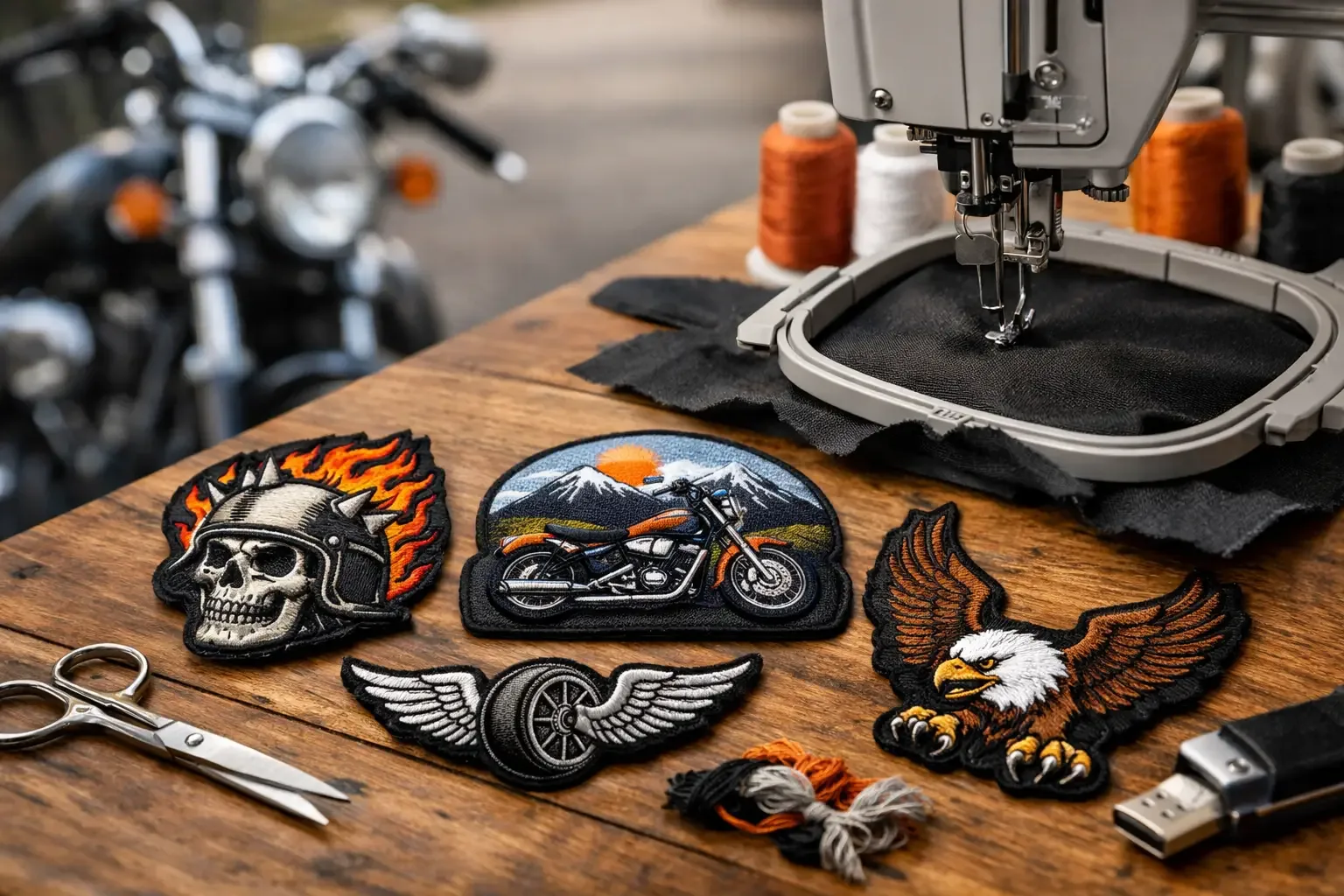
Look for designs built around recognizable motorcycle themes: classic bikes, choppers, racing helmets, wings, skulls, flames, engines, tire tracks, road signs, eagles, and garage-style badges. Vintage-inspired graphics work especially well because patches naturally have a bold, slightly rugged look. A clean circular emblem can suit a cap or chest placement, while a wide horizontal design is often a better choice for a jacket back or vest yoke.
Size is just as important as style. A 3-inch design can make an excellent sleeve, hat, or pocket patch. A 5- to 7-inch design gives you more impact on a tote, bag, or jacket front. For a large back patch, check your hoop size before buying or planning the project. Some designs are available in multiple sizes, while others may need to be split into sections for larger applications.
## Choosing Motorcycle Embroidery Patch Files by Project
The best file depends on where the finished patch will go. Before choosing a design, think about the item, the available embroidery area, and the look you want once it is worn or used.
Denim is one of the best surfaces for motorcycle patches because it supports bold stitching and fits the classic biker-inspired aesthetic. For a jacket back, choose a large design with a strong center image and uncomplicated lettering. Motorcycle silhouettes, winged emblems, flames, and vintage garage graphics all hold their shape well at larger sizes.
A jacket chest or vest panel needs something smaller and more focused. A circular badge, small engine graphic, or road-themed icon is usually easier to place and less likely to get lost in seams, pockets, or snaps. If you are adding several patches to one vest, vary the shape and scale so the layout looks collected rather than crowded.
Hats, caps, and beanies
Caps need simple artwork. The curved front panel and limited stitching area make dense, oversized files a poor match. Choose compact motorcycle patch designs with a clear outline, fewer color changes, and minimal small text. A small wheel, helmet, wing, or badge-style design can look sharp on a cap front.
Beanies and knit hats require extra care because stretchy fabric can distort during stitching. Use appropriate cut-away stabilizer and avoid files with heavy fill stitching over a small area. A finished embroidered patch applied after stitching may be the easier option for soft or highly stretchy items.
### Bags, tool rolls, and accessories
Canvas bags, duffels, backpacks, and tool rolls are practical places to use motorcycle designs. They are durable, visible, and ideal for patches that show personality without changing the fit of a garment. A rugged engine, tire tread, or garage emblem can turn an ordinary accessory into a gift that feels made for its owner.
For projects that will see frequent use, consider stitching the patch on twill or felt first, then attaching it securely. This approach lets you create a clean border and can be easier than hooping a bulky bag or a finished item with limited access.
File Formats and Machine Compatibility
Every embroidery machine reads specific file formats. Before downloading, confirm that the design is available for your machine. Common formats include PES for Brother and Babylock machines, DST for many commercial-style machines, JEF for Janome, EXP for Melco and Bernina systems, HUS for Husqvarna Viking, and VP3 for newer Husqvarna Viking and Pfaff machines.
Do not assume that a file can simply be renamed to work with another machine. Changing the letters after a file name does not convert the stitch data. If you need a different format, use reliable embroidery software to convert it, or choose a listing that includes the format you need.
It also helps to check the design details before you begin. Review the stitch count, finished dimensions, color sequence, and hoop requirements. A high stitch count is not automatically bad, especially for a detailed back patch, but dense designs take longer to sew and can create stiffness on lightweight fabric. For a patch, that density may be exactly what you want. For a T-shirt or thin jacket lining, it may not be the right fit.
How to Stitch a Patch That Looks Finished
A patch is more than an embroidery design on fabric. The base material and edge treatment determine whether it looks like a polished badge or a loose piece of stitched fabric.
Twill is a popular patch base because it is stable, durable, and available in colors that make thread stand out. Felt is another good choice for casual patches, especially for simple vintage or cartoon-style motorcycle artwork. Choose a base color that supports the design rather than competing with it. Black twill makes bright flames and chrome-inspired thread colors pop, while tan, gray, or olive can give a design a worn garage look.
Hoop the patch material with stabilizer underneath. A medium-weight cut-away or tear-away stabilizer can work depending on the fabric and stitch density, but test first. For dense motorcycle designs, a firmer stabilizer helps reduce puckering and keeps outlines clean. Slow the machine down if the design includes tight curves, small lettering, or multiple layered fills.
After stitching, trim around the design with a narrow, even margin. Some files include a satin stitch border that makes trimming easier and gives the patch a traditional finished edge. If the design does not include one, you can add a border in embroidery software or finish the edge with a heat-seal backing, fabric glue, or a stitched outline. The right option depends on whether the patch needs to be washable, removable, or permanently attached.
Thread Choices That Fit the Motorcycle Look
Thread color can make the same file feel vintage, high-contrast, or race-inspired. Black, charcoal, silver, red, orange, gold, and white are reliable choices for motorcycle-themed patch projects. Metallic thread can create a chrome effect, but it is more temperamental than standard polyester or rayon thread. Use a metallic needle, lower the machine speed, and test on scrap material before committing to a full design.
Polyester thread is a practical choice for patches used on jackets, bags, and gear because it handles wear and washing well. Rayon offers a softer sheen, which can be attractive for decorative pieces but may be less ideal for hard-use accessories. If your patch will be exposed to sun, rain, or regular abrasion, prioritize durability over shine.
Using Designs for Gifts and Small-Batch Products
Motorcycle patches are excellent for personalized gifts. Add a rider's name, a meaningful date, a favorite route number, or a custom phrase beside a motorcycle motif. A stitched patch can be attached to a denim jacket, travel bag, key fob, garage banner, or framed as workshop decor.
For small apparel and craft businesses, patch files can help create themed collections without paying for custom digitizing for every idea. Build a coordinated set around vintage bikes, racing graphics, patriotic road themes, or rugged garage artwork. Keep product photos clear about what customers receive if you sell finished items, and use only artwork you have permission to use commercially. Designs inspired by brands, teams, or protected logos may have usage restrictions, so always review licensing before listing products for sale.
Find a Design Worth Stitching
The right motorcycle design should fit the machine, the project, and the personality behind it. Browse by style, size, and placement instead of choosing only by the image on the screen. A compact badge may be perfect for a cap, while a large stitched emblem can become the centerpiece of a favorite riding vest.
Embroidery n Sewing makes it easy to shop a wide range of instant-download designs for custom apparel, gifts, bags, and more. Choose a file that speaks to the project in front of you, stitch a test run, and let the finished patch earn its place on the road.