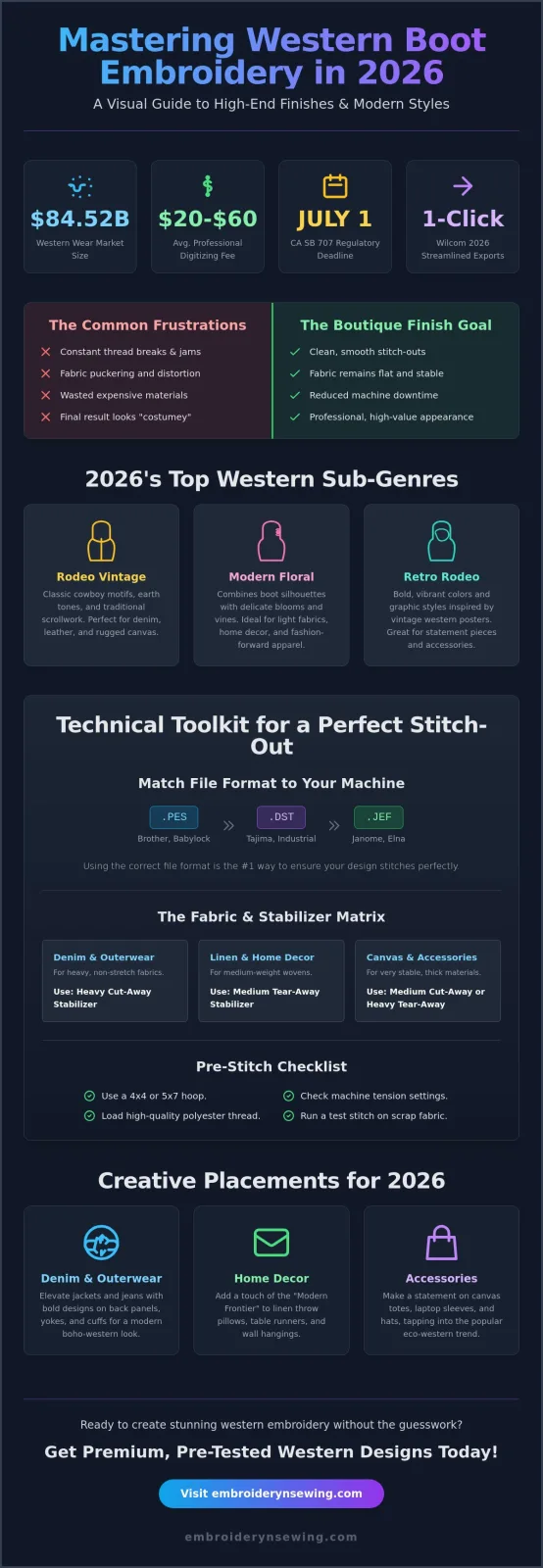
- Market Growth: The Western wear market reached USD 84.52 billion in 2026, according to Business Research Insights. - Technical Standards: Professional digitizing fees for new designs average between $20 and $60 in 2026. - Regulatory Deadlines: California’s SB 707 requires producers to register with a PRO by July 1, 2026. - Software Innovation: Wilcom 2026 now features Multi Blend tools and streamlined one-click exports.
The global Western wear market has hit USD 84.52 billion in 2026, yet finding western boot embroidery designs that look like high-end boutique fashion rather than a cheap costume remains a challenge. You've likely felt the frustration of a dense pattern causing constant thread breaks or ruining your fabric because the stabilizer wasn't a perfect match. It's exhausting to waste expensive materials on digital files that don't stitch out cleanly on your machine.
I promise to show you how to select and style the perfect designs for any project while avoiding common technical pitfalls. We'll explore the technical side of PES and DST formats; the benefits of Wilcom 2026's new features; and how to navigate the 2026 shift toward sustainable design prompted by California’s SB 707. You'll gain the inspiration and technical clarity needed to create modern, professional western apparel every time.
- Identify 2026’s top western sub-genres, from rodeo vintage to modern floral blooms, to ensure your projects feel current rather than like a costume.
- Master the technical setup needed for high-density patterns by matching specific stabilizers to your fabric to prevent puckering and thread breaks.
- Learn how to select the right file format, such as PES or DST, to ensure your western boot embroidery designs stitch perfectly on your specific machine.
- Explore creative placement ideas beyond standard apparel, including home decor and high-street fashion trends predicted for 2026.
- Discover why professional digitizing is the secret to reducing machine downtime and achieving a high-end boutique finish on every project.
Table of Contents
- Executive Summary: Mastering Western Boot Embroidery in 2026
- Choosing Your Style: From Traditional Cowboy to Floral Chic
- Technical Masterclass: Ensuring a Perfect Stitch-Out
- Creative Project Ideas: Where to Put Your Western Designs
- Why Source Your Western Designs from Embroidery n Sewing?
Executive Summary: Mastering Western Boot Embroidery in 2026
Western style has moved far beyond the ranch. In 2026, we are seeing a massive surge in western boot motifs appearing on everything from high-street denim to minimalist home decor. This guide helps you master the technical side of this trend so your projects look professional, not "costumey." To get started quickly, here is the core of what you need to know:
- Western boot designs are trending in 2026 across home decor and high-street fashion.
- Successful stitching requires matching the right file format (PES, DST, JEF) to your machine.
- Fabric choice and stabilization are the two biggest factors in preventing design puckering.
- Embroidery n Sewing offers premium, pre-tested digital files for professional-grade results.
Creating high-quality western boot embroidery designs requires more than just a great file. You need to understand how dense decorative stitching interacts with your specific fabric. Because western patterns often feature intricate scrolls and thick fill stitches, using a heavy-weight tear-away or cut-away stabilizer is non-negotiable. If you don't match these elements correctly, you'll face the dreaded "bird's nest" under your needle plate. Our digital embroidery designs are digitized with these challenges in mind, ensuring your machine runs smoothly from the first stitch to the last.
Why Western Aesthetics Are Dominating This Year
The "Modern Frontier" and "Boho Western" styles have taken over the 2026 fashion circuit. This shift is largely due to a desire for tactile, textured apparel in an increasingly digital world. Embroidery provides a physical depth that printed graphics simply cannot match. When you look at the history of the cowboy boot, it's clear that decorative stitching was always a sign of craftsmanship. Today, adding these motifs to a jacket or tote bag instantly increases its perceived value.
To help you visualize where these designs work best, consider this 2026 Style Map:
DIAGRAM: 2026 Western Style Map
[Central Motif: Western Boot Design]
↓
Denim & Outerwear: Back panels and cuffs (Boho Western Style)
Home Decor: Linen throw pillows and table runners (Modern Frontier)
Accessories: Canvas totes and laptop sleeves (Eco-Western Trend)
Quick Start: What You Need Before You Stitch
Before you load your western boot embroidery designs, check your inventory. You'll need a machine with a hoop size that accommodates the design's dimensions; usually a 4x4 or 5x7 hoop for standard boot motifs. It's also vital to brush up on your machine embroidery sewing fundamentals, especially regarding tension settings. High-quality polyester thread is the best choice for these projects; it provides a beautiful western sheen and resists the friction of high-speed stitching. Always run a test stitch on a scrap piece of your project fabric to ensure your stabilizer choice is sufficient for the design's density.
Choosing Your Style: From Traditional Cowboy to Floral Chic
- Identify the three main western boot design sub-genres for 2026: Classic Cowboy, Floral Western, and Retro Rodeo.
- Change the vibe of a single design simply by swapping your thread palette from earth tones to vibrant neons.
- Combine boot motifs with decorative borders to create a complete, high-end boutique look on any garment.
- Master the use of satin stitches to add light-catching texture to floral elements and scrollwork.
Picking the right look for your project is about more than just a single file; it's about matching the design's personality to your fabric. In 2026, we're seeing a huge variety in western boot embroidery designs, ranging from the dusty trails of the past to the bright lights of modern music festivals. If you're looking for inspiration on how to frame these pieces, our guide on embroidery patterns offers plenty of border ideas that can turn a standalone boot into a full, professional composition.
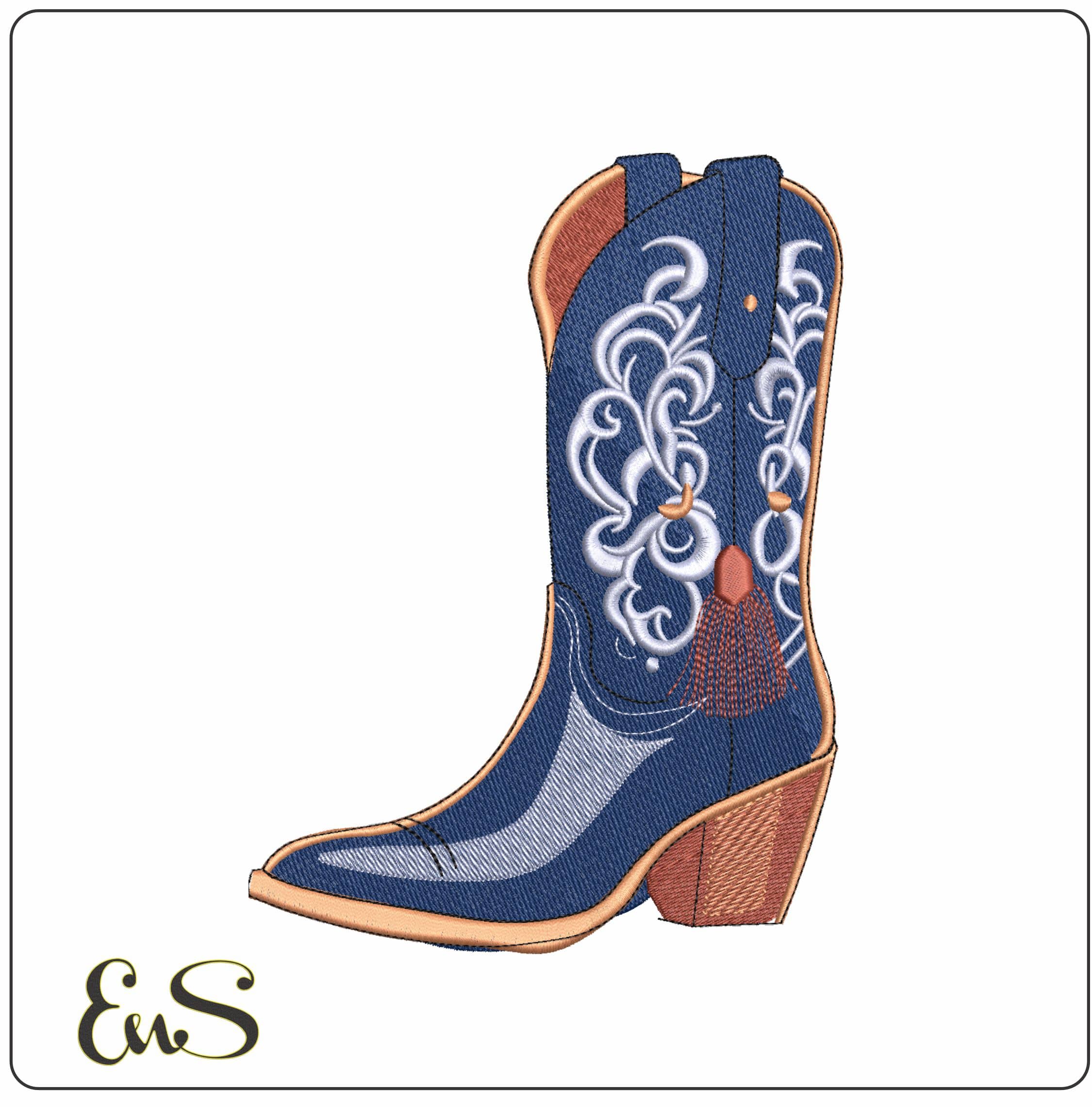
Don't feel locked into the colors you see in a preview image. One of the best parts about high-quality is their versatility. You can take a single boot design and stitch it in three different ways to suit different moods. For example, use turquoise and silver threads for a southwestern jewelry vibe, or try soft pinks and creams for a feminine, bridal look. Seeing how the same design transforms with different thread colors helps you realize that you aren't just buying a file; you're buying a template for your own creativity.
The Classic Cowboy style is all about authenticity and heritage. These designs often feature spurs and rugged leather textures that require a higher stitch count to get that realistic, raised feel. They look best on heavy-duty fabrics like work shirts, denim jackets, or leather accessories. To keep the look grounded, stick to a palette of rust, tan, and mahogany. If you're interested in the roots of these aesthetics, the definitive history of cowboy boots explains why these specific decorative elements became symbols of the frontier. When you stitch these, the density of the pattern provides a tactile depth that mimics actual embossed leather.
Floral Western: The 2026 "Coastal Cowboy" Look
If you want something softer, the "Coastal Cowboy" look is the standout trend of the year. This style mixes the sharp, iconic shape of the boot with delicate vines, cacti blooms, or soft wildflowers. It's a favorite for summer apparel and festival wear because it balances toughness with elegance. To make the flowers really pop, you'll want to use vibrant satin stitches for the petals. You can check out our visual guide on embroidery stitches to see how a satin fill differs from a standard tatami fill. It's a small technical detail that makes a massive difference in how the light hits your finished work, giving the floral elements a silky, high-end finish.
Technical Masterclass: Ensuring a Perfect Stitch-Out
- Dense western patterns require high-precision digitizing to prevent needle deflection and thread breaks.
- Standard machine maintenance, such as cleaning the bobbin case, is vital before starting high-stitch-count projects.
- Choosing between PES and DST formats depends on whether you're using a home Brother machine or a commercial unit.
- Heavy-weight cut-away stabilizer is the best choice for preventing fabric pull on intricate boot motifs.
While the aesthetic choices we discussed in the previous section bring the "Coastal Cowboy" vibe to life, the technical execution determines if your project actually succeeds. Digitizing is the process of converting art into machine-readable paths, and it's the most critical factor in a clean stitch-out. If a file isn't digitized with the correct "push and pull" compensation, your western boot embroidery designs will look distorted or cause your machine to jam. High-quality files ensure the needle follows a logical path that minimizes unnecessary jumps and keeps the thread tension consistent.
Before you load your design, run through this quick machine setup checklist. It's best to start every dense project with a fresh 75/11 or 80/12 sharp needle. A dull needle will struggle to pierce the tight layers of a western design, leading to skipped stitches. Also, take a moment to clean your bobbin case with a small brush; even a tiny amount of lint can cause the tension spikes that ruin a high-stitch-count fill. Once your machine is prepped, you're ready to select your file format and stabilizer.
Understanding File Formats (PES, DST, and More)
Your machine's brand usually dictates which file format you'll use. Brother and Babylock users should stick to PES files, as they carry the most accurate color information for those specific screens. However, DST is widely considered the universal language of embroidery because it works on almost any machine, including commercial Tajima or Barudan units. If you're a beginner and want to understand the deeper mechanics of these file types, our how to embroider guide offers a comprehensive breakdown. Choosing the right format ensures your machine interprets every curve of the boot exactly as it was digitized.
The Stabilizer Secret: Preventing Puckered Boots
Puckering is the most common issue when working with western boot embroidery designs because of their high stitch density. For these projects, a heavy-weight cut-away stabilizer is almost always better than a tear-away. Cut-away provides a permanent foundation that stays with the fabric, preventing the stitches from pulling the fabric inward during the wash. To get a perfect bond, use a light dusting of temporary spray adhesive to secure your fabric to the stabilizer before you hoop them together.
DIAGRAM: The Stabilizer Sandwich
[Top Layer: Project Fabric (e.g., Denim or Linen)]
[Middle Layer: Light Mist of Temporary Spray Adhesive]
[Bottom Layer: Heavy-Weight Cut-Away Stabilizer]
[Result: A unified surface that resists high-density stitch pull]
By using this "sandwich" method, you eliminate the shifting that leads to gaps in your embroidery. This setup, combined with professional digitizing from Embroidery n Sewing, ensures that even the most complex boot scrolls stitch out with boutique-level precision.
Creative Project Ideas: Where to Put Your Western Designs
- Move beyond the standard shirt pocket by exploring 2026 placement trends like full-scale jacket back panels and decorative home accents.
- Scale your motifs appropriately for 4x4, 5x7, or 8x12 hoops to ensure the density remains consistent with your fabric choice.
- Incorporate fabric textures like faux leather or floral cotton into the boot shaft using modern applique techniques.
- Apply specialized hooping methods for difficult materials, such as heavy denim and loose-weave burlap, to maintain design alignment.
Once you've mastered the technical prep from our masterclass, it's time to decide where your western boot embroidery designs will shine. In 2026, the trend is all about high-impact placement. You aren't limited to small, subtle hits; instead, we're seeing these boots used as central artistic statements. If you want to cut down on the high stitch counts we mentioned earlier while adding a unique tactile feel, applique is a fantastic solution. By substituting some of the fill stitches with actual fabric, you create a mixed-media look that feels very high-end.
DIAGRAM: Scaling and Placement Guide
[4x4 Hoop] → Best for: Pocket hits, sleeve cuffs, and small ITH coasters.
[5x7 Hoop] → Best for: Tote bag centers, pillow shams, and kids' denim vests.
[8x12 Hoop] → Best for: Full jacket back panels and large-scale wall hangings.
The Statement Denim Jacket
The denim jacket remains the gold standard for western motifs. For the best visual balance, center a large boot design on the back panel between the shoulder seams. Because denim is so thick, you'll want to avoid "hoop burn," which can permanently mark the fabric. Try a "floating" technique: hoop only your heavy-weight cut-away stabilizer, apply a light adhesive, and press the jacket panel onto the surface. This keeps the denim secure without the risk of the hoop frame leaving a ring. To finish the look, add a custom name or phrase using one of our machine embroidery designs in a bold, western-style font.
Western-Themed Home Decor
Western aesthetics are currently a major influence in 2026 home interior trends. Embroidering boot motifs on linen throw pillows or burlap table runners adds a sophisticated, rustic charm to any room. When working with burlap, remember that the loose weave can "swallow" your stitches. Always use a water-soluble topper on the front of the burlap to keep the thread sitting on top of the fibers. Stick with high-quality polyester thread for these items; it’s durable enough to handle the frequent washing and wear that home decor typically faces. If you're looking for a quick win, try a set of coasters using a smaller version of your favorite boot design to test your thread colors before committing to a larger project.
Why Source Your Western Designs from Embroidery n Sewing?
- Professional digitizing ensures smooth paths and significantly fewer thread breaks.
- Instant download features allow you to start your project seconds after your purchase.
- Designs are pre-tested on various machines to guarantee high-quality results. - Access a library of overing everything from rodeo styles to sports themes.
Choosing the right western boot embroidery designs is about more than just finding a pretty picture. You need files that respect your machine's mechanical limits. We focus on precision digitizing to minimize the technical issues we discussed earlier, such as bird-nesting or excessive stitch density. Our instant download system means you won't be waiting for an email to arrive; your files are ready the moment you finish checkout. Whether you're looking for Nike-inspired western mashups or traditional cowboy motifs, our library serves as an expert resource for creators who value their time and their equipment.
DIAGRAM: The Digital Journey to a Perfect Project
Step 1: Select Your Western Boot Design
↓
Step 2: Instant Download (PES, DST, JEF, etc.)
↓
Step 3: Load File to Your Machine
↓
Step 4: Flawless, High-Density Stitch-Out
Quality You Can See in Every Stitch
We don't just upload files and hope for the best. Each design undergoes testing on multiple machine brands to ensure the stitch paths are logical and efficient. This reduces unnecessary jump stitches and keeps your machine running cool. If you run into a snag with a specific file format, our support team is available to help you navigate those technical hurdles. You can also pair our boot designs with various machine embroidery fonts to add names or specific dates. This turns a standard digital pattern into a custom heirloom without the need for expensive custom design services.
Join Our Global Community of Makers
Our community of makers spans across the US, from small home studios in Texas to professional workshops in Montana. We love seeing how you take our digital patterns and turn them into physical art. Share your finished denim jackets or western home decor on social media to inspire other makers in our growing network. It's never been easier to access professional-grade western boot embroidery designs, regardless of where your sewing room is located. We provide the digital foundation so you can focus on the creative execution.
Ready to transform your next project with a touch of the frontier? Browse our exclusive Western Boot Embroidery Designs today!
Ready to Elevate Your 2026 Western Projects?
The Western wear market's growth to USD 84.52 billion in 2026 proves that frontier style is more than a passing phase. You've learned how to navigate the technical demands of high-density stitching and how to choose between rugged traditionalism and the "Coastal Cowboy" aesthetic. Success in machine embroidery comes down to the details. By using heavy-weight cut-away stabilizers and expertly digitized western boot embroidery designs, you ensure every project reflects professional-grade craftsmanship.
Our digital patterns are tested on all major machine brands to guarantee smooth paths and fewer thread breaks. Every file is available for instant download after purchase; so you can start your next denim jacket or home decor piece immediately. High-quality digitizing is the difference between a project that frustrates you and one that looks like it belongs on a high-street shelf.
Shop Premium Western Boot Embroidery Designs Now and bring your creative vision to life. Your machine is ready to create something iconic; let's get stitching!
Frequently Asked Questions
What is the best file format for my Brother embroidery machine?
Brother machines natively read PES files. While you can use DST files, the PES format is superior for Brother users because it preserves specific thread color data and hoop positions. If you're using a multi-needle Brother machine, DST is a reliable alternative, but PES remains the standard for most home and semi-professional models in 2026.
Can I resize a western boot embroidery design without losing quality?
You shouldn't resize a digital embroidery file by more than 10% to 15% in either direction. Because the stitch count is fixed in the digitized file, shrinking it makes the stitches too dense, which causes needle breaks. Enlarging it too much creates unsightly gaps. For the best results, always download the specific size that fits your project hoop.
Why does my fabric pucker when I stitch large western designs?
Puckering happens when the stitch density is too high for the stabilizer you've chosen. Many western boot embroidery designs feature over 15,000 stitches, which puts immense pull on the fabric. If you're seeing ripples, switch from a light tear-away to a heavy-weight cut-away stabilizer. This provides the permanent foundation needed to keep the fabric flat during and after the stitching process.
Do I need special needles for embroidering on denim or leather?
Yes, you should use a 90/14 or 100/16 sharp needle for heavy materials. Standard 75/11 embroidery needles are too flexible for the thick seams of a denim jacket or the resistance of faux leather. A larger, sharper needle ensures clean penetration and prevents the needle from deflecting, which is the leading cause of skipped stitches in dense western motifs.
What is the difference between a fill stitch and a satin stitch in boot designs?
Fill stitches cover large surface areas with a textured pattern, while satin stitches create smooth, glossy lines. In most western boot embroidery designs, fill stitches create the "leather" body of the boot. Satin stitches are then used for the decorative scrolls, spurs, and floral outlines to provide a contrasting sheen that catches the light.
How do I get my digital embroidery files after purchasing?
You'll receive an instant download link on the confirmation page and via your registered email address. This link allows you to download a ZIP folder containing all major formats, including PES, DST, JEF, and EXP. This system ensures you can start your project within seconds of completing your order without waiting for manual file delivery.
Is it possible to use these western designs for a commercial clothing line?
Yes, our designs include a commercial license that allows you to sell physical products featuring the stitched motifs. You can typically produce up to 500 physical items per design for your boutique or online store. It's important to remember that this license applies only to the physical embroidered product; reselling or sharing the digital embroidery files themselves is strictly prohibited.
What hoop size do I need for a standard western boot jacket back design?
You generally need an 8x12 inch hoop or larger for a full-size jacket back. A design measuring 8 to 10 inches in height is the standard for adult outerwear to ensure it looks proportional. For smaller projects like tote bags or kids' vests, a 5x7 inch hoop is usually sufficient for a single boot motif.