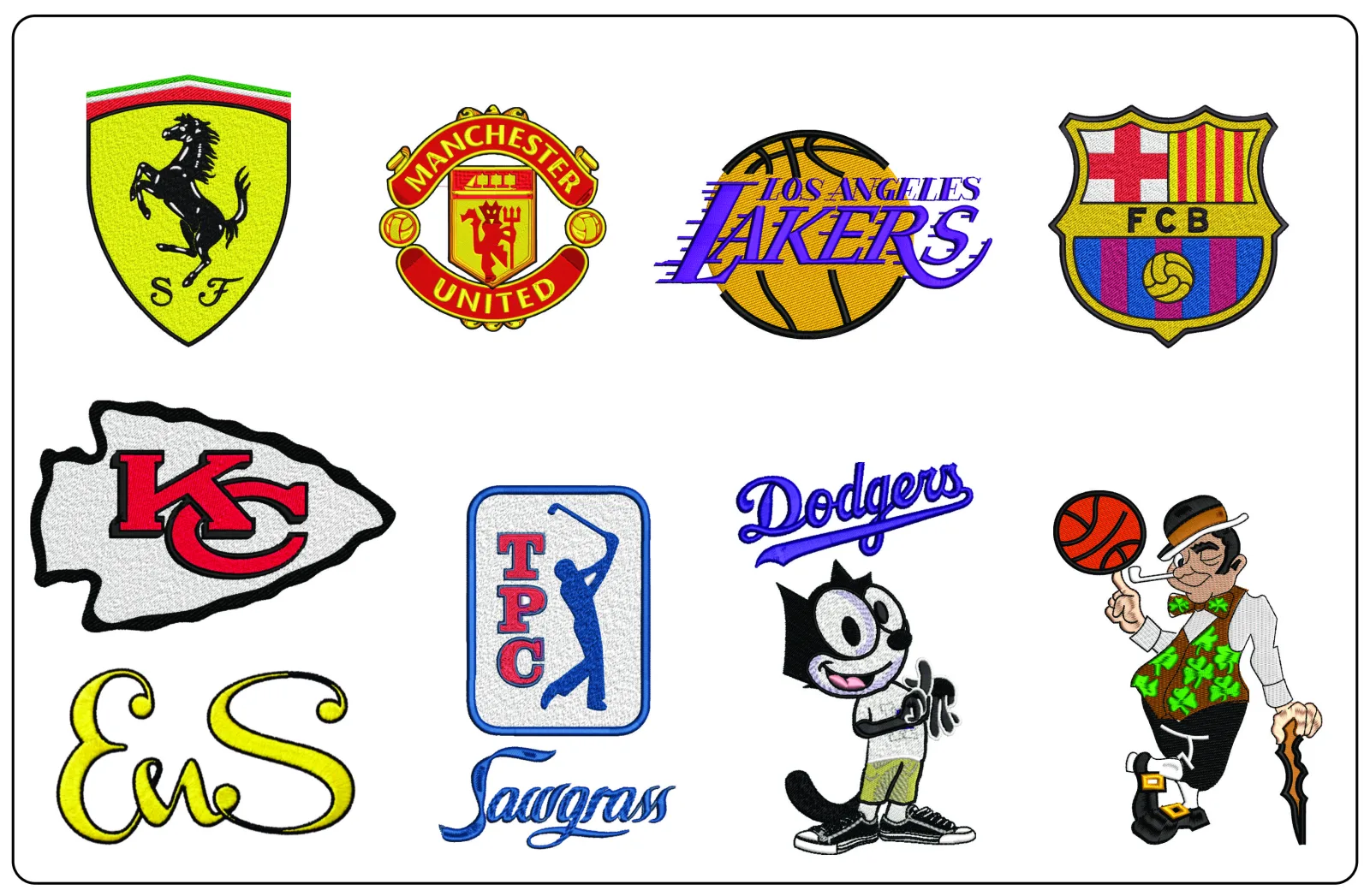
A sports logo embroidery file review should happen before the hoop comes out, not after a design has stitched halfway across a costly jacket. Team-inspired artwork can look bold in a listing image yet need the right size, stabilizer, thread colors, and machine format to perform well on your chosen item. A few minutes of checking the file details helps you buy with confidence and start your project faster.
Whether you are making a game-day sweatshirt, a youth team bag, a graduation gift, or boutique apparel for a customer, the goal is the same: choose a clean, embroidery-ready design that fits the job.
Sports designs are often built around strong lettering, mascots, helmets, balls, stadium shapes, or badge-style layouts. That makes size more than a simple measurement. A compact chest design needs enough space for letters, outlines, and small interior details to stitch cleanly. A large back design needs a hoop that can handle the finished dimensions without forcing an awkward split.
Read the listed height and width before purchasing. Then compare those measurements with the usable sewing field of your hoop, not just the hoop's outside dimensions. A 4x4 hoop is a practical choice for small monograms, cap patches, youth shirts, and compact logo-style marks. Larger team graphics, stadium scenes, and detailed school-inspired designs commonly need a 5x7, 6x10, or larger hoop.
Also consider where the design will sit. A logo that looks balanced at 3.8 inches wide on a left chest can become too dense or visually heavy when placed on a small toddler shirt. For adult hoodies and jacket backs, the opposite can happen: a small file may get lost in the garment. Start with the placement, then select the size that belongs there.
## Check What the Preview Actually Shows
A product preview is your first quality check. Look beyond the artwork itself and study how the design has been digitized for thread. Clear color blocks, defined borders, readable lettering, and sensible detail levels are good signs for a sports logo embroidery file.
Pay close attention to tiny text. Names, dates, championship phrases, and curved lettering can look crisp on screen but become difficult to read when stitched too small. If a design includes fine details, it may be best suited to a larger hoop, a stable fabric, or a flatter item such as a tote, banner, patch, or sweatshirt front.
Dense areas matter too. Filled helmets, large block letters, and layered badge designs can create a lot of stitching in one spot. That is not automatically a problem. It simply means your fabric support and needle choice need to match the project. A structured twill patch can support a dense design differently than a lightweight performance tee.
### Look for a balanced color layout
Sports projects often depend on recognizable color combinations. Before buying, review the color sequence shown in the listing and decide whether you have close thread matches on hand. Exact brand-name thread colors are not always necessary, but contrast is. Dark lettering on a dark hoodie can disappear, while a light outline or contrasting border can make the same design stand out.
If you are stitching for a customer, share a thread sample or digital color mockup before production. The file provides the stitch design, but your thread choices determine much of the finished look.
## Confirm Your Machine Format Before Checkout
The most attractive design is not useful if it does not work with your embroidery machine. Always verify that the available file formats include the one your machine reads. Common machine formats include PES, DST, JEF, EXP, VP3, HUS, XXX, and others, but each machine brand and model has its own requirements.
Do not assume that a downloaded ZIP folder will include every format. Review the product details first. If you use multiple machines in a home studio or small business, save the original download in an organized folder and make a copy for each machine workflow. Keep the design name, size, and format in the file name so you do not accidentally load the wrong version later.
At Embroidery n Sewing, instant-download sports, school, and team-inspired categories make it easier to shop by the theme your project calls for. Still, format and size should be confirmed on every individual file before you plan production around it.
## Match the File to the Fabric
A design can stitch beautifully on one material and need adjustment on another. Sports apparel covers a wide range: fleece hoodies, cotton tees, polyester jerseys, caps, varsity jackets, towels, duffel bags, and patches all behave differently under the needle.
For stable fabrics such as twill, canvas, or firm sweatshirt fleece, many logo-style designs stitch cleanly with appropriate cut-away or tear-away support, depending on the item and stitch density. Stretchy knit shirts need more care. Use a stabilizer that supports the fabric during stitching, and consider a water-soluble topping if the material has texture. This keeps stitches from sinking into fleece, terry, or similar surfaces.
Polyester performance apparel brings another trade-off. It is popular for team gear, but dense dark thread on light polyester can sometimes create show-through or puckering. A test stitch on a matching fabric scrap is worth the time, especially when you are producing multiple shirts. For heat-sensitive materials, choose methods and settings that protect the garment while you stabilize and finish it.
Caps deserve their own decision point. Not every flat embroidery file is suitable for a curved cap front. A cap-friendly design generally needs controlled density, a workable height, and lettering that remains readable along the curve. If the project is for hats, choose a file and size created with hat placement in mind rather than trying to force a wide chest design into a narrow front panel.
Read Stitch Details as Production Information
When a listing provides a stitch count, use it as a planning tool. Higher stitch counts often mean more detail, larger coverage, or denser fills. That can be exactly what you want for a bold mascot patch or a stadium-themed design. It can also mean longer run times, more thread changes, and greater need for proper stabilization.
For a one-off gift, a longer stitch-out may be no issue. For an Etsy shop, a school fundraiser, or a batch of team jackets, production time matters. Multiply the stitch count, color changes, hooping time, and trimming by the number of pieces you need to make. A design that is affordable as an instant download can still become expensive to produce if it requires slow stitching on difficult fabric.
Look for color-change information as well. A file with several colors can create a polished result, but it takes more active machine time. If you are making a dozen matching items, group your production by thread color where possible and keep extra bobbins ready.
Test Stitch Before You Commit to the Final Garment
A test stitch is the most useful part of any sports logo embroidery file review. Use fabric that is as close as possible to the final item, with the same stabilizer, needle, thread weight, and hooping method. This tells you far more than a preview image can.
Watch for puckering, gaps between fill stitches, thread breaks, outlines that do not align, or lettering that becomes hard to read. Some problems come from the file, but many come from fabric movement, poor hooping, an old needle, incorrect tension, or using the wrong stabilizer. Adjust one variable at a time so you know what fixed the issue.
If the design includes multiple color blocks, check registration after each section. If the edges stay crisp and the fabric remains smooth, you are ready for the final garment. If not, testing has saved you from wasting a hoodie, jersey, or customer order.
Know the Use Rules for Sports-Inspired Designs
Sports logos, team names, mascots, university marks, and related artwork may be protected by trademark or copyright rights. Buying a digital embroidery file does not automatically grant permission to reproduce protected branding for every purpose. Review the product terms and make sure your intended personal or commercial use is allowed.
This is especially relevant for makers selling finished goods. A personal game-day gift and a large run of products marketed with a team name can involve very different rights considerations. When in doubt, choose original team-color themes, generic sports artwork, or properly authorized designs for commercial projects.
A great team project starts with a file that fits your machine, hoop, fabric, and production plan. Choose the size with care, test before stitching on the final piece, and let the design become the detail that makes a simple garment feel ready for game day.


