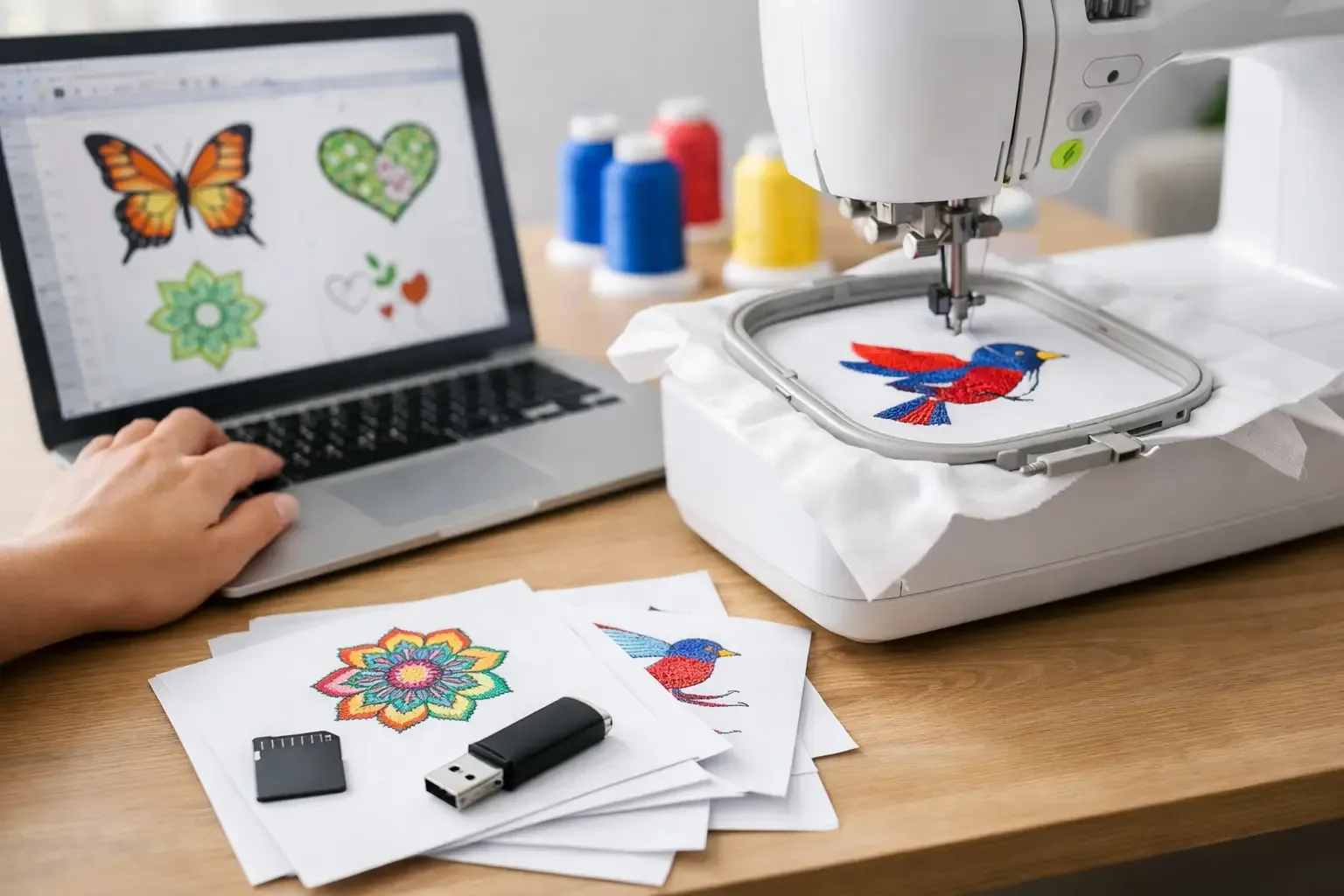
You've leveled up your embroidery skills, invested in a decent machine, and now you're ready to take on more ambitious projects. But here's where things can get a little overwhelming: where are you actually getting your designs? If you've been downloading files from random sites or relying on the same handful of freebies, you might be missing out on something that could genuinely transform your workflow.
An embroidery library is essentially your design home base, a curated collection of files you can access, organize, and stitch whenever inspiration strikes. But not all embroidery library designs are created equal, and the source you choose can make a huge difference in your results, your frustration levels, and even the longevity of your machine.
In this post, we're breaking down exactly what an embroidery library is, what separates a great one from a mediocre one, and the key factors you should consider before committing to a subscription or purchase. Whether you're looking to expand your creative options or just tired of dealing with poorly digitized files, this guide has you covered.
## What 'Embroidery Library Designs' Actually Means and What to Look For
When you search for embroidery library designs, you are not looking for a single file or a handful of random downloads. You are looking for a structured, browsable catalog that is organized by theme, technique, project type, and file format so you can find exactly what you need without digging through hundreds of unrelated files. Think of it the way you would think of a well-run streaming library versus someone's cluttered desktop folder. One is searchable and curated; the other is a guessing game.
A quality embroidery library signals its credibility in a few specific ways. Consistent stitch quality across every file is non-negotiable, because one poorly digitized design that shreds your fabric or causes thread breaks undermines trust in the entire catalog. Regular additions matter too, since thousands of new digital patterns are released industry-wide each year and a stagnant library quickly becomes irrelevant. You also want clear file format labeling (PES, DST, JEF, HUS, VP3, and others) so you know instantly whether a design is compatible with your machine before you purchase. Transparent licensing terms round out the checklist, especially if you are producing items for sale on Etsy or as custom apparel.
Volume is a genuine trust signal in this space. The Embroidery Library all-designs collection markets its 150,000+ unique designs as a headline differentiator, and that number has become the benchmark buyers instinctively reference when evaluating any platform. At this stage, you are not learning to embroider. You are choosing a supplier, which means category depth, search functionality, and organizational structure matter just as much as any individual design file.
That breadth is exactly what separates a true library from a niche boutique. EmbroideryNSewing.com covers anime, cartoons, children's themes, country flags, fonts, nature motifs, seasonal designs, sports teams, and university logos, giving it the category range to stay relevant across completely different projects over time.
## File Formats: Which Embroidery Designs Work With Your Machine
Before downloading any design from a library, you need to confirm one non-negotiable thing: does the file format match your machine? This is one of the most common friction points for buyers, and skipping this step can mean a beautiful design sits unusable on your hard drive.
**PES is the format you want if you own a Brother or Baby Lock machine**, including popular models like the PE800 and the Luminaire series. These machines represent the largest share of home embroidery machines in North America, which is exactly why PES tends to be the first format listed on most product pages. If you are shopping for embroidery library designs and you own one of these machines, PES should be your baseline requirement.
DST (Tajima format) is the go-to for commercial and multi-needle machines. If you run a custom apparel shop or work with promotional product businesses, DST is what your equipment reads. It is the most universally accepted format across commercial embroidery hardware, and professional sellers consistently recommend including it in any multi-format bundle. Commercial buyers who submit logo files for production almost always request DST specifically.
Brand-specific formats require a little more homework. Janome machines use JEF and JEF+. Pfaff and Husqvarna Viking machines run on VP3 and VIP, and it is worth knowing that machines reading VIP typically also accept VP3, so that format does double duty across that brand family. Older Husqvarna models still require HUS files, so do not assume a newer format will work on legacy hardware.
For less common machines, EXP covers Melco and Elna, XXX is Singer's format, and SEW handles older Janome and Elna models. According to community experts in the Hatch Embroidery User Group, a solid core format bundle should include DST, EXP, JEF, PES, VP3, HUS, and XXX at minimum. If your machine falls outside the mainstream brands, always verify format support before purchasing a bundle or subscription.
A library that packages multiple formats per design saves you from hunting down conversion software separately, which is a real purchase barrier for many buyers. Before completing any purchase on EmbroideryNSewing.com, check the product page to confirm which specific formats are included in the download. For a deeper look at how formats map to specific machines, Embroidery Legacy's format guide is a practical reference worth bookmarking. Format clarity is not just a convenience feature; it is one of the top reasons buyers choose one platform over another, and a clear format listing on a product page can be the difference between a completed purchase and an abandoned cart.
The Category No Other Library Matches: Sports, Fandom, and Pop Culture
If there is one area where EmbroideryNSewing.com genuinely stands apart from every other embroidery library on the market, it is the depth of its sports, fandom, and pop culture catalog. We are talking about NFL team designs, college athletics and university logo-style files, anime series, and major entertainment properties, all available as instant downloads. This is not a side category or an afterthought. It is the core of what makes this library worth bookmarking if you regularly produce fan apparel, team gear, or pop culture merchandise.
Why This Gap Exists in the Market
Most mainstream embroidery platforms are built around craft-first browsing. They organize by technique, stitch type, or decorative theme, which works beautifully if you need a floral border or a holiday motif. But if you are looking for a specific football team or a recognizable anime character, that approach leaves you empty-handed. Sports embroidery designs at technique-focused platforms tend to fall under broad "Activities and Interests" buckets rather than team-specific categories. There is no dedicated NFL section, no college athletics filter, and no anime library. That is exactly the white space EmbroideryNSewing.com fills.
The Real Cost of Not Having the Right File Ready
Custom digitizing solves the problem, but it costs you time and money. A single custom digitized design typically runs anywhere from $10 to $50 or more depending on complexity, plus turnaround time that can stretch days. For a parent customizing a college-logo tote bag, an alumni group ordering spirit wear, or a student organization personalizing event jackets, that cost adds up fast. A low-cost instant download from a well-stocked library skips all of that friction entirely.
The anime and entertainment design categories deserve a specific mention here. [Team sports embroidery files]Sports Team Embroidery Designs That Sell at most platforms skew heavily toward generic silhouettes and slogans rather than recognizable characters or franchise-specific imagery. The cosplay apparel and fan merchandise market is growing year over year, and craft-focused platforms have largely ignored it. EmbroideryNSewing.com's coverage of anime series and entertainment properties directly serves this underserved and fast-growing buyer segment, giving custom apparel makers a reliable source for files they genuinely cannot find anywhere else.
Free vs. Paid Embroidery Libraries: What You Are Actually Trading
Free embroidery libraries are a real option, not just a fallback for people who cannot afford to pay. Platforms like Embroidize offer 100% free, professionally digitized files with full commercial-use permission and no subscription required. That is a genuinely compelling offer, and most buyers rightfully evaluate it before spending a single dollar. If you are new to machine embroidery or running a low-volume hobby project, starting with a free library makes complete sense.
The problem shows up the moment you get specific. Free catalogs are built around broadly appealing, generic designs because that is what free platforms can legally offer. Think basic florals, simple seasonal motifs, and clean geometric borders. The moment you need an NFL team design, a college athletics logo, or a recognizable anime character, free platforms go quiet. This is not an oversight; it is a structural limitation driven by licensing complexity. Those categories require agreements that free platforms simply cannot negotiate or absorb.
Stitch quality is the other variable that rarely gets discussed upfront. Free design libraries pull from a wide range of sources, and consistency across files is uneven. For a single personal project, that is manageable. For production runs or items you are selling on Etsy, inconsistent stitch density means rework time, wasted materials, and potentially unhappy customers. According to a 2026 review of free embroidery digitizing software, even the best free tools carry meaningful limitations in stitch density control and design complexity, which flows directly into the quality of files built with them.
This is where the pricing structure at EmbroideryNSewing.com changes the math. When individual designs are priced in the impulse-purchase range, the decision to pay for the specific file you actually need becomes almost frictionless. Spending a small amount on one design that fits your project perfectly beats spending an hour searching a free library that may not carry it at all.
For commercial sellers, that logic gets even stronger. Generic designs from free libraries do not differentiate your product listings in a crowded Etsy marketplace. Customers shopping for custom apparel, fan gear, or niche gifts are searching for specific categories. The combination of low per-design pricing and a catalog built around high-demand niche categories, including sports, fandom, and pop culture, gives you designs that actually drive purchase decisions rather than blending into the background.
Commercial Use Licensing: What You Can and Cannot Do With Your Designs
Licensing is one of those topics that feels dry until the moment it becomes urgent. For Etsy sellers, custom apparel makers, and anyone producing finished goods to sell, getting this wrong is not just a technicality. It can mean cease-and-desist letters, platform takedowns, or fines. That is why commercially motivated buyers actively filter for licensing clarity before they ever click purchase.
Personal-use licenses are the default for most designs, and the boundaries are straightforward once you understand them. You can stitch the design onto items for yourself, your family, or as handmade gifts. What you cannot do is sell those finished items, run production batches for a boutique or online shop, or redistribute the original digital file in any form. This applies whether you paid for the design or downloaded it free. Free does not automatically mean commercially licensed, which surprises a lot of buyers who assume otherwise.
A commercial-use license changes the equation, but it does not remove all restrictions. The most important variables to check are unit caps (some licenses allow selling only up to a specific number of finished items per design before you need an upgraded agreement), digital redistribution rules (you almost never have the right to resell or share the original file, even with a commercial license), and category exclusions covering things like mass manufacturing or sublicensing to third parties.
Before purchasing any design for commercial use on EmbroideryNSewing.com, review the license terms on the individual product page and the site's Terms of Use. If your use case is unusual, such as bulk Etsy orders or print-on-demand fulfillment, contact support directly to confirm you are covered. This is consistent with best practices across the industry, where transparent licensing pages reduce buyer hesitation and support faster purchase decisions. Platforms that surface these details clearly earn trust with the Etsy seller segment, which treats licensing transparency as a direct purchase signal, not an afterthought.
What Is Trending in 2026 and Where to Find It in the Catalog
The embroidery world does not stand still, and 2026 is delivering one of the more coherent trend cycles the industry has seen in years. Here is what is moving in the market right now and where you can find designs that align with each direction.
1. The Soft Stitch Era Sets the Tone
Etsy's 2026 trend report coined the phrase "Soft Stitch Era" to describe a category-wide shift that is reshaping how buyers shop for embroidery library designs. The movement favors handcrafted texture, placement-driven layouts, and intentional minimalism over the dense, fill-heavy machine work that dominated earlier design cycles. According to TrueDigitizing's June 2026 trend breakdown, this translates practically into line art, tone-on-tone micro embroidery, and organic motifs. If your project aesthetic leans considered rather than saturated, this macro shift is working in your favor.
2. Minimalist Line Art and Oversized Florals
Both styles sit at the top of the 2026 trend list, and both share the same underlying logic: organic shape over complexity. Oversized florals with layered petals and trailing vines are landing particularly well on apparel and home textiles. One practical note worth keeping in mind is that minimalist designs can fail when digitized too densely, so previewing stitch density before downloading matters. EmbroideryNSewing.com's nature and seasonal categories are the most direct match here, covering botanical motifs and seasonal imagery that align cleanly with this direction.
3. 3D Puff on Structured Hats
Per Broken Arrow Wear's 2026 branded apparel trend report, 3D puff embroidery is one of the most noticeable techniques of the year, driven almost entirely by custom headwear demand. Sports team and fandom designs are a natural fit because hats are already the primary use case for that category. The sports and fandom library at EmbroideryNSewing.com, which spans NFL themes, college athletics, and entertainment properties, maps directly onto the structured-cap market where 3D puff makes the biggest visual impact.
4. Retro Y2K Typography
Personalized apparel is not slowing down, and the 2026 trend data points clearly toward retro Y2K letterforms as the aesthetic of choice for name drops, monogramming, and statement text. Font choice is genuinely upstream of execution here; the right digitized letterform determines whether the aesthetic lands or falls flat. EmbroideryNSewing.com's machine embroidery fonts collection offers downloadable letter and number sets that work across exactly these use cases, giving you a practical starting point without needing to commission custom digitizing.
5. Metallic Threads and Mixed-Media Appliqué
Metallic and iridescent thread work rounds out the core 2026 list, and the key craft insight is that design selection drives the outcome more than thread selection alone. Designs with open fill areas and clearly defined shape outlines are far more compatible with metallic thread runs because the thread catches light best where it has room to move. Appliqué mixed-media styles follow similar logic, rewarding designs with strong, clean shape boundaries. When browsing any embroidery library catalog, look for designs with those structural qualities if you are planning to experiment with either technique.
Build a Library Worth Stitching From
Putting all of this together comes down to five practical moves. First, confirm format compatibility before you browse anything. Know whether your machine needs .PES, .DST, .JEF, or another format, and verify the library delivers that exact format before you spend a dollar. Second, stop evaluating libraries by total design count alone. A catalog of 150,000 generic designs can leave you with almost nothing usable if your projects run toward sports apparel, anime, or structured hat work. Niche depth matters far more than raw volume. Third, read the licensing terms before you stitch a single item for sale. Personal-use-only files create real legal exposure for Etsy sellers and custom apparel businesses, and the fix takes less than five minutes.
Fourth, use the 2026 trend list as a literal shopping checklist. Search EmbroideryNSewing.com for oversized florals, nature motifs, Y2K-style fonts, and designs built for 3D puff on structured hats. Fifth, browse the sports, fandom, anime, and pop culture sections of the catalog with intention. That particular combination of categories is where the library genuinely delivers something other platforms do not. Start there, match your formats, check your license, and stitch with confidence.
Conclusion
Choosing the right embroidery library is not a small decision. It shapes the quality of your finished work, the smoothness of your creative process, and how much time you spend troubleshooting instead of stitching. The best libraries offer well-tested designs, broad format compatibility, and collections that actually grow with your skill level. A poor source, on the other hand, can cost you thread, fabric, and patience.
Before committing to any library, evaluate the design quality, the variety available, and the support behind it. Your machine and your projects deserve better than mystery files from unreliable sources.
Ready to upgrade your design collection? Start by auditing what you currently use, identify the gaps, and seek out a library built for embroiderers who are serious about their craft. The right foundation makes every project better.


