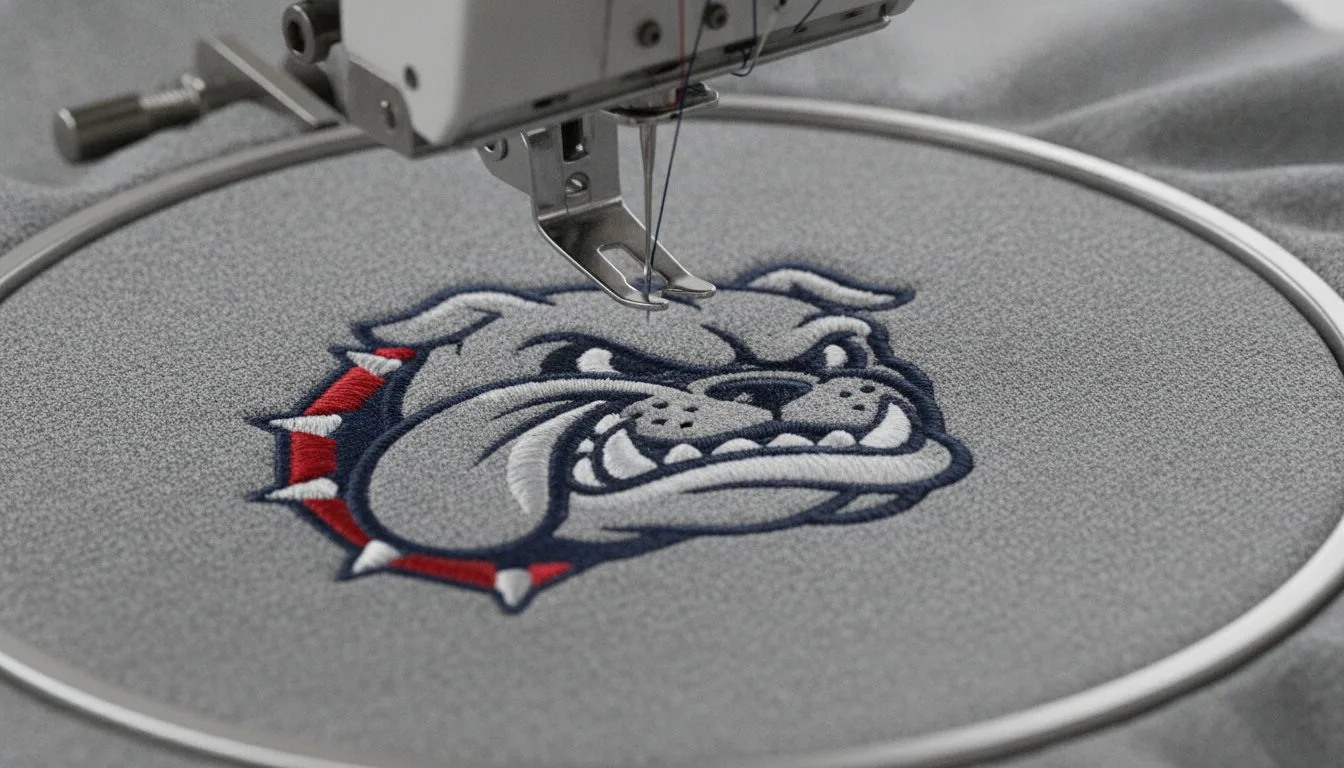
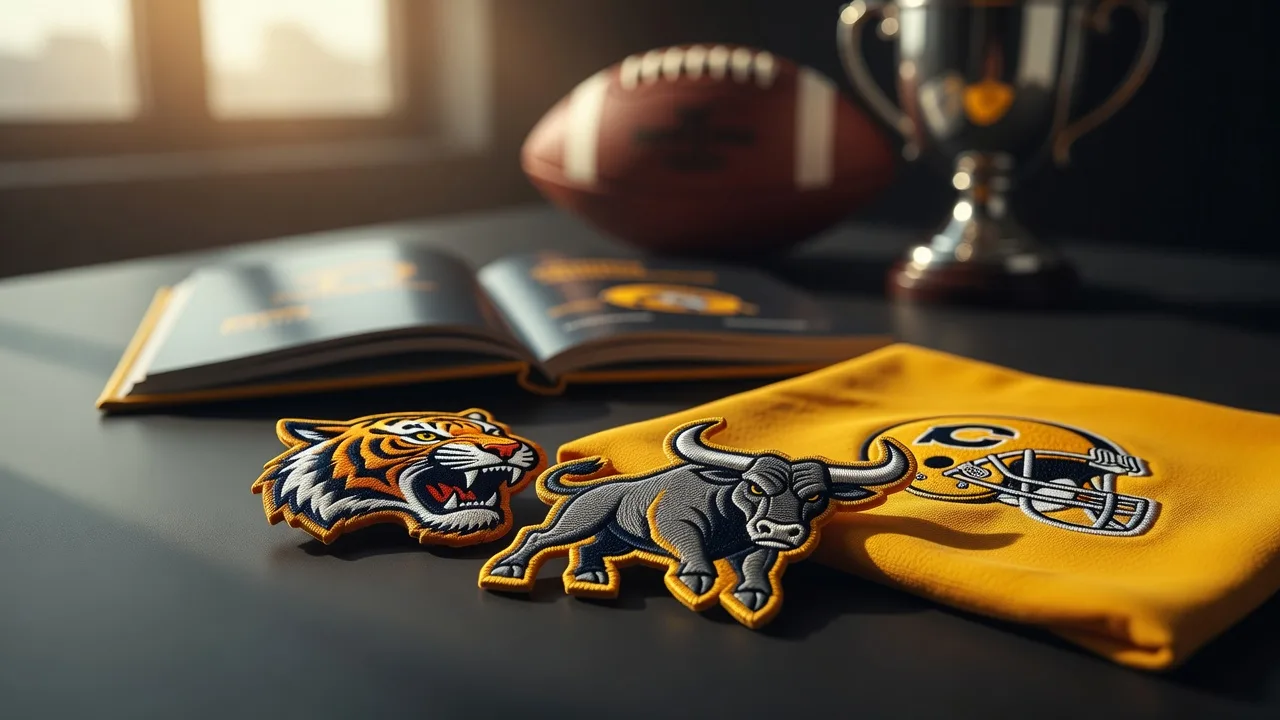
Whether you're a die-hard fan looking to stitch your team's logo onto a hat, or someone who just got their first embroidery machine and wants to show some school spirit, you've come to the right place. College football team embroidery designs are one of the most popular ways to personalize everything from jerseys and tote bags to blankets and pillowcases. But if you're new to the embroidery world, figuring out where to start can feel a little overwhelming.
Don't worry, we've got you covered. In this guide, we're breaking everything down into simple, easy-to-follow tips so you can shop with confidence. You'll learn what to look for when buying designs, where to find high-quality files, what file formats work best for beginners, and how to avoid some common mistakes that new embroiderers often make. By the time you finish reading, you'll know exactly how to find the perfect college football team embroidery designs for your next project. Let's dive in!
## What to Look for in a College Football Design File
Not every embroidery file is created equal, and that difference really shows when you're working with something as detail-heavy as a college football logo. Here are the four biggest things to check before you buy.
1. Digitization Quality Comes First
A college football design is not just a simple shape. You're dealing with mascot faces, helmet stripe sequences, and multi-color wordmarks that all need to register cleanly on stretchy or textured game-day fabrics. A professionally digitized file will include proper underlay threads, accurate pull compensation, and clean stitch paths. Without these, your finished design can pucker, shift, or look blurry around the edges. Always look for signs that real care went into the file, not just a quick auto-digitize conversion.
2. Confirm Your File Format Before Purchasing
Your machine speaks a very specific language. Brother and Baby Lock machines read PES files, Janome machines use JEF, and Tajima-based commercial machines rely on DST. Buying a beautiful design in the wrong format is a frustrating waste of money. Quality stores typically offer multi-format bundles so you're covered regardless of your machine brand.
3. Use Stitch Count as Your Complexity Guide
Stitch count tells you how complex a design is and how long it will take to sew. A detailed mascot for a jacket back can run 15,000 to 40,000 stitches, while a simple cap wordmark sits closer to 3,000 to 8,000. Knowing this number upfront helps you pick the right stabilizer and fabric weight for your project.
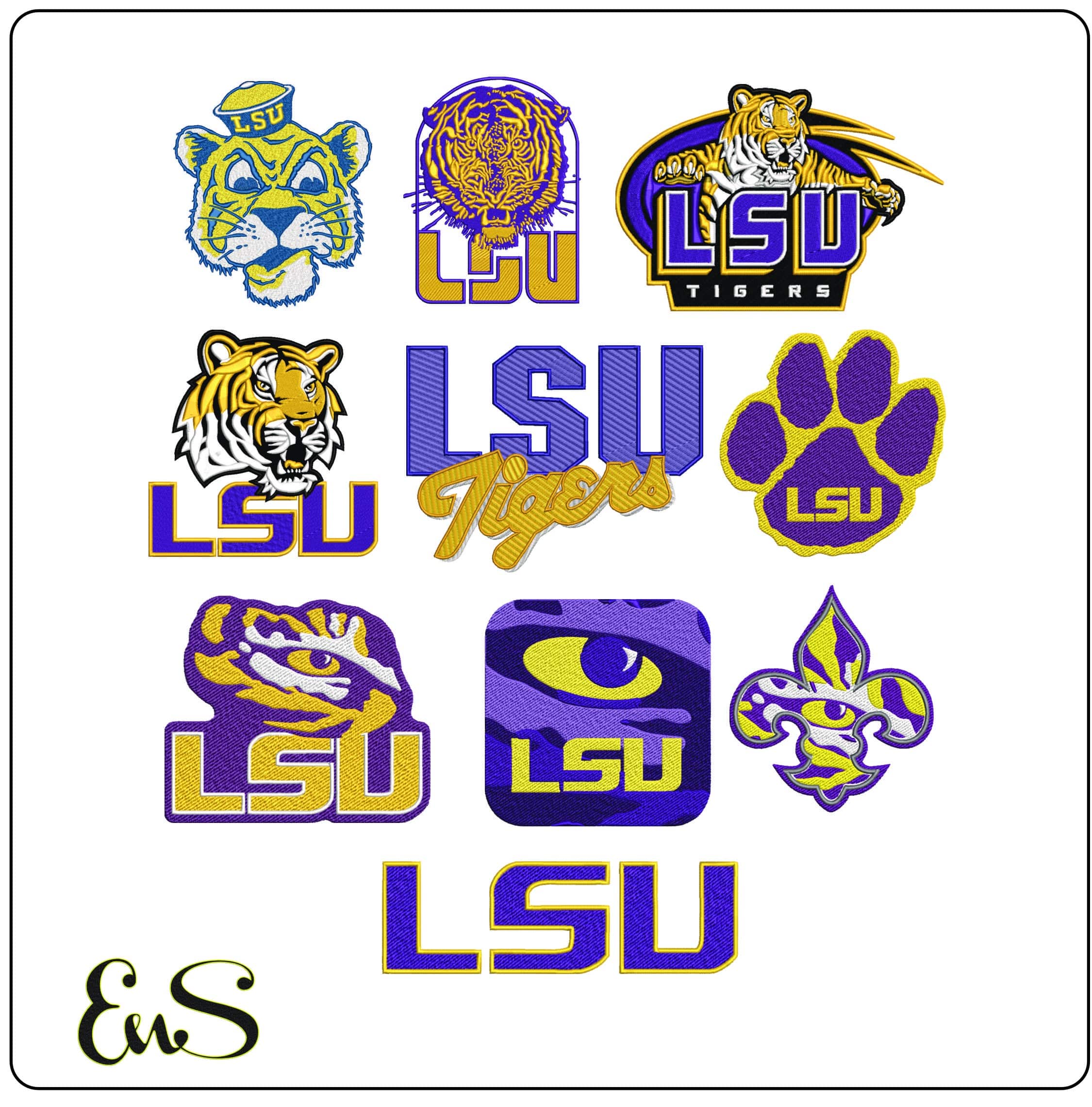
Flat digital renders can look flawless while hiding real density problems that only appear on fabric. Look for stores that show a zoomed-in stitch preview or, even better, a photo of an actual sewn sample. This is the fastest way to spot a quality file before committing.
Embroidery file format guidance from experienced digitizers confirms that reputable sellers test files before listing them, which is exactly the standard the College and University category at embroiderynsewing.com is built around. Their instant-download files are sized and tested for the home and boutique machines most hobbyists actually own, so you spend less time troubleshooting and more time sewing.
Which Teams and Conferences Are Covered
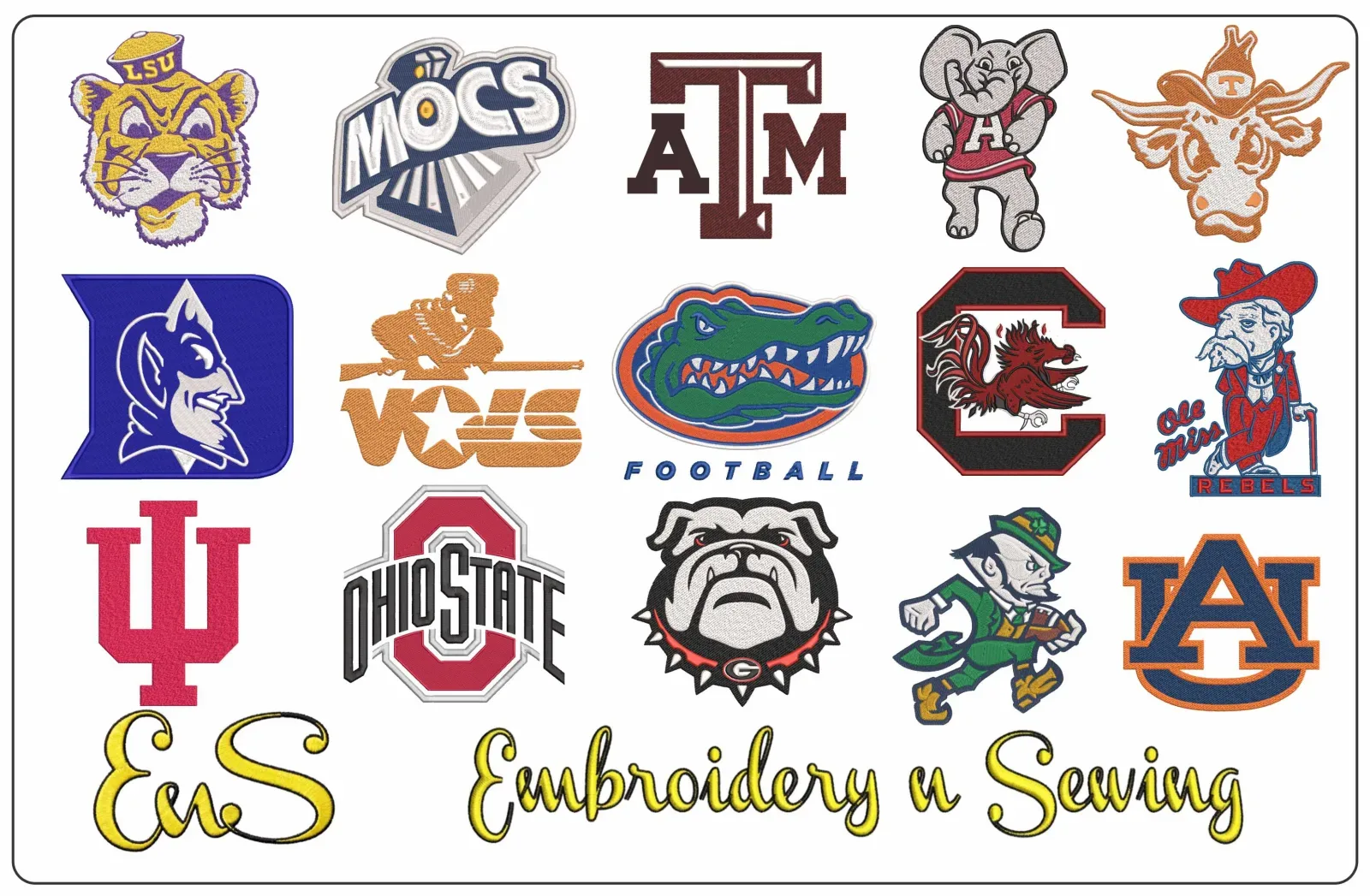
A good college football embroidery catalog should feel like it covers your team, not just the famous ones. The strongest collections span all the major conferences, including SEC powerhouses like Alabama, Georgia, Tennessee, LSU, and Florida; Big Ten staples like Michigan, Ohio State, Penn State, Nebraska, and Wisconsin; ACC programs like Clemson, Florida State, and North Carolina; and Big 12 schools like Texas, Oklahoma, and Kansas State. Beyond the Power Four, Sun Belt and AAC programs are worth checking too, since regional fan bases for those schools are genuinely passionate and actively searching for designs.
One thing beginners often overlook is that which type of design you need depends on where you're placing it. Mascot designs, with their bold shapes and personality, look great on large surfaces like hoodie backs and stadium blankets. Wordmark and clean logo-style files, on the other hand, are a better fit for smaller, more refined spots like cap fronts, left-chest polos, and bag corners. Having both options available for the same team gives you flexibility across different projects without needing separate custom work.
embroiderynsewing.com keeps its College and University designs in a dedicated navigation tab, separate from the general Sports category. That separation signals active, ongoing curation rather than a forgotten corner of the catalog. You can browse school-specific designs confidently knowing the collection is being maintained and updated.
When you search, try typing your school's name directly rather than browsing broadly. Specific searches like "Clemson tiger embroidery design PES" point you toward exactly the right file faster. Look for multiple design variations per team, including mascot, helmet logo, wordmark, and retro throwback versions, so you can match the right file to each project without overbuying.
Best Blanks and Hoop Sizes for College Football Projects
Choosing the right blank and hoop combination makes the difference between a polished finished project and a frustrating do-over. Here is a breakdown of the best starting points for beginners.
Structured caps with a flat front panel are the most popular college football blank for a reason — they are everywhere on game day. To embroider a cap properly, you need a cap hoop or hat hoop attachment rather than a standard flat hoop. Size your design between 2.5 and 3.5 inches wide so it fills the panel without crowding the edges. Behind the front panel, use a medium-weight cutaway stabilizer, which stays in place permanently and keeps the stitches crisp against the stiff fabric. Skip tear-away here; it does not provide enough long-term support for caps.
2. Hoodies and Crewneck Sweatshirts
Hoodies are the flagship blank for college football embroidery in 2026. Bold, oversized placements are trending hard right now, which means sleeve designs running 4 to 6 inches, full back wordmarks stretching 8 to 12 inches, and corner pocket placements are all fair game. For most chest designs, a 5x7 or 6x10 hoop covers the sweet spot. Use tear-away stabilizer on fleece-back blanks since the fleece separates cleanly after stitching. If you want to tackle a large back wordmark, this Embrilliance tutorial on stitching bigger designs with a 5x12 hoop walks through the process in practical detail.
3. Stadium Blankets and Fleece Throws
Stadium blankets are a fantastic beginner project because the large, open surface is forgiving and the finished product looks impressive. Center a mascot or team wordmark at 8 to 12 inches and use a large hoop, ideally 8x12 or bigger. Tear-away backing works well on fleece throws. These make excellent graduation gifts and tailgate items, so they are worth adding to your project lineup early.
4. Game-Day Tote Bags and Canvas Zip Pouches
Tote bags are quick, low-cost, and ideal if you are building a boutique product line. Corner placements between 3 and 5 inches look sharp without overwhelming the bag. Woven canvas accepts cutaway stabilizer cleanly and resists puckering, giving you consistent results even as a beginner.
5. Match Stitch Density to Fabric Weight
This one catches a lot of beginners off guard. A dense, high-stitch-count mascot can sink right into a lightweight performance polo or athletic knit, making the design look muddy. Placing water-soluble stabilizer on top of textured knits before stitching keeps the design sitting cleanly on the surface. For more on handling thin, stretchy fabrics, this tutorial on stabilizing stretchy shirts is a genuinely helpful watch before your first attempt.
Free Designs vs. Paid Files: The Quality Gap Explained
Free designs can feel like a smart shortcut, especially when you're just getting started. For simple, single-color outline designs, a free file might actually get you through a project without any major headaches. But college football logos are rarely simple. Think about your team's mascot: layered colors, fine lettering, detailed shading, and curves that need to follow the fabric naturally. That's exactly where free files tend to fall apart.
The most common problems with free or clearance-tier files include missing underlay stitches (the foundation layer that keeps your design from sinking into fluffy fabric), incorrect color change sequences, and stitch paths that were built for speed rather than quality. The result looks uneven on the finished piece, and no amount of careful hooping fixes a poorly digitized file.
Here's the part beginners often don't think about: a free file isn't actually free if it ruins your blank. If you're embroidering on a $30 hoodie and the design puckers, pulls, or misregisters across color changes, you've lost that hoodie. A professionally digitized file priced at $3 to $5 pays for itself the first time it stitches out cleanly. Good digitization accounts for how fabric behaves under tension, uses proper column stitch angles on curved edges, and places lock stitches correctly at every color stop. These are craft decisions that auto-digitizing software struggles to make reliably for mascot-level complexity, and a hastily uploaded free file almost certainly skips them entirely.
It's also worth knowing that free college logo files floating around online carry a real legal risk. As active embroidery community members have warned, stitching a copyrighted team logo without proper licensing is a legal issue, not just a quality one.
embroiderynsewing.com sits at exactly the right price point to make this an easy decision. Individual designs are priced for impulse buying, and the membership tier offers up to 20 free downloads per month with savings of up to 66%, which genuinely closes the gap with free-tier platforms while keeping professional digitization standards intact.
Before buying from any source, run this quick three-point check: Does the product page show an actual sewn-out photo on fabric? Does it list the exact stitch count? Does it specify which file formats are included? A store that provides all three is showing its work, and that transparency is one of the strongest signals that the file will perform the first time you use it.
The Licensing Question: What You Are Actually Buying
Here is something worth knowing before you hit the download button on any college football embroidery file: most of these designs are logo-style or mascot-inspired creations. They are not officially licensed by the NCAA, individual universities, or the Collegiate Licensing Company (CLC). That distinction is not a dealbreaker for most crafters, but it does matter depending on what you plan to do with the finished project.
For personal use, gifts to family members, or one-off custom pieces, logo-style designs are used by hobbyists all the time without issue. The concern starts when you move into selling finished goods at volume. University trademark offices actively monitor commercial use of school colors, mascots, and wordmarks, and some schools are significantly more aggressive about enforcement than others.
If you are planning to sell embroidered jackets or hats at a craft fair, through an Etsy shop, or through a small apparel business, consult the specific university's licensing guidelines or reach out to the CLC before you start scaling production. A little research upfront saves a lot of headache later.
The most important concept to understand is this: when you purchase a design file from a reputable digital marketplace, you are buying the right to use that file for embroidery production. That is a sewing permission, not a trademark license. The underlying trademark still belongs to the institution.
Honest sellers make this distinction clear before purchase, not buried in fine print afterward. That transparency is actually a trust signal worth paying attention to when you are choosing where to buy your files.
The College Football Embroidery Buying Calendar
Knowing when to shop for college football embroidery designs is just as important as knowing what to buy. The college football calendar is packed with purchase triggers, and each one creates a real window of opportunity for both personal projects and boutique sellers.
December and February kick things off with the Early Signing Period and National Signing Day. Families of new recruits love ordering personalized gear to celebrate their athlete, and boutique sellers who prepare small-batch welcome gifts around these dates often find a surprisingly loyal niche audience ready to buy.
March through April brings spring game season, and July through August delivers the first preseason rankings. Spring games are the first live-attendance events of the year for most programs, and seeing those poll rankings drop in late July reliably reignites fan identity purchases during an otherwise quiet window. These are great months to download your files, run test-sew sessions, and dial in your settings before the real rush hits.
Late August through early September is the biggest window of the entire year. Tailgate bags, stadium seat covers, team hoodies, and personalized caps all spike at once as fans gear up for opening weekend. Top programs routinely draw over 100,000 fans per home game, which means the demand for fan apparel at this moment is enormous. If you are selling finished pieces, your files need to be downloaded and test-sewn well before this window opens.
Rivalry week in November and conference championship weekend create a strong second peak. Gear sells into both fan bases at once, and the tight turnaround before game day rewards crafters who already have their team files queued up and ready.
Bowl season and the College Football Playoff stretch buying momentum all the way into January, with championship gear, bowl patches, and December graduation gift projects keeping production calendars full for four solid weeks.
Personalization Upsells That Multiply One Design's Value
One of the smartest moves you can make as a beginner is realizing that a single downloaded design file can power an entire product line. When you pair a team mascot or wordmark with a machine embroidery font for a player name, jersey number, or graduation year, you instantly have a personalized product without buying anything extra or commissioning new digitizing. This combination is the most common upsell in boutique college football apparel, and it costs you nothing beyond what you already purchased.
Font choice matters more than most beginners expect. Varsity-style embroidery designs have proven to be strong sellers in the boutique market, and for good reason. embroiderynsewing.com carries a wide selection of machine embroidery fonts, including athletic block letter and varsity-style options that visually match college team aesthetics. Choosing a font that fits the team's energy keeps the finished piece looking cohesive instead of like two unrelated designs stitched near each other.
Jersey number placements work especially well on sleeve positions or directly below a left-chest logo. A two-digit number in a bold athletic font, sized around 1.5 to 2 inches, reads cleanly on caps and apparel without visually competing with the main design.
Adding "Class of 2026" beneath a school mascot is one of the highest-converting combinations for gift buyers. It transforms a general fan item into a keepsake, which naturally supports a higher price point. For boutique sellers, offering the base team design plus a personalization add-on as a service tier, rather than pre-making finished goods, is a lower-risk entry point that keeps inventory simple while still capturing custom-work pricing.
Membership Savings for Multi-Team Buyers
If you're planning to collect designs for multiple teams, whether that's every school in your conference, a personal library spanning rivalry matchups, or a full season's worth of project files, the cost-per-file math starts to matter pretty quickly. At a standard price of around $3.28 per design, building out even 15 files adds up to roughly $49 before you've stitched a single stitch. That's the exact buyer profile that membership pricing is built for.
The membership tier at embroiderynsewing.com offers up to 20 free downloads per month plus savings of up to 66% off standard pricing. For someone planning to grab 10 to 20 college football design files across a season, those numbers mean the membership can realistically pay for itself within the very first month of use. A 15-file library that would normally run close to $50 at full retail could come in at $15 to $25 with membership discounts applied, and your monthly free download credits can chip that number down even further.
The buyers who get the most out of this setup are the ones with recurring, multi-school needs. Think families with alumni spread across different programs, boutique sellers serving a regional fan base, or school spirit shop operators who need fresh files each season. College football purchase triggers don't stop after opening weekend; they keep coming through rivalry games, conference championships, and bowl season, so the savings genuinely compound across multiple buying cycles rather than landing as a one-time win.
There's also a practical workflow benefit that's easy to overlook. When you're browsing during rivalry week with a production deadline breathing down your neck, stopping to make a per-file checkout decision for every design you like is real friction. Having download credits ready means you can grab a file the moment you find it and get straight to stitching.
Gear Up for Game Day: Your Next Steps
You have everything you need to start strong. Pick your team's primary mascot or wordmark file first, then pair it with a single versatile blank, either a structured cap or a mid-weight hoodie, to test your machine's output before committing to a full production run. This one-and-done test stitch tells you whether your tension, underlay, and hoop alignment are dialed in before you scale up.
Before you download anything, double-check your file format against your specific machine model. PES works for Brother and Baby Lock machines, while DST is the go-to for Tajima-compatible setups. Also confirm the stitch count matches your blank's fabric weight; structured caps typically do best under 8,000 stitches, while hoodies can handle more but may need underlay adjustments for fleece.
Time your downloads around the two biggest windows in the college football calendar: late August for the season opener rush and November for rivalry week. Those are your highest-impact production cycles.
Add a personalization font to your first order. It instantly expands what you can make without any extra digitizing costs. Then head to the College and University category at embroiderynsewing.com to compare mascot versus wordmark options and see whether a membership tier fits your season's project volume.
Conclusion
You now have everything you need to shop for college football team embroidery designs like a pro. Remember the key takeaways: always choose the right file format for your machine, buy from reputable sources that offer clean and tested designs, match the design complexity to your skill level, and double-check sizing before you start stitching.
The best projects start with the best designs, and now you know exactly what to look for. Whether you are personalizing a game-day hat or creating a thoughtful gift for a fellow fan, the right embroidery design makes all the difference.
Ready to get started? Browse a trusted embroidery design shop today, pick your favorite team, and bring your school spirit to life one stitch at a time. Your next favorite project is closer than you think!