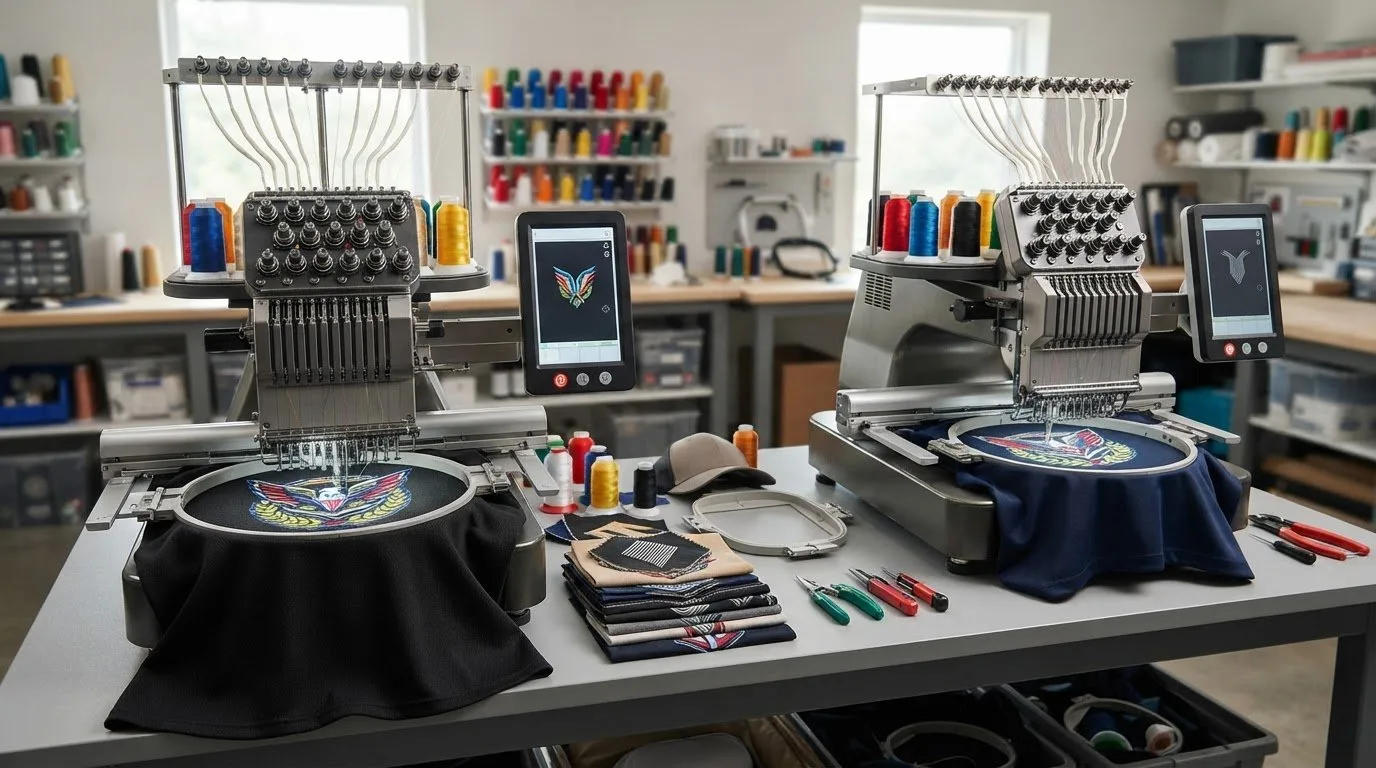
The familiar brand name isn't automatically the better fit. Chinese 15-needle embroidery machines can be a practical option when their stitch quality, machine capabilities, and access to parts and service match the work you plan to do. In comparing Chinese 15-needle embroidery machines with established brands, look beyond the country of manufacture: one advertised single-head model reaches 1,200 RPM, but speed alone doesn't show how well a machine will perform on your materials.
It's reasonable to weigh lower-cost options against concerns about reliability and support. This guide explains how to assess those trade-offs, compare machine configurations and brands, and estimate factors that affect financing and return on investment. You'll also find practical criteria for evaluating stitch samples, operating needs, and service access, so you can focus on a machine that fits your production goals instead of relying on a brand label alone.
Key Takeaways
- Match machine configuration to your production volume and the materials you plan to embroider, rather than choosing by brand name alone.
- Build a realistic ownership estimate by accounting for upkeep, utilities, and parts alongside the purchase price; then compare it with expected production income.
- Compare Chinese machine brands using practical criteria such as stitch performance, precision claims, software compatibility, and access to service.
- For sports-themed embroidery inspiration, explore our Sports Embroidery, including designs for teams such as the Buffalo Bills and Chicago Bears.
Are China Embroidery Machines Any Good?
A Chinese machine can suit commercial embroidery when its stitch quality, software, and service support fit the work. Choose a machine based on production scale: a single-head model suits varied, smaller runs, while multi-head equipment can keep repeat jobs moving efficiently. For high-volume logo production, prioritize high-speed machines with more heads. For cap runs, look for multiple heads, high RPM, and cap frames.
Specifications need context. A listed single-head 15-needle machine advertises a maximum speed of 1,200 RPM, but cap work may run around 700 stitches per minute. One listing gives a 40 × 60 cm flat embroidery area; another specifies 500 × 1,200 mm. Test samples on the actual fabric, then assess the result alongside the machine's production speed and support needs. Reliability also depends on maintenance access, spare parts, and software that handles your required file formats. If you're new to multi-needle work, our honest guide to the best embroidery machine for beginners is a useful starting point.
Gensen machines may be worth considering for production use. Evaluate them by the same criteria as other options: head count, needle count, embroidery area, sample quality, software compatibility, and service access. A brand name alone cannot show whether a machine suits your workflow.
| Option | Production fit | Key comparison |
|---|---|---|
| Chinese single-head, 15-needle | Varied, smaller runs | Sample quality and service access |
| Chinese two-head, 15-needle | Parallel production | Actual output and maintenance needs |
| Chinese four-head, 12/15-needle | Repeated commercial work | Embroidery area and software |
| Gensen production option | Production-focused workflows | Compare specifications and support |
| Established-brand machine | Depends on model and workload | Compare the same operating criteria |
Choose the option whose tested stitch results, production capacity, software, and support best match your workload. Choose software that supports the file formats your workflow requires, and verify that it works with the machine; our guide on how to transfer embroidery designs to your machine explains the options.
Commercial Pricing, Financing, and Return on Investment
For commercial embroidery, compare the purchase cost with production capacity and ongoing expenses. A single-head, 15-needle machine can handle varied jobs, while multi-head industrial equipment suits repeated orders. One forum estimate puts embroidery supplies at about 15% of machine cost. Add electricity, air-conditioning if needed, maintenance, and spare heads to estimate total ownership costs. For financing, compare repayment costs with available cash flow and expected order volume.
Needle count and speed matter only in context. A Chinese 15-needle machine advertises up to 1,200 RPM, while cap work may run around 700 stitches per minute. Assess stitch quality on the actual fabric and application. Compare manufacturers by capabilities, warranty terms, support access, and the software workflow, not by an "excellent" speed claim alone. A friendly sales conversation cannot replace written operating details.
Software compatibility depends on the machine's control system and embroidery software. Confirm that the software supports your required file formats, converts sample designs correctly, and runs on a computer that meets its documented requirements.
To assess a seller, match the model name and written specifications to the machine, then review warranty coverage, service terms, and certificates for that exact model. Compare the stated needle count, embroidery area, speed, and support arrangements before committing.
Estimate return on investment by comparing expected paid production with ownership costs and realistic operating speed. An advertised maximum speed, for example, may be higher than the practical speed for stitching caps. Once your machine is running, keep stitch quality high with our guide to troubleshooting machine embroidery tension.
Chinese Embroidery Machine Brand Comparisons
Comparing Chinese 15-needle embroidery machines with known brands works best when you match specifications to your actual production needs. Evaluate precision, fabric results, support, and customization rather than relying on country labels.
Chinese 15-Needle Brands and Models
Gensen is a named production-focused option. Listings also include single-head 15-needle machines and four-head machines with 12 or 15 needles. Some Chinese brands advertise 0.1 mm positional precision for delicate fabrics, but that figure alone doesn't establish stitch quality or durability across materials.
For popular models, compare head count, needle count, embroidery area, and advertised speed. Run a test design on your intended fabric and note how the machine handles detailed stitching and customization.
Chinese Brands and Known Brands
The comparison between Chinese 15-needle embroidery machines and established brands such as Brother, Ricoma, Tajima, and Melco should use equivalent models and workloads. Available details don't establish that one brand consistently performs better. Compare stitch samples, software compatibility, service access, and production capacity to identify differences relevant to your embroidery business.
For imports to the U.S., shipping charges depend on the shipping arrangement, while import costs depend on the transaction. Installation needs vary by machine and worksite, including setup space and required utilities.
Choose based on test results and support fit. Explore our best-selling embroidery designs to plan projects around your production needs.
Embroidery n Sewing: Sports Embroidery
Embroidery n Sewing offers sports embroidery designs for crafters planning team-inspired projects. Once you've chosen a machine, find designs that suit the look you want to create. Multi-colour team designs such as our Buffalo Bills stadium design, Chicago Bears Wrigley Field design and Eagle Hitter baseball design are a great way to put all 15 needles to work.
Digital sports designs are a natural fit when your project calls for sports imagery rather than more machine comparisons. Browse by theme to find a direction that fits your creative goal, whether you're preparing a team-inspired gift or exploring a wider range of sports designs.
Turn Your Machine Choice Into a Project Plan
Comparing Chinese 15-needle embroidery machines with established brands is only one part of preparing for production. The next step is to connect your equipment choice to the designs and themes you want to create. A clear project plan can help you consider design requirements alongside machine capabilities and turn your investment into purposeful work.
Embroidery n Sewing offers digital embroidery designs, machine embroidery designs, and college embroidery designs to inspire a range of projects. Explore digital embroidery designs at Embroidery n Sewing, and take the next step toward bringing your ideas to life.
Frequently Asked Questions
How much maintenance is required for a 15-needle machine?
Maintenance depends on the machine's design, workload, and manufacturer's schedule. Follow the operating manual and keep a service log for cleaning, lubrication, needle changes, and adjustments. Record thread breaks, tension changes, unusual noise, and downtime, too. These notes can reveal recurring issues and help a technician determine whether wear, settings, or a specific component is affecting stitch consistency.
Should I choose a single-head or multi-head 15-needle machine?
Choose a single-head machine when orders vary and jobs can run one at a time. Multi-head equipment suits repeat designs that can be stitched on several garments in parallel. For example, a two-head setup may suit a small team order better than a single head. A larger operation should weigh expected order flow against added maintenance and floor-space needs.
Should I buy a new or used machine?
A new machine provides a clear starting point for its service history; a used machine may suit a tighter equipment budget but needs closer inspection. Before deciding, run a stitch sample on your own fabric, review maintenance records, and assess the machine's operating history. A demonstration can reveal thread breaks, uneven registration, or control issues that a listing description won't show.
What warranty should I expect?
Warranty coverage varies by seller and model, so compare the written terms rather than relying on a general promise. Review which parts and labor are covered, how to submit claims, and whether shipping, training, or remote diagnostics are included. Also examine exclusions for wear items and how to obtain replacement parts, since downtime can affect production planning.
What are current U.S. prices for Chinese and established-brand 15-needle embroidery machines?
There isn't one useful price for either category because machine configurations and purchase terms affect the total. Compare equivalent head counts, embroidery areas, included software, shipping, installation, and warranty coverage. Then factor operating costs into the quoted purchase amount. A lower initial quote may not mean better value if setup, parts, or service add substantial costs later.