- [The advantages of using ITH doll clothes patterns for precision sewing.] - Understanding how to match digital embroidery designs with your specific hoop size. - Strategies for scaling patterns to fit various doll dimensions without losing quality. - How to select the right file formats to avoid technical errors and fabric waste.
What if you could skip the frustration of wrestling with a standard sewing machine to stitch a tiny sleeve? We understand that sewing at a miniature scale is incredibly difficult, especially when you're trying to master ITH doll clothes patterns for the first time. Managing those minuscule seams often leads to tangled threads or uneven edges that ruin expensive fabric. It's a common struggle for many hobbyists who want professional results without the headache of manual precision. By using these specialized files, you can transform your embroidery machine into a precision garment factory. Since the computerized segment of the embroidery market holds a 66.6% share in 2026, it's the perfect time to leverage this technology. You'll discover how to create high-quality clothing entirely within your hoop using digital patterns. This guide covers everything from matching hoop sizes to scaling designs for different dolls. You'll gain the confidence to choose the right digital embroidery designs and achieve perfectly finished seams every time you press start.
[Key Takeaways]
- You'll learn how ITH doll clothes patterns let your machine do the heavy lifting by stitching perfect seams and construction automatically.
- We'll show you how to pick the right hoop sizes and file formats so you never have to worry about a design not fitting your machine.
- You can master the layering steps and stabilizer choices that keep your tiny clothes looking professional and feeling soft.
- You'll find out how to mix and match digital fonts or appliqués to give your doll outfits a custom, personalized look.
Table of Contents
- What Are ITH Doll Clothes Patterns and Why Use Them?
- Selecting the Best Digital Files and Hoop Sizes
- A Beginner’s Guide to Stitching Doll Clothes In-the-Hoop
- Customizing Your Doll Outfits with Fonts and Appliqué
[What Are ITH Doll Clothes Patterns and Why Use Them?]
- Definition and Process: ITH doll clothes patterns are digital files that allow an embroidery machine to handle both decorative stitching and structural assembly, essentially building the garment within the hoop.
- Technical Requirements: You'll need to match your specific machine file format with a hoop size that accommodates the scale of the doll clothing.
- Assembly and Stabilizers: Success depends on a specific layering sequence and the use of stabilizers that keep tiny garments flexible yet secure.
- Customization and Personalization: You can modify basic patterns by merging them with digital fonts or unique textures for a one of a kind result.
I must start with a brief apology regarding our inventory. I regret to inform you that we don't sell physical dolls or pre-made outfits. Our operational focus is strictly limited to the digital architecture behind these designs. We specialize in the files that make the creation process possible, rather than the physical toys themselves. If you've ever tried to sew a tiny sleeve on a standard machine, you know how difficult it is. ITH doll clothes patterns solve this by using Computerized Machine Embroidery to automate the construction. The machine stitches the seams with perfect precision while the fabric is still flat in the hoop. This removes the need to handle microscopic pieces of fabric near a moving needle, which is a major relief for your fingers and your patience.
[The Benefits of Digital Doll Patterns]
Consistency is the primary reason many creators switch to digital methods. Every time you run a file, the bodice or trousers will be the exact same size. There's no risk of a shaky hand ruining a seam. You can also incorporate complex [embroidery stitches] directly into the garment design. This adds a level of professional detail that's nearly impossible to achieve through traditional sewing on such a small scale. It's a cleaner, faster, and much more reliable way to build a miniature wardrobe.
[Selecting the Best Digital Files and Hoop Sizes]
[
- Hoop Matching: You must align your specific machine's hoop dimensions with the pattern's scale to ensure proper fit.](/articles/in-the-hoop-stuffed-animal-patterns-a-beginners-guide-to-ith-plushies) - Resizing Risks: Manual scaling on your machine often distorts stitch density and ruins the final garment.
- Format Compatibility: Different machine brands require specific file types like PES, JEF, or HUS for successful reading. - File Integrity: High-quality digital files maintain consistent thread tension across the tiny, intricate areas of doll clothing.
I must clarify our operational boundaries before we continue. I regret to inform you that we don't sell physical embroidery machines or hoop attachments. Our technical expertise is restricted to the digital files themselves. We cannot offer guidance on machine repairs or physical hardware malfunctions, as our focus remains entirely on the digital architecture of the designs. When you begin working with ITH doll clothes patterns, your hoop size is your most important constraint. A 5x7 hoop is standard for many small projects, but larger dolls often require 7x12 or 8x12 spaces. You should always verify your machine's maximum stitch area before you commit to a purchase. For those interested in the rich heritage of this craft, exploring the history of embroidery can provide fascinating context for the artistry involved in modern digital work.
[Hoop Compatibility and Scaling]
You should never manually resize an ITH pattern on your machine's touchscreen. Standard embroidery software calculates stitch density based on the original size. If you shrink a pattern, the stitches become too crowded and can break your needle. Larger 18-inch dolls usually need a larger hoop than 11.5-inch fashion dolls. It's better to buy a file specifically digitized for your doll's scale to ensure the seams remain professional and clean.
Understanding Embroidery File Formats
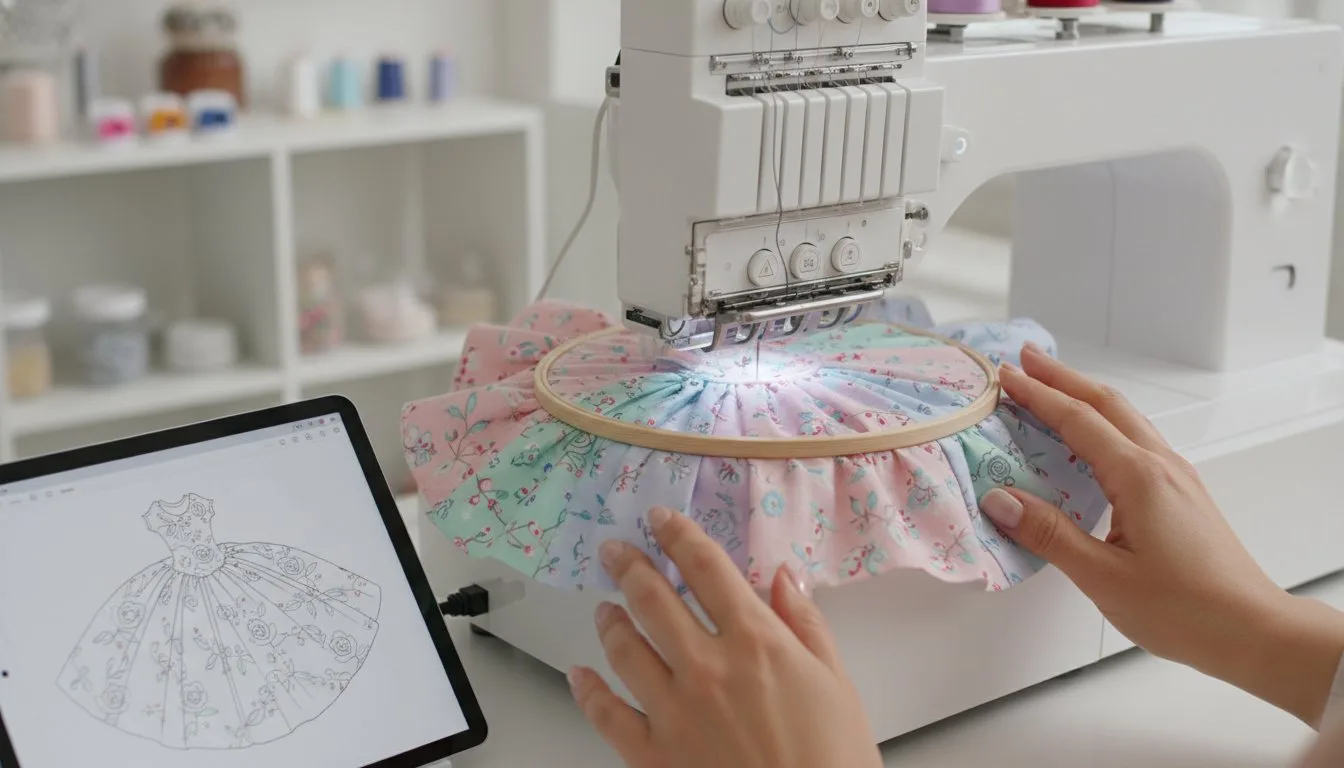
Your machine brand determines which file you'll use. Brother machines typically use PES, while Janome users look for JEF, and Husqvarna owners need HUS. When you download our [embroidery designs], you'll often receive a zipped folder containing all these formats. You'll need to unzip the folder on your computer first. Then, simply transfer the specific file your machine recognizes. If you're ready to start your next project, feel free to [explore our digital embroidery designs] to find the perfect fit for your hoop. ![ITH Doll Clothes Patterns: The Ultimate Guide to In-the-Hoop Embroidery]
A Beginner’s Guide to Stitching Doll Clothes In-the-Hoop
- The Layering Concept: Success depends on understanding how fabrics are stacked and stitched in a specific sequence.
- Stabilizer Selection: Choosing between tear-away and wash-away stabilizers affects the final drape and feel of the doll clothing. - Placement and Tack-down: These two phases ensure your fabric is perfectly aligned and secured before decorative stitching begins.
- Troubleshooting Techniques: Identifying the causes of fabric flagging and tension issues prevents ruined projects and wasted material.
I must apologize for a specific technical barrier regarding your project supplies. We don't offer physical sewing supplies, stabilizers, or embroidery hoops. Our operational scope is strictly limited to the distribution of digital files. Because we focus entirely on the digital architecture of the designs, we cannot provide the physical materials required to complete the stitch-out. Using ITH doll clothes patterns feels like magic because the machine handles the complex assembly for you. Instead of traditional sewing, you'll work through a logical layering process. You'll start by hooping your stabilizer. I recommend using a wash-away stabilizer for doll clothes because it disappears completely after a quick soak, leaving the tiny garment soft and flexible. Once your stabilizer is ready, the machine will guide you through the construction steps.
The 4 Main Phases of an ITH Project
Phase 1 is the placement line, which is a simple outline that shows you exactly where to put your fabric. Phase 2 is the tack-down stitch. This step secures your fabric to the stabilizer so it doesn't move during the high-speed embroidery. In Phase 3, the machine adds decorative elements or [applique]details. Finally, you'll place a second piece of fabric face-down over the design. The machine then sews the final construction seam, leaving only a small gap for you to turn the outfit right-side out.
Troubleshooting the Stitch-out
If you notice your fabric 'flagging' or bouncing up and down, your stabilizer likely isn't tight enough. This movement can lead to shifted designs or broken needles. You should also keep a close eye on your thread tension. Because doll patterns are so small and dense, high tension can cause the fabric to pucker or pull. If you're new to these methods, reading a [machine embroidery sewing] guide can help you master the fine-tuning needed for small-scale projects. If you're ready to start your next project, you can [browse our digital embroidery designs] to find the perfect pattern for your machine.
Customizing Your Doll Outfits with Fonts and Appliqué
- Personalization Techniques: Learn how to merge digital fonts with your pattern files to create custom monograms.
- Creative Layering: Use blank pattern areas to showcase unique [embroidery patterns] like sports or anime logos.
- Thematic Designs: Incorporate college or professional sports branding for realistic, miniature fan gear.
- Miniature Precision: Master the art of scaling and trimming for professional results on a tiny scale.
I'm sorry to say that we don't provide custom design services or personalized digitizing. I regret this limitation, but our operational focus is centered on distributing pre-made digital files. This technical barrier means you'll need to use your own embroidery software to perform any modifications or merges with ITH doll clothes patterns. It's a straightforward process once you get the hang of it, and it opens up many creative doors for your projects. Once you've got your software open, the possibilities are endless. You can take a standard shirt pattern and turn it into a tiny jersey. We offer a wide range of [embroidery patterns] that fit perfectly into the blank spaces of these designs. For instance, using our college embroidery designs or sports embroidery files can help you create a 'mini-me' look for a favorite doll. It's all about finding the right balance between the garment's size and the design's complexity.
Adding Names and Monograms
Adding a name is the easiest way to make a doll outfit feel special. When you merge a font into your doll shirt pattern, pay close attention to the scale. A font that looks great on a human t-shirt will likely be too bulky for a doll. I recommend choosing thin, crisp lettering that won't overwhelm the small fabric area. Always run a test stitch on scrap fabric to ensure the letters remain legible and don't cause the fabric to pucker.
Mixing Textures with Appliqué
Appliqué is a fantastic way to use up those tiny fabric scraps you've been saving. It works beautifully for adding detail to doll shoes or hat brims. Since the scale is so small, you'll need very sharp, fine-point scissors. Trimming close to the tack-down line is vital for a professional finish. If you leave too much excess fabric, the final satin stitch won't cover the raw edges completely. This results in a messy look that detracts from the professional quality of your ITH doll clothes patterns. If you're ready to start customizing your next project, please browse our collection of digital embroidery designs. Whether you're looking for anime embroidery designs, NFL embroidery logos, or car embroidery designs, we have the files you need to make your doll's wardrobe truly unique.
- Precision Assembly: Moving to ITH methods ensures your doll clothing has perfect seams that manual sewing can't match.
- Creative Freedom: Digital files allow you to merge fonts and logos for a completely personalized miniature wardrobe.
- Efficiency: Instant downloads and machine-ready files mean you can start your project the moment inspiration strikes.
Start Your Miniature Wardrobe Today
I must reiterate our operational constraints before you begin your next project. I regret to inform you that we don't sell physical dolls, fabrics, or embroidery machines. Our technical focus is strictly limited to the creation and distribution of digital files. This barrier means we can't provide the physical materials needed for your stitch-out; we only provide the digital blueprints. You've now seen how ITH doll clothes patterns remove the stress of manual sewing by automating every seam and decorative detail. By matching your hoop size correctly and following the layering process, you'll achieve professional results that are nearly impossible to replicate by hand. Whether you're adding personalized monograms or creating themed gear, the precision of these digital files ensures a perfect fit every time. Ready to transform your doll's closet? We offer professional-grade digital files and a wide variety of machine-ready fonts to help you succeed. You'll get an instant download after your purchase so there's no waiting around. Start your next project with our high-quality Digital Embroidery Designs! We can't wait to see the beautiful outfits you create for your collection.
- ITH Definition: In-the-Hoop (ITH) is a technique where your embroidery machine handles both the decorative stitching and the structural garment assembly.
- Hoop Size Requirements: Most 18-inch doll patterns require a 5x7 hoop or larger, depending on the complexity of the clothing design.
- Finishing Steps: While the machine does the heavy lifting, you may still need minimal hand-stitching or a sewing machine to close small turning gaps.
- Material Selection: Standard 40-weight embroidery thread and wash-away stabilizers are the preferred choices for maintaining garment flexibility.
Frequently Asked Questions
What does ITH mean in machine embroidery?
ITH stands for "In-the-Hoop," which refers to a process where the embroidery machine completes the actual construction of a garment. Instead of just adding a logo to a pre-made shirt, the machine stitches the seams of the outfit while the fabric is secured in the hoop. This method is the foundation of ITH doll clothes patterns, allowing you to create finished items with high precision. I must apologize that we don't provide the physical machines for this process, as we specialize strictly in digital files.
What is the best hoop size for making 18-inch doll clothes?
For 18-inch dolls, you will typically need a hoop size of at least 5x7 inches to accommodate the pattern pieces. However, many intricate ITH doll clothes patterns or full-length dresses require a 7x12 or 8x12 hoop to fit the design in a single run. I regret that we cannot offer physical hoop extensions or machine hardware. You should always check your machine’s maximum stitch area before purchasing a digital design to ensure the file will load correctly on your specific equipment.
Do I need a sewing machine to finish ITH doll clothes patterns?
You generally don't need a traditional sewing machine for the main assembly, but it can be helpful for the final closure. Most patterns are designed so the embroidery machine handles every seam, leaving only a small gap for turning the garment right-side out. You can close this gap with a simple hand stitch or a quick run on a sewing machine. I must clarify that we don't sell sewing machines or physical tools, as our expertise is limited to the digital architecture of embroidery designs.
Can I use regular embroidery thread for doll clothes?
Yes, standard 40-weight polyester or rayon embroidery thread is the ideal choice for these projects. It's durable enough to hold the construction seams together while providing a professional, high-sheen finish for any decorative elements. I'm sorry to say we don't stock physical thread or sewing supplies. Our operational focus is providing the digital files for your machine, so you'll need to source your threads from a local or online craft supplier to complete your project.
What kind of stabilizer is best for ITH doll projects?
Wash-away or tear-away stabilizers are the most effective options for creating doll clothing. Wash-away stabilizer is particularly useful because it dissolves completely in water, leaving the tiny garments soft and flexible for the doll to wear. I must apologize that we don't offer physical stabilizers in our shop. Because we focus entirely on the digital side of embroidery, we recommend checking with a specialty textile retailer to find the best physical backing for the specific fabric you plan to use.